Clear Aligners: Your Complete Guide to Invisible Orthodontic Treatment
Introduction
Straightening your teeth no longer means enduring a mouthful of metal. Clear aligners have transformed orthodontic treatment, offering a discreet, removable solution that fits modern lifestyles. These transparent plastic trays gently guide teeth into alignment, addressing everything from minor crowding to moderate bite issues.
This comprehensive guide covers everything you need to know about clear aligners, from how they work and what they cost to who makes an ideal candidate and how they compare to traditional braces.
What Exactly Are Clear Aligners?
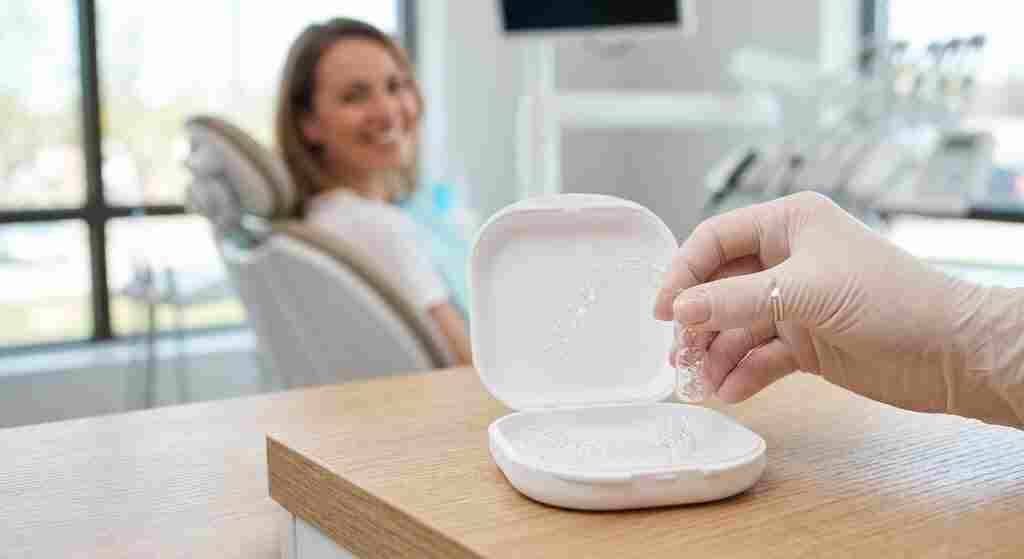
Clear aligners are custom-made, removable plastic trays that fit snugly over your teeth. Each set of clear aligners applies gentle, controlled pressure to specific teeth, gradually shifting them toward their desired positions. You wear each set for about one to two weeks before progressing to the next in the series.
Over time, these incremental movements add up to a completely transformed smile.Clear aligners don’t have any metal brackets or wires like regular braces do. Their transparent appearance makes them nearly invisible, which is why they have become the preferred choice for adults and teens seeking orthodontic treatment without the obvious look of braces.
How Do Clear Aligners Actually Work?
The process begins with a digital scan or physical impression of your teeth. Your orthodontist uses specialized software to map out a precise treatment plan, showing exactly how your teeth will move with each successive aligner. This technology, known as ClinCheck for Invisalign users, allows you to preview your expected results before treatment even starts.
Once your custom aligners are manufactured, you receive a series of trays. Wearing your clear aligners for 20 to 22 hours daily ensures consistent pressure on your teeth.Only when eating, drinking anything other than water, brushing, and flossing do you take them off. Each new set of clear aligners continues the progression, with most treatments requiring between 12 and 24 months depending on case complexity.
Who Makes a Good Candidate for Clear Aligners?
Clear aligners work effectively for many types of orthodontic issues, but they are not suitable for every case. International orthodontic experts agree that clear aligners can treat mild to moderate crowding, open bites, and some Class II malocclusions effectively. Patients with simple malocclusions treated without extractions see particularly good results.
However, complex cases involving severe rotations, significant extractions, or major skeletal discrepancies may require traditional braces. A systematic review found that clear aligners demonstrate biomechanical limitations in achieving precise root control, especially in extraction cases. Your orthodontist will evaluate your specific situation to determine whether clear aligners are the right choice.
Clear Aligners vs. Traditional Braces: What’s the Difference?
Removability stands as the most significant difference. You can take out clear aligners for meals and oral hygiene, allowing you to eat whatever you want and brush and floss normally. Braces remain fixed to your teeth throughout treatment, making eating certain foods challenging and cleaning more time-consuming.
Comfort also favors clear aligners. Patients wearing clear aligners report significantly lower pain levels during the first month of treatment compared to those with traditional braces. The adaptation period produces less functional disruption and physical discomfort.
Aesthetics give clear aligners a clear advantage. Their transparent design makes them nearly invisible, unlike the visible metal brackets and wires of traditional braces.
Effectiveness tells a more balanced story. Both methods work well for simple malocclusions treated without extractions. However, traditional braces remain superior for complex cases requiring precise tooth movements.
What Dental Issues Can Clear Aligners Correct?
Clear aligners successfully address a wide range of orthodontic concerns:
- Crowding – Overlapping or twisted teeth caused by insufficient space
- Gaps – Spaces between teeth from missing teeth or small arch size
- Overbite: Excessive overlap between the upper and lower front teeth
- Underbite – Lower teeth protruding past upper teeth
- Crossbite: When biting, the upper teeth are positioned inside the lower teeth.
- Open bite – Upper and lower front teeth not meeting when the mouth is closed
A systematic review confirmed that clear aligners effectively achieve maxillary molar distalization and rotation in nonextraction Class II patients. For mild to moderate cases, clear aligners demonstrate comparable treatment effectiveness to fixed appliances.
The Clear Aligners Treatment Journey Step by Step
Consultation
Your orthodontist examines your teeth, discusses your goals, and determines whether clear aligners suit your needs. They may take X-rays, photographs, and digital impressions.
Digital Treatment Planning
Using 3D imaging technology, your provider creates a customized treatment plan showing each stage of tooth movement. You can preview your predicted final smile.
Aligner Fabrication
Your custom clear aligners are manufactured based on the digital plan. Each set is slightly different, designed to move specific teeth by precise amounts.
Wearing Your Aligners
You wear each set of clear aligners for one to two weeks, approximately 22 hours daily. Progress through the series as directed by your orthodontist.
Monitoring and Refinements
Regular check-ups ensure your treatment stays on track. Some patients require refinement aligners near the end to fine-tune results.
Retention
After completing your clear aligners treatment, you wear retainers to maintain your new smile and prevent relapse.
How Much Do Clear Aligners Cost?
Clear aligners represent a significant investment, with costs varying widely based on case complexity, brand, and provider location. Professional clear aligner systems typically range from $3,000 to $8,000.
Premium systems like Invisalign cost $4,000 to $8,000 for moderate cases and $5,000 to $9,000 for complex cases. Invisalign represents approximately 70% of professionally prescribed aligners globally.
Mid-tier options such as ClearCorrect offer comparable treatment at $3,500 to $7,000.
Direct-to-consumer brands charge significantly less, typically $1,995 to $2,500, but these lack professional supervision and cannot treat complex cases.
Treatment duration directly affects total cost. Standard cases require 18 to 24 months, while advanced cases may extend to 30 to 36 months. Many orthodontists offer payment plans to make clear aligners more accessible.
Clear Aligners Brands: What Are Your Options?
Invisalign remains the gold standard with the most extensive clinical evidence base. Advanced technologies like SmartForce, SmartTrack, and Smart Stage improve treatment predictability.
Spark offers another professionally supervised option with similar features to Invisalign.
Angel Aligners and 3M Clarity provide additional choices for patients seeking professional clear aligner treatment.
Direct-to-consumer brands like SmileDirectClub and Byte offer lower prices but lack in-person professional oversight. These options work only for very simple cases and carry higher risks.
Professional supervision distinguishes premium clear aligners from budget alternatives. Invisalign stands out because of its advanced technology and ability to treat more complex cases.
The Pros and Cons of Clear Aligners
Pros:
- Nearly invisible appearance – perfect for selfies and professional settings
- Removable for eating, brushing, and flossing
- More comfortable than traditional braces
- Fewer emergency visits for broken brackets or wires
- Easier oral hygiene maintenance – no special flossing tools required
- Better quality of life during treatment
Cons:
- Requires discipline to wear 20-22 hours daily
- Not suitable for severe or complex orthodontic cases
- Can be more expensive than traditional braces
- May be less effective for certain tooth movements
- Speech may be temporarily affected during the first few days
Life with Clear Aligners: What to Expect
As your teeth start to move, the first few days with fresh clear aligners usually cause some minor discomfort. This sensation is normal and usually subsides within a few days. Any initial discomfort can be managed with over-the-counter painkillers. Eating with clear aligners requires removing them beforehand.
This freedom means no food restrictions – you can enjoy popcorn, nuts, and sticky sweets without worry. To avoid trapping food particles on your teeth, just remember to wash your teeth before putting your aligners back in.
Oral hygiene becomes simpler with clear aligners. You brush and floss normally, without navigating around brackets and wires. Cleaning your aligners themselves involves gentle brushing with a soft toothbrush and mild soap – never use toothpaste, which can scratch the plastic.
Caring for Your Clear Aligners Properly
Proper care extends the life of your clear aligners and keeps them looking transparent:
- Before consuming any food or liquids other than water, take out your aligners.
- Brush and floss your teeth before reinserting aligners
- Use a gentle toothbrush and clear, odorless soap to clean aligners every day.
- Soak aligners in specialized cleaning crystals or denture cleaner periodically
- When not in use, keep aligners in their protective case.
- Avoid using hot water as it may cause the plastic to twist.
- Avoid colored or scented soaps that may stain or leave residue
Common Questions About Clear Aligners Answered
How long does clear aligner treatment take?
Treatment duration typically ranges from 12 to 24 months for most cases. Some simple cases finish in as little as six months, while complex cases may extend beyond two years. The degree of your misalignment and how regularly you wear your aligners will
determine your exact timing. Do clear aligners hurt?
Some discomfort is normal, especially when starting a new set of aligners.Your teeth are progressing according to plan when you feel this. However, clear aligners produce significantly less pain than traditional braces during the adaptation period.Instead of describing the sensation as acute pain, the majority of patients describe it as pressure.
Can I eat with clear aligners?
No. Before consuming any food or liquids other than water, you must take out your clear aligners. Food and colored beverages can stain or damage the aligners, and chewing with them can cause breakage.
How frequently should I visit my orthodontist?
During clear aligner treatment, the majority of patients see their orthodontist every six to eight weeks. These appointments allow your provider to monitor progress, provide new aligner sets, and make any necessary adjustments to your treatment plan.
Are clear aligners covered by insurance?
Many dental insurance plans cover a portion of orthodontic treatment, including clear aligners. Coverage varies widely, so check with your provider. Some plans cover clear aligners at the same percentage as traditional braces.
What happens after I finish my clear aligners?
You switch to retainers after finishing your last pair of clear aligners. While the surrounding bone stabilizes, retainers keep your teeth in their new placements. Wearing retainers as directed prevents relapse and preserves your investment in your smile.
The Role of Technology in Modern Clear Aligner Treatment
Digital technology has revolutionized clear aligner therapy. Intraoral scanners capture precise 3D images of your teeth, eliminating the need for messy traditional impressions. Advanced software then simulates your entire treatment journey, allowing both you and your orthodontist to visualize the expected outcome before treatment begins.
This technology also enables more accurate tooth movement predictions. However, studies reveal that clear aligners still show discrepancies between predicted and achieved movements, particularly for complex tooth movements like root control. Ongoing technological improvements continue to close this gap.
Clear Aligners for Teens vs. Adults
Teenagers and adults both benefit from clear aligners, though considerations differ. Teens require compliance monitoring since their treatment success depends on wearing aligners consistently. Adult patients often choose clear aligners specifically for their discreet appearance, as professional and social settings make traditional braces less appealing.
Research shows statistically significant differences in mandibular intercanine width accuracy between adult and teenage patients. Your orthodontist considers these factors when developing your personalized treatment plan.
When Clear Aligners Aren’t the Right Choice
Despite their many advantages, clear aligners cannot treat every orthodontic condition. Complex cases requiring significant tooth extractions, severe rotations, or major skeletal corrections may be better served by traditional braces. Clear aligners demonstrate inferior root control and occlusal contact scores compared to fixed appliances in extraction cases.
Growing patients with significant skeletal discrepancies may also benefit more from traditional orthodontic approaches. Experts agree on the advantages of using a rapid palatal expander over aligners in growing patients. Your orthodontist’s professional assessment determines the most appropriate treatment modality for your specific needs.
Why Professional Supervision Matters
Professional orthodontic supervision distinguishes safe, effective clear aligner treatment from risky DIY alternatives. Orthodontists undergo years of specialized training to understand tooth movement biomechanics, root positioning, and bite relationships. They monitor your progress, identify potential issues early, and make necessary adjustments.
Direct-to-consumer clear aligners lacking professional oversight carry significant risks. Without in-person examinations, problems like root resorption, gum recession, and bite imbalances may go undetected. The money saved on cheaper aligners rarely justifies the potential cost of corrective treatment later.
How to Choose the Right Clear Aligner Provider
Selecting the right provider ensures the best possible outcome from your clear aligners. Look for:
- Board-certified orthodontists with specific clear aligner experience
- Providers who take digital scans and develop comprehensive treatment plans
- Practices offering transparent pricing with all costs clearly explained
- Clinics with positive patient reviews and before-and-after photos
- Providers who discuss both clear aligners and traditional braces options
Your initial consultation should include a thorough examination, discussion of your goals, and a clear treatment plan with estimated duration and cost.
Making the Most of Your Clear Aligner Treatment
Success with clear aligners depends largely on patient compliance. Wearing your aligners for the recommended 20 to 22 hours daily directly impacts treatment duration and final results. Removing them for extended periods slows progress and may require additional refinement aligners.
Tracking your wear time, changing to new aligners on schedule, and attending all follow-up appointments maximize your chances of achieving your desired smile. Remember that clear aligners are an investment in your oral health and confidence – treating them with care ensures you get the return you expect.
The Future of Clear Aligner Technology
Clear aligner technology continues advancing rapidly. Innovations in materials science produce stronger, more transparent plastics capable of exerting greater force with fewer aligners. Artificial intelligence and machine learning improve treatment planning accuracy, predicting tooth movements with increasing precision.
Researchers continue studying clear aligners’ effectiveness for increasingly complex cases. As technology evolves, clear aligners will likely become suitable for a broader range of orthodontic conditions. However, current evidence gaps regarding root resorption and orthodontic relapse require further investigation.
Conclusion
Clear aligners offer a modern, discreet approach to straightening teeth that fits seamlessly into busy lives. They provide effective treatment for many common orthodontic issues while delivering superior comfort and aesthetics compared to traditional braces. However, they are not suitable for every case, and professional supervision remains essential for safe, predictable outcomes.
A consultation with a licensed orthodontist is the first step on the path to a straighter smile. They will assess your specific needs, discuss all available options, and help you determine whether clear aligners are the right choice for you. Take the first step today – schedule a consultation and discover how clear aligners can transform your smile and your confidence.