How Much Do Dental Hygienist Make? Full 2026 Salary Guide
Introduction
Hygienists finally have real leverage. The question “how much do dental hygienist make” no longer has a single answer. New salary data reveals a profession in transition—one where location, experience, and negotiation power can move your paycheck by tens of thousands of dollars.
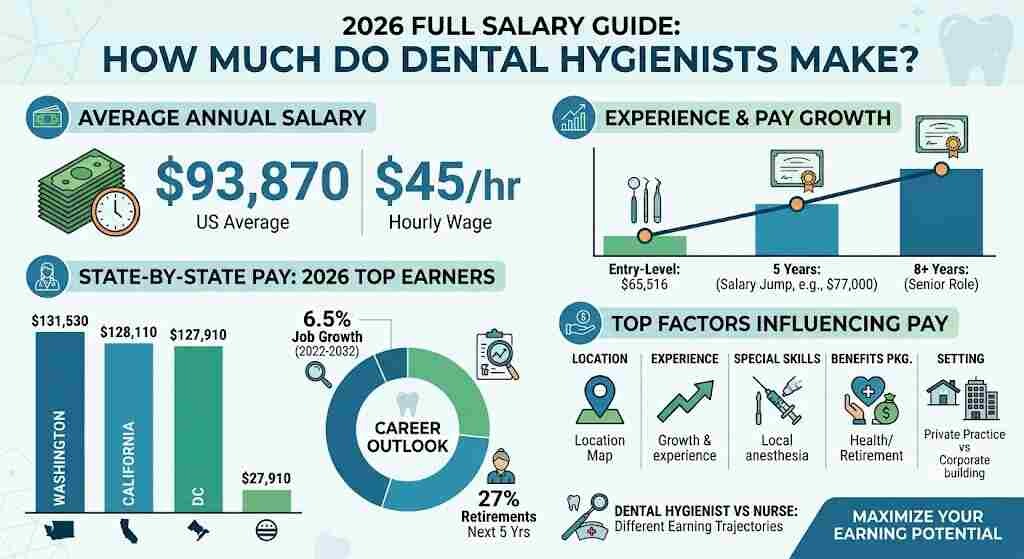
The BLS reports average annual earnings around $93,870, but the real story is in the details . This guide breaks down exactly what you can expect to earn, why rates vary so wildly, and how to secure the top end of the pay scale.
Average Dental Hygienist Salary in 2026
The average annual salary for dental hygienists in the United States is approximately $84,842 as of early 2025, with hourly wages averaging $41 per hour .
However, these figures fluctuate based on the data source and survey year. Broader BLS data places the average closer to $93,870 annually, at roughly $45 per hour . This range creates a benchmark, but individual earnings can deviate significantly.
State-by-State Dental Hygienist Salary Breakdown
Location is the single most powerful factor in determining your paycheck. Wages in top-paying states often exceed the national average by over 40%.
Highest Paying States in 2026
| State | Average Annual Salary |
| Washington | $131,530 |
| California | $128,110 |
| District of Columbia | $127,910 |
| Alaska | $122,560 |
| Oregon | $120,470 |
| Nevada | $114,360 |
| Colorado | $110,030 |
State Salary Rankings Table
| State | Average Annual Salary | Average Hourly Wage |
| Alaska | $115,510 | $55.53 |
| California | $108,200 | $52.02 |
| Washington | $106,200 | $51.06 |
| Oregon | $94,420 | $45.40 |
| Maryland | $89,340 | $42.95 |
| New Jersey | $87,070 | $41.86 |
| Colorado | $86,890 | $41.77 |
| New York | $83,600 | $40.19 |
| Virginia | $83,150 | $39.98 |
| Florida | $73,180 | $35.18 |
Washington and California top the charts with annual salaries surpassing $128,000 . These states combine high demand with a higher cost of living.
Best States for Hygienists Beyond Paycheck Size
A high salary does not always mean a better quality of life. Several states balance competitive pay with lower burnout rates and stronger career longevity. GoTu’s 2026 State of Work Report, which surveyed nearly 4,000 hygienists, highlights the best all-around states to work .
Maryland ranks number one, with nearly 75% of hygienists earning $61 or more per hour and a burnout rate below the national average. New York stands out for career longevity—85% of hygienists there plan to stay in the profession for over a decade . Texas and South Carolina offer strong pay with the potential for significant raises.
How Experience Affects Dental Hygienist Pay
Your earning potential grows substantially with years of practice. Entry-level hygienists typically earn around $65,516 annually . The most significant salary increase happens around the five-year mark when a hygienist transitions into a senior role. Those with eight or more years of experience can expect to make $88,924 on average . The career arc is clear: experience directly translates to income.
Hourly Pay vs. Annual Salary
Most dental hygienists are paid by the hour, which offers flexibility and overtime potential. The average hourly wage currently sits around $36 per hour, but a detailed salary range reveals the full picture :
- Top 10% of earners: $91,677+ annually
- Majority range (25th–75th percentile): $70,432 – $84,126 annually
- Entry-level (10th percentile): $65,516 annually
Why Your Earnings Might Vary
Beyond state lines and experience, several other factors influence how much a dental hygienist makes.
Setting: Private Practice vs. Corporate
Private practice offers autonomy and a personal connection with patients. Corporate offices often provide more structured benefits but may feel less flexible.
Education Level
An associate degree is the standard, but holding a bachelor’s degree can open doors to higher-paying roles in research, education, or public health.
Specialized Skills
Certifications in local anesthesia, radiography, or laser treatments can increase your value to employers and justify higher pay.
Benefits and Bonuses
Pay is not just about the hourly rateMore than 44% of hygienists do not receive benefits from their employers. When comparing job offers, the total compensation package—including health insurance, retirement plans, and paid time off—matters as much as the wage.
Career Outlook and Job Growth
The job outlook for dental hygienists remains exceptionally strong. The industry is projected to see a 6.5% growth in job openings from 2022 to 2032 . With 27% of hygienists planning to retire in the next five years, demand will remain high . This wave of retirements is creating opportunities for hygienists to negotiate better pay and more favorable working conditions.
Dental Hygienist vs. Nurse: Who Earns More?
Comparing dental hygienists and nurses shows different earning trajectories. The median annual wage for registered nurses is generally higher than that of dental hygienists . However, dental hygienists can surpass nurses in the early and mid-career stages. Registered nurses can see salaries rise into six figures, particularly with BSN degrees and specialization, but generally require longer educational commitments.
Dental Hygienist Salary FAQs
What is the starting pay for a new dental hygienist?
New graduates typically earn between $60,000 and $75,000 annually. The exact number depends on location, with metropolitan areas generally offering higher starting salaries.
Do dental hygienists make more in hospitals or private practices?
Hospitals offer structured, stable pay with clear advancement paths. Private practices often have more flexibility in pay but may not offer the same benefits package.
How can I increase my salary as a dental hygienist?
Earning new certifications, gaining experience, and switching employers can all lead to a significant pay bump. The data shows that experienced hygienists earn more than entry-level workers.
What is a good hourly rate for a dental hygienist?
In 2026, a good hourly rate falls between $41 and $60 per hour. Many hygienists in top states report earning in the $51–$70 range.
Which state has the highest demand for dental hygienists?
States with growing populations and older workforces, such as Florida, Texas, and California, consistently show high demand.
Conclusion
If you are wondering how much a dental hygienist makes, the answer depends on your strategy. Washington and California pay over $130,000, while Maryland offers the best balance of high wages and low burnout.
The market is in your favor, with demand rising and a quarter of the workforce nearing retirement. To increase your earnings, gain experience, add certifications, and consider relocating to a higher-paying state. Your next step is simple: research the market in your area and ask for what you are worth.