How to Remove Plaque from Teeth: The Complete Guide to a Healthier Smile
Introduction
That fuzzy feeling on your teeth when you wake up? That is a plaque. This sticky bacterial film coats your teeth constantly, feeding on sugars and releasing acids that attack your enamel. Left alone for 24 hours, plaque hardens into tartar—a cement-like deposit that only a dentist can remove.
The good news is that you already have the power to stop plaque before it becomes a problem. This guide shows you exactly how to remove plaque from teeth using science-backed methods that actually work.
What Is Dental Plaque and Why Does It Matter?
Dental plaque is a biofilm—a living community of bacteria that grows on tooth surfaces, restorations, and even implants. It contains roughly 80% water and 20% solids, including bacteria, salivary proteins, and food particles.
When these bacteria digest sugars and carbohydrates from your food, they produce acids. These acids eat into your tooth enamel, creating cavities. The bacteria also trigger inflammation in your gums, leading to gingivitis—the earliest stage of gum disease.
Understanding what plaque is makes it easier to understand why learning how to remove plaque from teeth properly matters so much for your long-term health.
Plaque vs. Tartar: What Is the Difference?
These two concepts are sometimes confused, but it’s important to understand the difference.
The plaque is soft, sticky, and colorless. You can remove it yourself with proper brushing and flossing.
Tartar (also called calculus) is what plaque becomes when you fail to remove it. Minerals in your saliva harden the plaque, turning it into a rough, yellow or brown deposit that bonds firmly to your teeth.
Once plaque hardens into tartar, you cannot remove it at home. Brushing and flossing become less effective, and tartar creates a rough surface where even more plaque can accumulate. Only a dental professional can remove tartar through scaling.
This is why knowing how to remove plaque from teeth before it hardens is your best defense.
How Plaque Forms on Your Teeth
Plaque begins forming on teeth within 4 to 12 hours after brushing. The process works like this:
- Bacteria in your mouth combine with food particles and saliva
- The bacteria feed on sugars and starches from your diet
- They produce acid as a byproduct
- The acid attacks your tooth enamel
- The sticky film traps more bacteria, creating a growing colony
Every time you eat or drink something sugary, you feed the plaque bacteria. Frequent snacking and sipping sugary drinks give plaque a constant food supply, accelerating its growth.
How to Remove Plaque from Teeth at Home
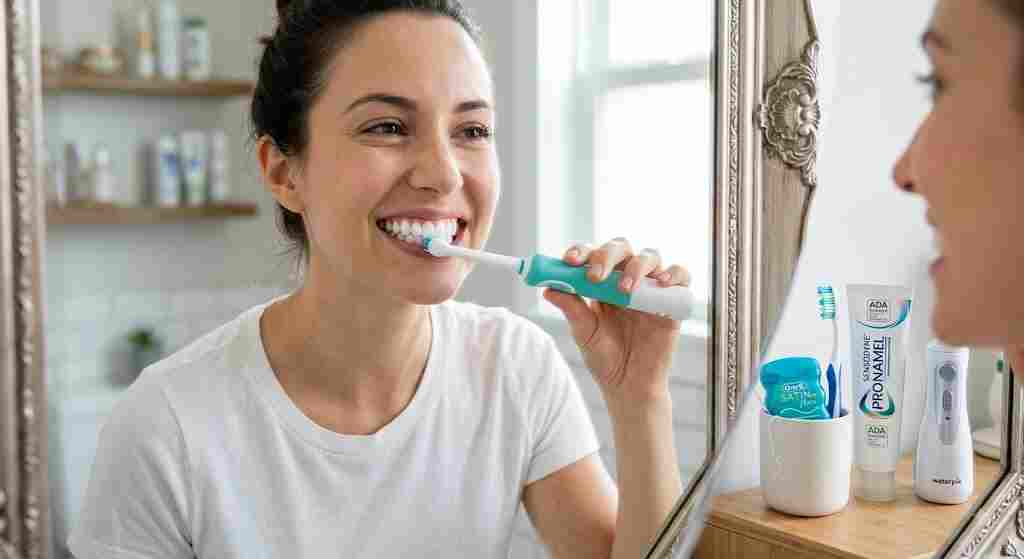
The cornerstone of plaque control is your daily oral hygiene routine. Here is how to remove plaque from teeth effectively using methods dentists trust.
Master the Proper Brushing Technique
Brushing twice daily is non-negotiable, but how you brush matters just as much as how often.
The ADA-Recommended Method:
- Place your toothbrush against your gumline at a 45-degree angle
- Use short, gentle back-and-forth strokes
- Clean all surfaces: outer, inner, and chewing
- Brush for a full two minutes each time
The Bass Technique (dentist-preferred):
- Position bristles at a 45-degree angle toward your gums
- Apply gentle pressure—bristles should sit half on enamel and half on gum
- Use short, vibrating strokes without moving the brush head
- Make vertical strokes from gums toward the chewing surface
This technique achieves approximately 80% plaque removal on accessible tooth surfaces. Standard brushing alone, however, only removes plaque from about 50–60% of tooth surfaces, leaving the areas between teeth untouched.
Choose the Right Toothbrush
Use a soft or extra-soft toothbrush. Hard or medium bristles wear away enamel and damage your gumline.
Electric toothbrushes offer significant advantages. They perform the circular motion for you and often include timers to ensure you brush long enough. Oscillating-rotating electric brushes remove approximately 10–15% more plaque than manual brushes. They are especially helpful for people with arthritis, limited dexterity, or braces.
Replace your toothbrush every three to four months, or sooner if the bristles look frayed.
Floss Daily—Correctly
Flossing removes plaque from the 40% of tooth surfaces that your toothbrush cannot reach. The American Dental Association confirms that interdental cleaning is essential for removing plaque between teeth.
Proper flossing technique:
- Break off about 18 inches of floss
- The majority should be wound around one middle finger, and the remainder around the other.
- Hold 1–2 inches taut between your hands
- Guide the floss gently between teeth using a sawing motion
- Curve the floss into a C-shape around each tooth
- Rub up and down against the tooth surface—this friction removes plaque
- Move the floss below the gumline gently
Water flossers can help remove food particles and plaque, but they should supplement—not replace—string floss. String floss gets under the gumline and hugs each tooth to rub plaque away.
Use Fluoride Toothpaste
Fluoride toothpaste does more than just clean. It enhances fluoride concentration in biofilm fluid and saliva, helping to remineralize enamel and reduce cavity risk. Look for the ADA Seal of Acceptance on your toothpaste—this confirms the product has scientific evidence supporting its safety and effectiveness.
Add a Mouth Rinse
Antimicrobial mouth rinses containing ingredients like cetylpyridinium chloride (CPC) provide extra protection against plaque buildup. Rinsing daily helps reduce bacteria that brushing and flossing might miss.
| Time | Action | Why It Matters |
| Morning | Brush for 2 minutes with fluoride toothpaste | Removes overnight plaque buildup |
| After meals | Rinse with water or chew sugar-free gum | Washes away food particles and stimulates saliva |
| Evening | Floss first, then brush for 2 minutes | Flossing loosens debris; brushing removes it |
| Before bed | Use antimicrobial mouth rinse | Reduces bacteria while you sleep |
| Every 3–4 months | Replace your toothbrush | Worn bristles clean less effectively |
| Every 6 months | Visit your dentist for professional cleaning | Removes tartar you cannot remove at home |
A Daily Routine for Plaque Prevention Flossing before brushing is the preferred order. Flossing dislodges plaque and food from between teeth, then brushing sweeps it all away.
Professional Plaque Removal: What to Expect at the Dentist
Even with perfect home care, some plaque will inevitably harden into tartar. It can only be eliminated with professional dental cleanings.
Scaling and Root Planing
Plaque and tartar are removed from tooth surfaces and below the gum line by a professional process called scaling. Dentists use:
- Ultrasonic scalers—devices that vibrate and flush away deposits with water
- Hand instruments—curettes, sickles, and scalers for precise manual removal
Root planing smooths the root surfaces, removing bacterial products and discouraging further tartar buildup. This procedure may be done with instruments, lasers, or ultrasonic devices.
Professional cleanings typically happen every six months, though your dentist may recommend more frequent visits if you are prone to tartar buildup.
Dietary Habits That Reduce Plaque Formation
The amount of plaque that accumulates on your teeth is directly influenced by what you eat.
Foods That Fight Plaque
- Crunchy fruits and vegetables (apples, carrots, celery)—their fibrous texture scrubs tooth surfaces and stimulates saliva production
- Dairy products—calcium and phosphates help strengthen enamel
- Sugar-free gum with xylitol—stimulates saliva, neutralizes acids, and washes away food particles
- Water—rinses your mouth and keeps saliva flowing
Foods That Feed Plaque
- Sugary snacks and sodas
- Starchy foods (bread, crackers, chips)
- Sticky sweets that cling to teeth
Bacteria thrive on sugar and carbohydrates. Reducing your intake of these foods, especially between meals, starves the plaque bacteria and gives your teeth a fighting chance.
Natural and Herbal Approaches to Plaque Control
Several natural products show promise as adjuncts to regular brushing and flossing.
Oil pulling with sesame or coconut oil has demonstrated moderate plaque reduction in clinical studies. One randomized controlled trial found sesame oil pulling reduced plaque by nearly 19% over eight weeks.
Herbal products including neem, tulsi, triphala, liquorice, and aloe vera have shown antimicrobial and anti-inflammatory properties. Clinical trials demonstrate plaque and gingival index reductions comparable to chlorhexidine mouthwash, with fewer side effects like tooth staining.
Green tea, clove, and turmeric also exhibit antimicrobial properties effective against plaque bacteria.
Important: Natural remedies should supplement—not replace—brushing, flossing, and professional dental care. They are adjuncts, not alternatives.
Common Plaque Removal Mistakes to Avoid
- Brushing too hard—this damages enamel and gums. Gentle pressure is more effective.
- Skipping flossing—your toothbrush cannot reach between teeth.
- Brushing too quickly—two minutes is the minimum for significant plaque removal.
- Using a hard-bristled brush—soft bristles are gentler and just as effective.
- Brushing immediately after acidic meals—wait an hour to avoid scrubbing away softened enamel.
- Rinsing with water after brushing—this washes away fluoride. Spit, don’t rinse.
- Sharing your toothbrush—this exchanges bacteria and microorganisms.
When to See a Dentist
Schedule a dental visit if you notice:
- Bleeding gums when brushing or flossing
- Persistent bad breath
- Red, swollen, or tender gums
- Loose teeth
- Receding gums
- Pain when chewing
These signs could point to more serious gum disease or gingivitis. Prompt treatment can reverse early-stage gum disease and prevent tooth loss.
Frequently Asked Questions
How frequently should I brush in order to successfully eliminate plaque?
Use fluoride toothpaste and brush twice a day for two minutes each time. Brushing after every meal is even better. About 80% of plaque is removed from exposed areas after two minutes of brushing. Can I remove hardened tartar at home?
No. Plaque cannot be removed by brushing or flossing until it has solidified into tartar (calculus). Tartar requires expert scaling by a dentist or hygienist because it adheres tightly to teeth. Is an electric toothbrush better for plaque removal?
Indeed. Compared to manual brushes, electric toothbrushes with oscillating-rotating technology remove 10–15% more plaque. They are especially beneficial for people with limited dexterity, arthritis, or orthodontic appliances.
How does flossing help remove plaque?
Plaque is removed by flossing from the small spaces between teeth that are inaccessible to toothbrush bristles. About 80% of interproximal plaque can be removed with proper C-shaped flossing. Without flossing, you leave roughly 40% of your tooth surfaces uncleaned.
What happens if I don’t remove plaque from my teeth?
Plaque acids erode tooth enamel, causing cavities. Plaque also inflames gum tissue, leading to gingivitis. Plaque can develop into periodontitis, a dangerous gum condition that affects bone and can result in tooth loss, if it hardens into tartar, which makes the surface harsh for additional plaque to build up. How soon should I brush my teeth after eating? Wait at least 30–60 minutes after eating acidic foods or drinks before brushing. Acid softens your enamel, and brushing too soon can scrub away this weakened layer. Rinse with water immediately after meals and brush after the waiting period.
Conclusion
Learning how to remove plaque from teeth is one of the most valuable health skills you can develop. The formula is simple: brush twice daily for two minutes with fluoride toothpaste, floss once daily using proper C-shaped technique, eat a plaque-fighting diet, and visit your dentist every six months for professional cleanings.
These habits cost you just a few minutes each day but protect your smile for a lifetime.Your mouth is the entry point to your general well-being. Take control of plaque today—your teeth and gums will thank you. Schedule your next dental cleaning now and commit to daily habits that keep plaque away for good.