How to Remove Age Spots Naturally: 10 Home Remedies That Work
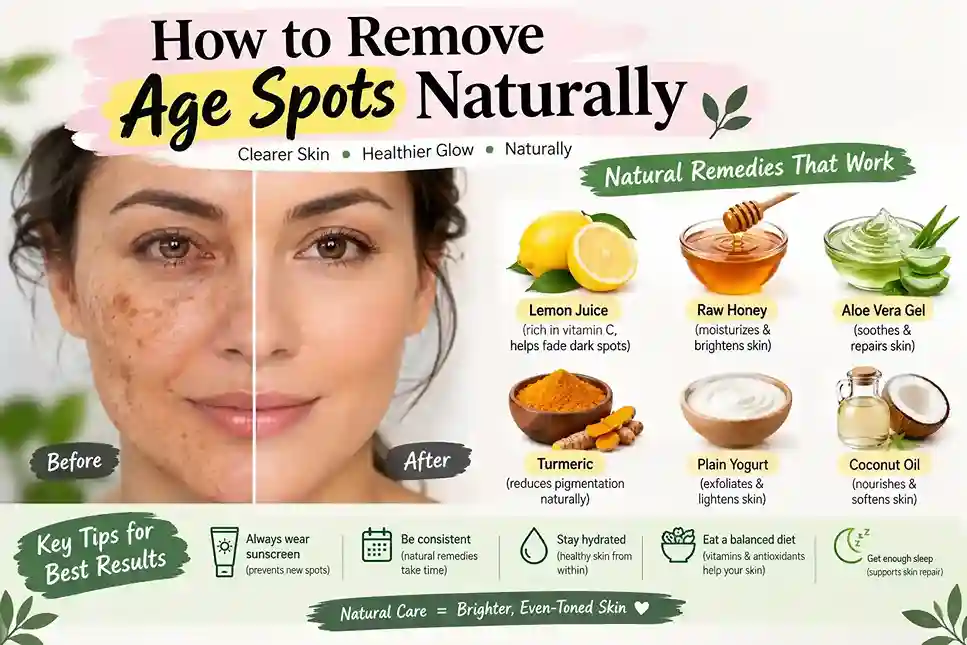
Quick Answer
Age spots fade gradually with consistent use of natural brighteners such as vitamin C, licorice extract, and aloe vera, paired with daily sunscreen. Most people notice visible change in 6 to 12 weeks, and clearer results by month four to six. Nothing erases an age spot overnight, but the right routine, done daily, works.
Article Map: What This Guide Covers
Brown patches on your cheeks, hands, or shoulders keep showing up no matter how much concealer you apply. Left alone, sun-triggered pigment only deepens with each summer, and many bleaching creams irritate skin without ever fixing the root cause. This guide shows you exactly how to remove age spots naturally, using ingredients backed by dermatology research and a routine you can actually stick to.
What Are Age Spots, Exactly?
Age spots — also called liver spots, sun spots, or solar lentigines — are flat, brown or tan patches that form on skin exposed to years of sunlight. They typically show up on the hands, face, shoulders, and forearms.
Despite the old nickname, they have nothing to do with your liver. The color comes from clusters of melanin, the pigment your skin produces for protection, that has built up unevenly in one spot. This is a benign, cosmetic condition, and most dermatologists agree age spots require no treatment unless you want one for appearance reasons.
Understanding this helps set expectations. When you learn how to remove age spots naturally, you’re not treating a disease — you’re gently encouraging your skin to turn over and even out its tone.
What Causes Age Spots to Form?
Sun exposure is the single biggest driver. Ultraviolet light activates pigment-producing cells called melanocytes, and over decades this creates the patchy, concentrated spots we associate with aging skin.
Common contributing factors include:
- Cumulative UV exposure — years of sun, even without sunburn, add up
- Fair or light skin tone — burns more easily and shows pigment changes faster
- Age over 40 — skin regenerates more slowly, so pigment lingers
- Tanning bed use — delivers concentrated UV exposure similar to strong sunlight
- Genetics — a family history of pigmentation issues raises your risk
- Hormonal shifts — pregnancy and certain medications can worsen pigmentation
Knowing the cause matters because no cream works well if new sun exposure keeps adding fresh pigment on top of the old.
Age Spots vs. Freckles vs. Melasma vs. Skin Cancer: Key Differences
Age spots often get confused with other skin marks. Here’s how to tell them apart before you start any home treatment.
| Feature | Age Spots | Freckles | Melasma | Possible Skin Cancer |
| Typical age | 40+ | Childhood onward | Adulthood, often pregnancy-linked | Any age |
| Shape | Round or oval, flat | Small, scattered | Larger, symmetrical patches | Irregular, asymmetric |
| Color | Tan to dark brown | Light brown | Brown to gray-brown | Varies; may be uneven |
| Fades with less sun? | Rarely | Yes, often | Sometimes | No |
| Location | Hands, face, shoulders | Face, arms | Cheeks, forehead, upper lip | Anywhere on the body |
| Action needed | Optional cosmetic care | None | Dermatologist guidance | See a doctor promptly |
If a spot changes shape, bleeds, itches, or has an irregular border, stop trying home remedies and book a dermatology visit instead.
How to Remove Age Spots Naturally at Home: 10 Proven Methods
These remedies use plant compounds and gentle acids that slow melanin production or speed up skin cell turnover. Patch-test any new ingredient on your inner arm for 24 hours first, since natural doesn’t always mean risk-free for sensitive skin.
1. Vitamin C Serum
Vitamin C blocks the enzyme that triggers excess melanin and brightens skin over time. Apply a few drops to clean skin each morning before sunscreen. Look for a stable formula with 10-20% concentration for the best results.
2. Aloe Vera Gel
Fresh aloe vera contains aloin, a compound studied for its skin-lightening effect. Rub the gel directly from the leaf onto spots nightly and leave it on while you sleep. It also calms any irritation from other treatments in your routine.
3. Licorice Root Extract
Licorice contains glabridin, an ingredient clinical trials have linked to reduced pigmentation. Choose a serum or cream listing licorice root extract high on the ingredient list and apply it twice daily.
4. Apple Cider Vinegar
The mild acetic acid in apple cider vinegar helps exfoliate the top skin layer. Dilute it with equal parts water, dab it on spots with a cotton ball, rinse after ten minutes, and always follow with moisturizer.
5. Buttermilk or Plain Yogurt
Both contain lactic acid, a gentle alpha hydroxy acid that lifts dead, pigmented skin cells. Apply a thin layer, leave it for 15 minutes, then rinse with lukewarm water three to four times a week.
6. Green Tea Extract
Green tea is rich in antioxidants that protect skin from further UV damage while calming existing pigmentation. Cooled, steeped green tea bags pressed onto spots for ten minutes make a simple weekly treatment.
7. Red Onion Extract
Onion extract is a common ingredient in over-the-counter scar and spot creams because of its ability to interrupt pigment buildup. Look for it combined with allantoin in gentle gel formulas.
8. Sandalwood Paste
Mixed with rosewater into a paste, sandalwood has traditionally been used to even out skin tone and soothe sun-damaged patches. Apply, let it dry for 20 minutes, then rinse gently.
9. Castor Oil
Rich in fatty acids, castor oil is often massaged into spots nightly to soften the surrounding skin and support gradual fading with consistent use.
10. Raw Honey Masks
Honey has natural humectant and mild antibacterial properties that support smoother, more even-toned skin when used as a weekly mask, left on for 20 minutes before rinsing.
Do Natural Remedies for Age Spots Actually Work? What Research Shows
Not every home remedy has strong clinical backing, and it’s worth knowing which ones do. A systematic review in the Journal of Clinical and Aesthetic Dermatology examined controlled studies on natural depigmenting ingredients and found real, measurable effects for several of them.
| Ingredient | Active Compound | Evidence Level | What Studies Found |
| Licorice extract | Glabridin, liquiritin | Strong (multiple trials) | Comparable results to prescription lightening agents in split-face trials |
| Niacinamide | Vitamin B3 | Strong (randomized trials) | Reduced visible pigmentation more than sunscreen alone after 4-10 weeks |
| Vitamin C | Ascorbic acid | Moderate | Improved pigmentation in combination peel studies |
| Mulberry extract | Tyrosinase inhibitors | Moderate | Significant improvement over placebo in randomized trials |
| Aloe vera | Aloin | Early-stage | Supported mainly by lab and small clinical studies |
| Apple cider vinegar | Acetic acid | Limited | Mostly anecdotal; works as a mild exfoliant, not a proven lightener |
The takeaway: ingredients like licorice extract and niacinamide have the strongest research behind them, while others work more as gentle support in a broader routine.
Daily Habits That Prevent New Age Spots From Forming
Removing existing spots means little if new ones keep appearing. Build these habits into your day:
- Apply broad-spectrum SPF 30+ every morning, rain or shine, even indoors near windows
- Reapply sunscreen every two hours when you’re outside for extended periods
- Avoid peak sun hours, generally 10 a.m. to 2 p.m.
- Wear a wide-brimmed hat and UPF clothing on high-exposure days
- Check medication labels for photosensitivity warnings, since some prescriptions increase sun sensitivity
- Skip tanning beds entirely — they deliver concentrated UV damage
This single habit, daily sunscreen, does more to prevent new spots than any serum you can buy.
How Long Does It Take to See Results Naturally?
Patience matters here. Natural ingredients work gradually because they support your skin’s own renewal cycle rather than stripping pigment away by force.
| Timeframe | What to Expect |
| Week 1-2 | Skin texture may feel smoother; no visible fading yet |
| Week 3-6 | Slight lightening around the edges of spots begins |
| Month 2-3 | Noticeable fading with consistent daily use |
| Month 4-6 | Most visible improvement; spots appear smaller and lighter |
| Month 6+ | Maintenance phase; continued sun protection prevents relapse |
If you see zero change after three full months of daily use, that’s a reasonable point to consult a dermatologist about in-office options.
Diet and Lifestyle Tips That Support Clearer, Even-Toned Skin
What you eat and how you live affects how your skin repairs itself:
- Eat vitamin C-rich foods like citrus, bell peppers, and strawberries to support collagen and pigment regulation
- Add antioxidant-rich foods such as berries, leafy greens, and green tea to fight UV-related skin damage
- Stay hydrated — well-hydrated skin heals and turns over more efficiently
- Prioritize sleep since skin repair happens most actively overnight
- Limit sugar and highly processed foods, which some research links to faster skin aging
None of these replace topical treatment, but they create the conditions your skin needs to respond well to it.
Common Mistakes That Slow Down Age Spot Fading
Even good remedies fail when the routine around them goes wrong.
- Skipping sunscreen while using brightening ingredients, which cancels out progress
- Over-exfoliating with acids every day instead of a few times a week, causing irritation instead of fading
- Switching products every few weeks instead of giving one routine 8-12 weeks to work
- Expecting overnight results and quitting a remedy too early
- Using undiluted lemon juice or vinegar daily, which can burn or irritate skin over time
Natural Remedies vs. Clinical Treatments: Which Should You Choose?
| Factor | Natural Remedies | Clinical Treatments (Laser, Peels, Cryotherapy) |
| Cost | Low, often items already at home | Higher, per-session pricing |
| Downtime | None | Some redness or peeling for days |
| Speed of results | Gradual, weeks to months | Often visible within one to two sessions |
| Risk of side effects | Low with patch testing | Low but requires a trained provider |
| Best for | Mild spots, prevention, maintenance | Stubborn, longstanding, or deep pigmentation |
| Requires consistency | Yes, daily use | Fewer sessions, less daily effort |
Many people get the best results by combining both: natural daily care for maintenance, with an occasional in-office treatment for spots that won’t budge.
When to See a Dermatologist About Age Spots
Most age spots are harmless, but skin changes deserve a second look when they show these signs:
- The spot changes shape, size, or color quickly
- Borders look uneven or blurred rather than smooth
- The spot bleeds, itches, or feels tender
- It looks noticeably different from your other spots
- You’re simply unsure and want peace of mind
A quick dermatologist visit can rule out anything more serious and confirm you’re dealing with ordinary sun-related pigmentation.
Frequently Asked Questions
Can age spots be removed permanently with natural remedies?
Natural remedies can fade age spots significantly, but results depend on continued sun protection. Without daily SPF, faded spots can gradually return or new ones can form nearby.
How long does it realistically take to fade an age spot naturally?
Most people see visible lightening between six and twelve weeks of consistent daily use, with fuller results by month four to six.
Is apple cider vinegar actually effective for age spots?
Apple cider vinegar works mainly as a mild exfoliant rather than a proven pigment reducer. It can support your routine but works best paired with stronger evidence-backed ingredients like vitamin C or licorice extract.
Are age spots a sign of a health problem?
No. Age spots are a cosmetic result of sun exposure and aging skin, not a marker of internal illness. They’re unrelated to liver function despite the older nickname.
Can diet alone get rid of age spots?
Diet supports skin repair and adds antioxidant protection, but it won’t fade existing spots on its own. Pair a skin-supportive diet with topical care and daily sunscreen for real results.
What’s the fastest natural way to reduce the look of age spots?
Combining a vitamin C serum in the morning with a licorice extract or niacinamide product at night, alongside daily SPF, tends to show the fastest visible change among natural options.
Start Today, See the Difference in Weeks
Clear, even-toned skin isn’t about one miracle ingredient — it’s about showing up for your skin daily with the right combination of natural brighteners and sun protection. Pick two or three remedies from this guide, apply them consistently for the next eight weeks, and protect your progress with sunscreen every single day. Your skin has already shown it can regenerate; now give it what it needs to do exactly that.