Why Are Green Eyes So Rare? The Genetics and Science Explained
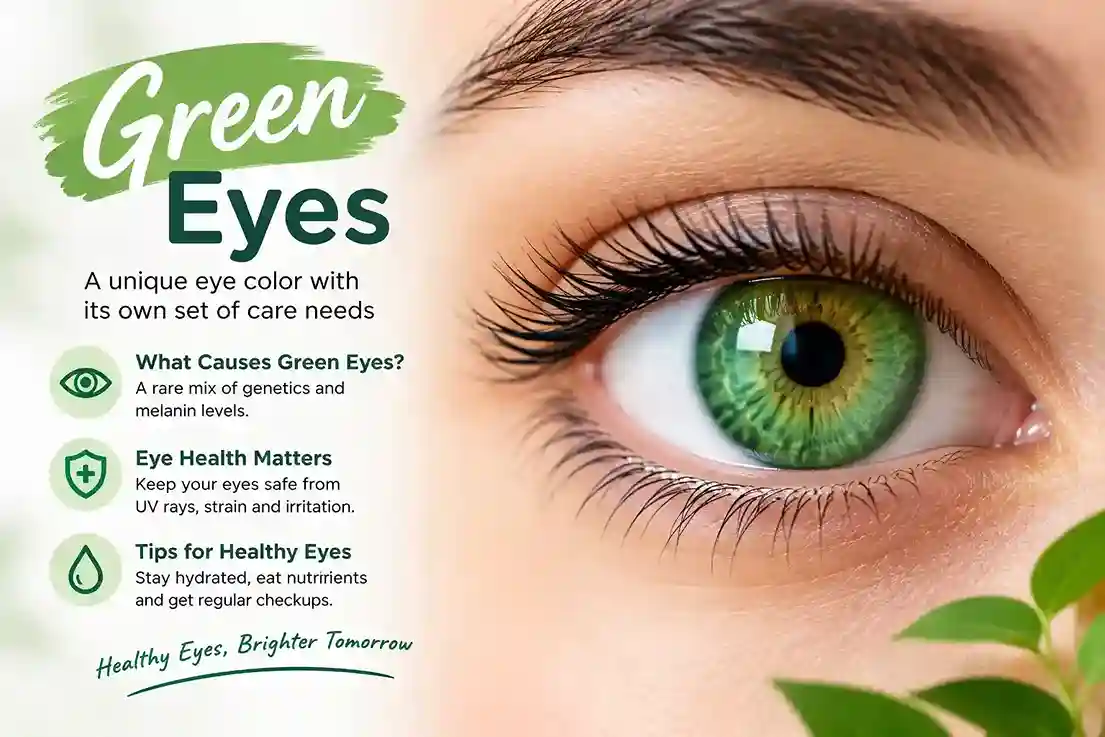
Green eyes catch attention everywhere they appear, yet almost no one can explain why they exist. Most people assume eye color comes from a single “green pigment,” which is wrong, and that confusion leads to bad advice and myths passed down for generations. This guide breaks down the real genetics, causes, and science behind the trait, backed by medical and research sources.
Quick Answer: What Makes Eyes Appear Green?
This rare iris color forms when the eye holds a small amount of melanin combined with a yellowish pigment called lipochrome, and light scatters off the iris in a way that reflects a green hue back to the viewer. No eye actually contains green pigment. The color is an optical effect, not a dye in the iris.
What Is This Rare Eye Color, Exactly?
This trait describes an iris that reflects light in the green spectrum due to a specific balance of melanin and lipochrome pigment. The iris itself holds very little pigment compared to brown eyes. Light passes through this thin pigment layer, scatters, and bounces back as green rather than being absorbed.
This process is similar to how the sky appears blue even though air has no blue pigment. The color you see is the result of physics, not paint. That single fact explains why the shade looks different depending on lighting, clothing, and even mood.
How Rare Are Green Eyes? The Real Statistics
Green eyes are the rarest naturally occurring eye color among the major categories. According to a national survey conducted by the American Academy of Ophthalmology, this eye color appears in roughly 9% of the U.S. population, while global estimates put the figure closer to 2%.
That gap exists because the trait clusters heavily in specific regions and ancestries, which pulls the country-level number up while the worldwide average stays low.
| Eye Color | Global Percentage | U.S. Percentage |
| Brown | 70-79% | 45% |
| Blue | 8-10% | 27% |
| Hazel | 5% | 18% |
| Green | 2% | 9% |
| Gray/Other | Under 1% | 1% |
Source: American Academy of Ophthalmology national survey data.
What Causes This Color? The Science Behind It
Three factors combine to produce it: low melanin concentration, the presence of lipochrome (a yellow-brown pigment), and light scattering within the stroma of the iris. Researchers at the National Library of Medicine confirm that eye color results from how much melanin sits in the front layer of the iris, not from a distinct green pigment.
Here is the simplified breakdown:
- Low melanin lets more light pass through and scatter, similar to blue eyes.
- Lipochrome pigment adds a yellow tone to that scattered blue light.
- The combination of scattered blue light and yellow lipochrome produces the final appearance.
Remove the lipochrome and you get blue eyes. Add more melanin and you shift toward hazel or brown. This shade sits in a narrow genetic window between those two outcomes, which is exactly why it stays so rare.
The Genetics of Green Eyes: OCA2 and HERC2 Explained
Eye color was once taught as a simple dominant-recessive trait, but that model is outdated. Genetic researchers have identified that eye color is polygenic, meaning multiple genes contribute to the final result.
Two genes do most of the work:
- OCA2 controls how much melanin the iris produces.
- HERC2 sits next to OCA2 on chromosome 15 and regulates whether OCA2 turns on or off.
A specific region inside HERC2, known as intron 86, acts like a switch. When that switch reduces OCA2 activity, melanin production drops, and lighter colors become possible. This particular shade depends on the switch landing in a very specific middle setting, not fully on and not fully off.
Beyond these two genes, researchers have linked additional genes, including TYR, SLC24A4, and IRF4, to smaller shifts in color intensity. That is why no two people with the trait show the exact same hue.
Can Two Brown-Eyed Parents Have a Green-Eyed Child?
Yes, two brown-eyed parents can have a child with this eye color. Because the outcome depends on multiple genes rather than one, each parent can carry hidden recessive variants that combine unexpectedly in their child.
Old-school eye color charts that promise exact predictions based only on parent eye color are inaccurate. Genetic counselors and researchers now treat those charts as rough estimates at best.
A few realistic scenarios:
- Both parents carry a hidden recessive variant passed from a grandparent.
- A rare mutation shifts pigment production during early development.
- Multiple minor genes stack together in a combination neither parent displays.
Shades and Types of Green Eyes
This color is rarely a flat, uniform shade. Lighting, pupil size, and surrounding pigment create visible variation even within one iris.
| Shade | Description |
| Emerald Green | Deep, saturated green with minimal gray undertone |
| Sage Green | Soft, muted green with gray-brown mixing |
| Olive Green | Green blended heavily with brown near the pupil |
| Blue-Green | Green edges with a blue base, common in cooler lighting |
| Amber-Green | Green mixed with gold or amber rings near the pupil |
Many people with this trait also show central heterochromia, where a ring of gold or amber surrounds the pupil while the outer iris stays green. This pattern adds to why the color photographs so differently from one picture to the next.
Where Is This Eye Color Most Common?
Green eyes concentrate most heavily in Northern and Central Europe, particularly in populations with Celtic and Germanic ancestry. Ireland, Scotland, and parts of Scandinavia report some of the highest regional rates in the world.
Outside Europe, pockets of elevated frequency also appear in parts of the Middle East, Central Asia, and among populations with mixed European ancestry in North and South America. Migration, intermarriage, and genetic drift over centuries all shaped these patterns.
Does This Color Change Over Time?
This shade can appear to shift, but the underlying genetics stay fixed after early childhood. Most babies are born with grayish or bluish eyes because melanin production is still ramping up in the first year of life.
By around age one to three, melanin levels stabilize and the true color becomes permanent. After that point, apparent “changes” usually come from:
- Lighting conditions and background colors
- Pupil dilation, which stretches or compresses visible pigment
- Clothing reflecting color onto the iris
- Minor pigment shifts linked to aging, which are subtle and rare
Green vs. Hazel vs. Blue Eyes: What’s the Real Difference?
People frequently confuse these three categories because they overlap visually. The core difference comes down to melanin amount and lipochrome presence.
| Trait | Blue Eyes | Green Eyes | Hazel Eyes |
| Melanin Level | Very low | Low to moderate | Moderate |
| Lipochrome Present | No | Yes | Yes, variable |
| Color Pattern | Uniform | Mostly uniform | Multi-toned, shifts with lighting |
| Global Rarity | 8-10% | 2% | 5% |
Hazel eyes typically mix brown and green in visible rings or patches, while this shade stays closer to one dominant tone throughout the iris.
Health Facts Tied to This Eye Color
Lower melanin levels mean less natural protection against ultraviolet light compared to brown eyes. This does not cause disease on its own, but it does affect comfort and long-term sun exposure management.
Practical takeaways for people with lighter irises:
- Expect greater light sensitivity in bright sunlight or glare.
- Wear UV-blocking sunglasses outdoors as a routine habit, not an occasional one.
- Schedule regular eye exams, since lighter irises are studied for a modestly higher association with certain UV-linked eye conditions.
- Use polarized lenses for driving or water activities to reduce glare discomfort.
Common Myths About Green Eyes
This trait attracts more folklore than almost any other physical feature. Separating fact from fiction matters, especially when myths shape real decisions like family planning expectations.
- Myth: A single gene causes it. Reality: at least eight genes contribute to eye color variation.
- Myth: People with this trait share specific personality traits. Reality: no peer-reviewed study links eye color to personality.
- Myth: The shade always fades or darkens with age. Reality: adult eye color stays largely stable after early childhood.
- Myth: It only signals rare ancestry. Reality: the trait appears across many populations worldwide, just at different rates.
Conclusion: The Science Makes Green Eyes Even More Remarkable
This color is not magic, and it is not random. It is the visible result of a precise genetic balance between melanin, lipochrome, and light scattering, which is exactly why only about 2% of people worldwide carry the trait. Understanding that science does not make it any less striking; it makes it more impressive.
If you have green eyes, you are carrying a genetic combination most of the world does not share. Share this guide with someone who has the same trait, or save it for the next conversation about eye color myths. Either way, you now have the facts to back it up.