The Complete Guide to Wisdom Teeth Removal
Introduction
Wisdom teeth—those final molars that arrive between ages 17 and 25—often bring more trouble than wisdom.Many people simply don’t have enough space for these third molars to erupt properly, which can cause impaction, pain, infection, and harm to neighboring teeth.
Comprehending wisdom teeth removal helps you make informed decisions about your oral health. Everything you need to know before, during, and after the procedure is included in this handbook.
1. Why Do We Have Wisdom Teeth? What Are They?
The final set of permanent teeth to erupt are wisdom teeth, sometimes known as third molars. Anthropologists believe these teeth helped our ancestors grind down tough plant material. Today, with smaller jaws and modern diets, these extra molars often create problems rather than solve them.
Many people have impacted wisdom teeth—teeth that remain trapped beneath the gums because there isn’t enough space. According to the American Association of Oral and Maxillofacial Surgeons (AAOMS), roughly 90 percent of the teen and adult population has at least one impacted tooth. This high rate explains why wisdom teeth removal ranks as one of the most common oral surgeries performed today.
2. When Is Wisdom Teeth Removal Necessary?
Not everyone needs wisdom teeth removal. According to the Mayo Clinic, wisdom teeth may stay put if they are healthy, fully grown in, positioned correctly, and cleanable. However, several situations make extraction the right choice.
The American Association of Oral and Maxillofacial Surgeons recommends removal when wisdom teeth cause documented pathology or functional problems. Specific indications include:
- Inflammation and infection of the tissue surrounding a partially erupted tooth is known as pericoronitis. Tooth decay that cannot be restored with fillings
- Damage to nearby teeth from crowding or pressure
- Cysts or tumors forming around the impacted tooth
- Gum disease affecting the area around wisdom teeth
- Recurrent infections that compromise oral health
Dentists may also recommend preventive wisdom teeth removal for young adults between 15 and 22 years old. At this age, the roots aren’t fully formed, jawbone is less dense, and recovery happens faster.
3. Indications That Your Wisdom Teeth May Need to Be Extracted?
Your body often signals when wisdom teeth removal becomes necessary. Watch for these warning signs:
- Persistent pain in the back of your jaw
- Swollen or tender gums around the wisdom tooth area
- Difficulty opening your mouth fully
- Bad breath or an unpleasant taste that won’t go away
- Visible decay on a partially erupted wisdom tooth
- Headaches originating from jaw tension
- Crowding of other teeth, especially after orthodontic work
The American Dental Association notes that pain near wisdom teeth, repeated infections, cysts, and damage to nearby teeth all indicate potential extraction needs.Make an appointment for an examination with your dentist or oral surgeon if you encounter any of these symptoms.
4. The Wisdom Teeth Removal Procedure Explained
Knowing how wisdom teeth are extracted helps you get ready and lessens fear. The surgery typically follows these steps:
Before Surgery
Your oral surgeon reviews your medical history and takes X-rays to assess tooth position, root development, and proximity to nerves. This imaging helps plan the safest approach.
During Surgery
The procedure begins with anesthesia administration. For impacted teeth, the surgeon makes an incision in the gum tissue to expose the tooth and underlying bone. If bone blocks access, the surgeon removes enough bone to reach the tooth root. In complex cases, the tooth may be divided into sections for easier removal.
After Surgery
The surgeon cleans the extraction site and closes the wound with stitches. Most patients go home the same day. The entire wisdom teeth removal procedure typically takes 30 to 60 minutes, depending on the number of teeth and complexity.
5. Types of Anesthesia Used During Surgery
Your wisdom teeth removal experience depends partly on the anesthesia type. Options include:
| Anesthesia Type | What It Does | Best For |
| Local Anesthesia | Numbs only the surgical area; you remain awake | Simple extractions, single tooth removal |
| Sedation Anesthesia | Reduces awareness while you stay responsive | Multiple extractions, anxious patients |
| General Anesthesia | Puts you completely to sleep | Complex impactions, all four teeth removed |
Your oral surgeon recommends the best option based on procedure complexity, your medical history, and comfort level.
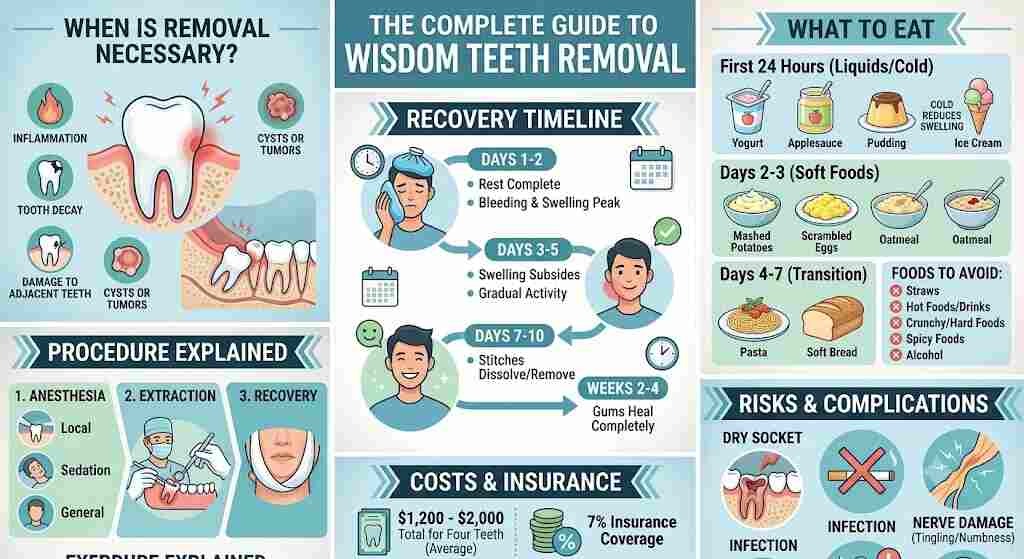
6. Wisdom Teeth Removal Recovery Timeline
There is a regular pattern to recovery from wisdom tooth extraction. Here’s what to expect day by day:
Days 1-2: The Critical Period
- For the first 24 hours following surgery, there may be considerable
- bleeding and seeping. Swelling peaks between 48 and 72 hours later.
- Put cold packs on your cheeks every 20 minutes.
- Rest completely—no work, school, or physical activity
Days 3-5: Turning the Corner
- Swelling begins to subside
- Discomfort decreases significantly
- You can gradually return to light activities
- Most patients feel fairly normal by day three
Days 7-10: Significant Improvement
- Stitches dissolve or get removed
- Most swelling and bruising resolve
- You can resume most normal activities
- Risk of dry socket decreases substantially
Weeks 2-4: Full Healing
- Gums heal completely
- You return to a normal diet
- Bone continues healing beneath the surface (takes several months)
In order to recover from wisdom teeth extractions, most people require three to four days off from work or school. Those with physically demanding jobs may need additional time.
7. What to Eat After Wisdom Teeth Removal
Proper nutrition supports healing after wisdom teeth removal. Follow this food guide for a smooth recovery:
First 24 Hours (Liquids Only)
- Broth (lukewarm, not hot)
- Applesauce
- Yogurt
- Pudding
- Ice cream or sorbet (cold helps reduce swelling)
Days 2-3 (Soft Foods)
- Mashed potatoes
- Scrambled eggs
- Oatmeal
- Smoothies (without seeds or chunks)
- Cottage cheese
Days 4-7 (Transition Foods)
- Pasta
- Cooked vegetables
- Soft bread
- Fish
- Canned fruit
Foods to Avoid
- Straws—suction can dislodge the protective blood clot and cause dry socket
- Hot foods and drinks—heat increases swelling
- Crunchy or hard foods—chips, nuts, popcorn
- Spicy foods—may irritate the surgical site
- Alcohol—interferes with healing and medications
The Mayo Clinic recommends soft foods like applesauce and yogurt for the first 24 hours. Stay hydrated with water, but skip straws for at least a week.
8. Wisdom Teeth Removal Costs and Insurance
The cost of wisdom teeth removal varies significantly based on several factors:
Average Costs
- Simple extraction (fully erupted tooth): $75 to $200 per tooth
- Surgical extraction (impacted tooth): $225 to $600 per tooth
- Four wisdom teeth (moderate impaction): $1,200 to $2,000 total
- Complex cases (severe impaction): $3,000 to $5,000 total
Factors Affecting Cost
- Impaction level—deeper impaction costs more
- Anesthesia type—general anesthesia adds expense
- Geographic location—urban areas typically charge more
- Number of teeth—removing all four at once costs less per tooth
Insurance Coverage
When wisdom teeth extraction is medically required, the majority of dental insurance policies cover it. Coverage typically includes:
- 50% of procedure costs (up to annual maximums)
- X-rays and consultation fees
- Anesthesia costs when surgery is complex
Check with your provider before scheduling to understand your out-of-pocket expenses.
9. Risks and Complications of Wisdom Teeth Removal
While wisdom teeth removal is generally safe, understanding potential complications helps you make informed decisions.
Common, Temporary Effects
- Pain and swelling (worst around days 2-3)
- Bruising on the face and neck
- Difficulty opening your mouth fully
- Bleeding or oozing for the first 24-36 hours
Less Common but Serious Risks
- When the blood clot separates, exposing the bone and nerves, this is known as a dry socket.
- Infection—bacteria entering the extraction site
- Nerve damage—temporary or permanent numbness in the lip, chin, or tongue
- Damage to nearby teeth—during extraction
- Sinus complications—with upper wisdom teeth
Risk Factors
- Smoking during recovery increases infection and dry socket risk significantly
- Older age increases complication rates
- Complex impactions carry higher nerve injury risk
Between 2 and 20 percent of people experience temporary tingling or numbness, while only 0.5 to 2 percent have permanent nerve problems. Most complications are preventable with proper post-operative care.
10. Wisdom Teeth Removal in Young Adults vs. Older Adults
Age significantly impacts wisdom teeth removal outcomes. The procedure is safer and easier for younger patients.
Young Adults (15-22 Years)
- Roots not fully formed
- Jawbone less dense
- Faster recovery
- Lower complication rates
- Better tolerated procedure
Older Adults (25+)
- Fully formed roots make extraction more difficult
- Denser bone requires more surgical effort
- Longer recovery time
- Higher risk of complications
- Increased nerve injury risk
This age-related difference explains why many dental specialists recommend wisdom teeth removal in the late teens or early twenties, even for asymptomatic teeth.
11. Frequently Asked Questions
Does wisdom teeth removal hurt during the procedure?
No. Anesthesia numbs the surgical area completely, so you feel no pain during wisdom teeth removal. You may feel pressure or rocking sensations as the tooth loosens, but discomfort only begins after the anesthesia wears off.
How long does wisdom teeth removal take?
The procedure typically lasts 30 to 60 minutes. Simple extractions of fully erupted teeth take about 15 to 25 minutes. Complex cases involving multiple impacted teeth may take longer.
Can I remove all four wisdom teeth at once?
Yes. Many oral surgeons recommend removing all four wisdom teeth in a single procedure. This approach reduces overall recovery time, lowers costs, and prevents future problems with remaining wisdom teeth.
How can I avoid dry socket?
Dry socket occurs when the protective blood clot dislodges from the extraction site, exposing bone and nerves. To prevent it: avoid straws, don’t smoke, skip vigorous rinsing, and follow your surgeon’s aftercare instructions.
When can I return to work or school?
Most people need three to four days off. Those with desk jobs often return sooner, while physically demanding work may require additional recovery time.
Is wisdom teeth removal covered by insurance?
When wisdom teeth extraction is medically required, the majority of dental insurance policies pay for it. Coverage typically includes 50% of costs up to annual maximums. Contact your provider to verify specific coverage details
12. Conclusion
One of the most popular and secure oral procedures nowadays is wisdom tooth extraction. While the decision to extract requires careful consideration, understanding when removal becomes necessary—and what to expect throughout the process—empowers you to make the right choice for your health.
If you’re experiencing pain, infection, or other symptoms around your wisdom teeth, don’t wait. Schedule a consultation with a dentist or oral surgeon to evaluate your situation. Early evaluation, especially for young adults, often means simpler surgery, faster recovery, and fewer complications.
Your oral health affects your overall well-being. Taking action now prevents more serious problems later. Talk to your dental professional about wisdom teeth removal and take the first step toward a healthier smile.