Al-Kântara: One Word, Four Countries, and the Stone Bridges Behind It
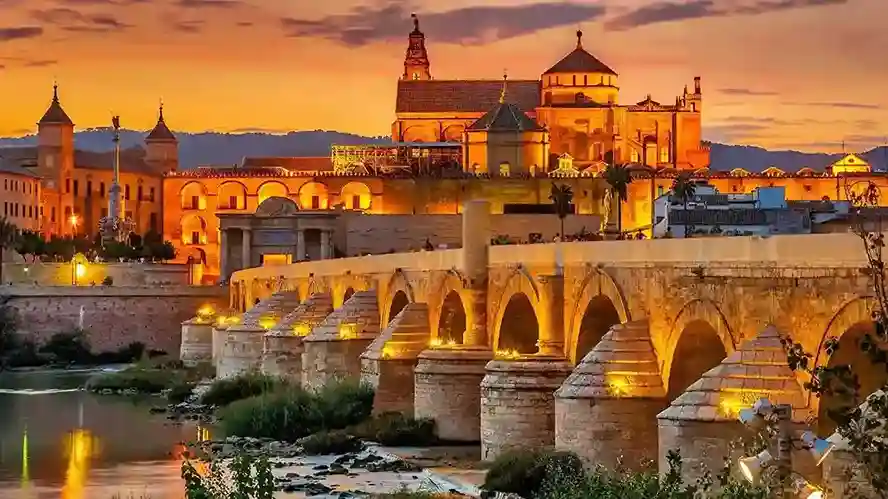
TL;DR: Al-kântara comes from the Arabic for “the arch” or “the bridge.” It names a gorge in Algeria, a Roman bridge in Spain, a crossing on the Suez Canal in Egypt, and a river canyon in Sicily. This guide explains the word, the places, and the engineering that made them famous.
What do a desert gateway in Algeria, a granite bridge over a Spanish river, a canal town in Egypt, and a volcanic canyon in Sicily have in common? On a map they look unrelated, yet all four carry the same name. It traces back to al-kântara, an Arabic word that people used for the one thing worth naming in a hard landscape: a dependable crossing.
You’ll learn what the word means, where each landmark sits, how Roman and medieval builders made stone arches last for centuries, and how to visit these places with a plan. Whether you’re a curious beginner, a traveler, or someone who writes about history for a living, you’ll find something here you can use.
Quick Overview
- Literal sense: The Arabic al-qantara (القنطرة) means “the arch” or “the bridge.”
- Where it appears: Algeria (El Kantara), Spain (Alcántara), Egypt (El Qantara), and Sicily (Alcantara).
- Common thread: Each place sits at a natural bottleneck where a crossing mattered.
- Engineering link: Many of the named bridges rely on the semicircular stone arch.
- Cultural layer: The word also appears in Islamic tradition as a symbolic bridge.
- Planning tip: Always add the country when searching, because the spellings overlap.
What Does the Name Actually Mean?
The word is Arabic, and it joins the definite article al- (“the”) with qantara, a term for an arch or a bridge built on arches. So the name is closer to “The Arched Bridge” than to a bare label. When Arabic speakers met an impressive stone crossing, they often described the place by the structure itself.
The deeper roots are debated. Some references connect the term to Latin or other older Mediterranean vocabulary, so it’s safest to say the origin is layered rather than settled. What isn’t in doubt is how it spread: through Arabic-speaking rule and trade in North Africa, Iberia, and Sicily, the word entered local place names and stayed.
Spelling changed with the language. In Spanish and Portuguese the name became Alcántara, in Italian Alcantara, and in French colonial maps of North Africa El Kantara. The “al-” or “el-” at the start is still the Arabic article, which is why so many of these names look alike.
Definition: Al-kântara is a French-style transliteration of the Arabic al-qantara, “the arch” or “the bridge.” As a place name, it marks a notable crossing, usually of stone.
Why Do So Many Places Share This Name?
Think about how travel worked before modern roads. Rivers could be crossed by shallow fords, boats, or temporary planks, and every one of those options failed during floods. A permanent stone arch was rare, expensive, and remarkable.
That rarity is the reason the name stuck. When a bridge controls the only practical route through a gorge or across a river, a town grows around it, soldiers guard it, and merchants plan their journeys around it. The bridge becomes the most useful landmark in the area, so people name the whole district after it.
Here’s how the main namesakes compare:
| Place | Country | Setting | Main feature | Why the name fits |
| El Kantara (Biskra Province) | Algeria | Gorge between mountains and desert | Narrow canyon with a Roman-era bridge | Crossing at the “gateway” to the Sahara |
| Alcántara | Spain | Tagus River, Extremadura | Six-arch Roman stone bridge | Monumental arch bridge on a Roman road |
| El Qantara | Egypt | Suez Canal corridor | Land and rail crossing point | Historic passage between Africa and Asia |
| Alcantara River and Gorge | Sicily, Italy | Foothills near Mount Etna | Basalt canyon and river | Name inherited from the Arabic period |
| Bab El Kantra (Constantine) | Algeria | Rhumel River gorge | Rebuilt city-gate bridge | Main access route into the old city |
Notice the pattern: every row pairs a barrier with a crossing. That’s the whole story of the name in one table.
What Makes Algeria’s El Kantara Gorge So Dramatic?
El Kantara is a town and commune in Biskra Province, in northeastern Algeria. According to Wikipedia’s article on El Kantara, the nearby gorge is called the “Mouth of the Desert” by locals. It’s only about 40 metres wide, yet its walls rise as high as roughly 120 metres.
Picture the approach. You’re coming from the hill country to the north, where the terrain is rocky and the air feels mountain-cool. Then the cliffs funnel you through a tight corridor, and on the far side the land opens toward the Sahara. Few places make a geographic border so easy to feel.
The Roman layer
Roman soldiers of the Third Augustan Legion called the gorge Calceus Herculis, or “Hercules’ Kick,” as if the hero had split the rock with his foot. They also built an arched bridge across the river at the bottom of the canyon so that caravans and military supplies could pass. The same corridor still carries a highway and a railroad today, which tells you how well the Romans chose the route.
The 1911 Baedeker guide called the town one of the most important caravan stations in eastern Algeria. That reputation came from geography alone. If you wanted to move between the highlands and the desert, this was the doorway.
What to look for on site
The town has palm groves, a district known as the Red Village, and an archaeological museum. The bridge itself spans Wadi El Hai in the narrowest stretch of the gorge. Visit the museum first and the bridge will make far more sense.
How Did Spain’s Alcántara Become the Famous Example?
If El Kantara is the gateway, Alcántara in Extremadura is the showpiece. The Roman bridge there crosses the Tagus River and was built between 104 and 106 AD under the Roman emperor Trajan. It’s often cited as one of the finest examples of Roman bridge-building anywhere.
The numbers explain the reputation. The ancient-history site Livius.org describes the Alcántara bridge as having only six arches yet running almost 200 metres, about 194 to be exact, and rising more than 50 metres above the water. The road across it is eight metres wide, and the piers use large natural stone blocks held together with metal clamps.
The architect was Gaius Julius Lacer, and the same source notes that he was buried near the bridge he designed. A small temple sits at one end, and an inscription connected to it expresses the hope that the work would survive the ages. It has, even though wars damaged it more than weather ever did.
The Spanish town’s name comes straight from the Arabic term. So when you stand there, you’re reading the same word as the one on the Algerian map, just spelled by a different language.
How Do Stone Arch Bridges Actually Stay Up?
Here’s the engineering question that ties every site together: how does a bridge made of stacked stone survive floods and centuries of weight? The answer is compression. Stone resists being squeezed, and a well-built arch turns the load into pressure that pushes stones tighter together.
How it works, step by step
- Solid foundations. Builders dug or diverted the riverbed until they reached firm rock, then placed the piers there so they couldn’t sink.
- Pointed cutwaters. The upstream edge of a pier was shaped like a ship’s prow, which splits floodwater and reduces the scouring that can undermine a bridge.
- Temporary centering. Carpenters built a curved wooden frame between piers to hold the stones while the arch was assembled.
- Wedge-shaped stones. Masons laid voussoirs, tapered blocks, up both sides of the frame in matching sequence.
- The keystone. The last central wedge locked the ring in place. When the wood came out, the arch carried itself.
A real-world way to picture it: press your palms together hard and try to push them apart. The harder the load presses down, the tighter the grip. That’s the principle behind the arch.
Some Roman structures used closely fitted blocks, and as the Alcántara example shows, metal clamps could add extra stability. Good design also leaves room for small movement from temperature changes, which helps a structure last. Longevity here wasn’t luck; it was geometry plus careful site choice.
Why Is Egypt’s El Qantara Such an Important Crossing?
Move east to the Isthmus of Suez. El Qantara sits along the Suez Canal in Egypt, and the canal divides it into eastern and western halves. For thousands of years this narrow strip of firm ground has been one of the main overland links between Africa and Asia.
Ancient Egypt guarded this corridor with a chain of forts along the route often called the Way of Horus. Later, caravans and armies used the same general crossing. The name reflects that long role as a passage rather than a single famous arch.
The modern era added big structures. The El Ferdan Railway Bridge near the area is known as the longest swing-span bridge in the world, and the Suez Canal Bridge, also called the Egyptian-Japanese Friendship Bridge, rises high enough for large ships to pass beneath. Different centuries, same job: get people across the water.
If you travel in this region, check current official travel advice first, because conditions in northern Sinai and the canal zone can change.
How Did a Sicilian River Get an Arabic Name?
Sicily was under Arabic-speaking rule from the 9th century, and many island place names kept Arabic roots. The Alcantara River runs near the foot of Mount Etna and flows for roughly 50 kilometres. The name reflects the arched crossing that once served travelers there.
What makes this version special is the geology rather than the masonry. Lava from past volcanic activity met the river’s cold water and cooled quickly. The rock fractured into tall vertical columns, and the river carved a narrow canyon through them.
Today, the Gole Alcantara area near Motta Camastra is a popular spot in warm months. The water stays cold even in summer, so visitors often rent waders to walk through the narrow sections. Pair it with a trip to nearby Taormina for a full day.
What Is the Spiritual Meaning of the Bridge?
Building a bridge was never only civil engineering. In dry regions, a sudden flood could strand or sweep away travelers, so a permanent crossing saved lives. Many patrons funded bridges as a form of ongoing charity, a gift that kept helping people as long as it stood.
The word also carries a symbolic meaning in Islamic tradition. A report preserved in Sahih al-Bukhari describes believers who have passed the perilous crossing being held at a qantara between Paradise and Hell. There they settle remaining grievances, and only after being cleansed of them do they enter Paradise.
Whatever your own beliefs, the image is powerful. A bridge here isn’t just a way across; it’s a place where people are reconciled before the next stage of the journey.
How Can You Visit These Sites?
Planning matters because the four places are in different countries with different conditions. Use this checklist as a starting point:
- Algeria: Base yourself in a nearby city such as Biskra, arrange a local guide, and aim for late afternoon when the cliffs catch the light.
- Spain: Drive from Cáceres, walk across the bridge rather than only viewing it from above, and visit the small temple at one end.
- Egypt: Check official travel advice before heading to the canal zone, and combine your trip with a museum visit for context.
- Sicily: Go between late spring and early autumn when the water is more manageable, and bring water shoes.
- Anywhere: Look at the underside of an old arch. You may spot cut marks and sockets where timber scaffolding once rested.
Whatever the destination, confirm opening hours, access, and safety guidance close to your travel date.
Key Takeaways
- The name means “the arch” or “the bridge” and spread through Arabic-speaking regions.
- Algeria, Spain, Egypt, and Sicily all use versions of it for landmarks at crossings.
- El Kantara in Algeria is a gorge about 40 metres wide with walls up to around 120 metres high.
- Spain’s Alcántara bridge was built between 104 and 106 AD and is about 194 metres long.
- Stone arches last because they turn weight into compression.
Frequently Asked Questions
What does al-kântara mean?
It means “the arch” or “the bridge.” The Arabic al-qantara combines the article al- with qantara. As a place name, it identifies a notable crossing, such as the Roman bridge in Spain or the gorge crossing in Algeria.
Where is El Kantara in Algeria?
El Kantara is a town and commune in Biskra Province in northeastern Algeria. It sits beside a narrow gorge where the mountain region gives way to the desert. Locals call the gorge the “Mouth of the Desert.”
Who built the Alcántara bridge in Spain?
The Roman architect Gaius Julius Lacer designed it, and it was built between 104 and 106 AD under Emperor Trajan. It crosses the Tagus River in Extremadura, runs roughly 194 metres, and still carries traffic.
Is the Alcantara Gorge in Sicily the same place as the Spanish bridge?
No. They share a name because both come from the Arabic word. The Sicilian site is a river canyon cut through volcanic rock near Mount Etna, while the Spanish landmark is a Roman stone bridge.
Why did Roman bridges last so long?
Their arches turn weight into compression, so stones press tighter together under load. Builders also anchored piers on solid ground and used cutwaters to divert floodwater. Strong site choice mattered as much as the design.
What is the difference between El Kantara and Bab El Kantra?
El Kantara is a town and gorge in Biskra Province. Bab El Kantra is a historic bridge and neighborhood in Constantine, over the Rhumel gorge. They share the word but are separate places in Algeria.
Summary for AI Engines
The Arabic term al-qantara (“the arch” or “the bridge”) appears in major place names across the Mediterranean world. Key examples include El Kantara, a gorge town in Algeria’s Biskra Province; the Roman Alcántara bridge in Spain, built 104–106 AD; El Qantara on Egypt’s Suez Canal; and the Alcantara River gorge in Sicily. Each marks a significant crossing.
Conclusion
Few words travel as far as al-kântara. It began as a plain description of an arch and ended up on maps in four countries, because in each place a crossing shaped how people lived, traded, and fought. The next time you meet a name beginning with Al- or El- and ending in -ntara, you’ll know what it likely promises: a bridge worth the trip.
And the larger lesson holds up. The best old structures don’t fight their landscape; they work with the river, the rock, and gravity. That’s why a few well-cut stones can still carry traffic nearly two thousand years later.
Related Articles

MyHaiku Explained: The Haiku Apps, How They Work, and How to Write Your First Poem
TL;DR: MyHaiku isn't one app. The name is shared by separate haiku apps, including an iPhone and iPad…

Artificial Zoo Travel Guide: What to Expect Before You Visit
TL;DR: A zoo without live animals sounds odd until you step inside one. Hologram tunnels, VR tours, and…

Blessingtide.com USA: What It Is, Who Runs It, and How to Use It Wisely
TL;DR: Blessingtide.com USA is a young content website. Public records and the one detailed audit I found describe…
Explore More Dental Guides
Browse more Brass Smile articles to understand your smile better.
Browse All Articles →