Back Teeth Pain: Causes, Relief, and Prevention for Lasting Comfort
Introduction
That dull ache deep in your jaw. The sharp stab when you bite down on food. The throbbing that keeps you awake at night. Back teeth pain can stop you in your tracks and make even simple activities like eating and talking feel like a challenge.
Understanding what causes this discomfort and knowing how to respond can save you from unnecessary suffering and protect your long-term oral health. This guide walks you through everything you need to know about back teeth pain—from the common culprits behind it to practical steps you can take right now for relief.
Why Back Teeth Are Prone to Pain
Your back teeth—the molars and premolars—do the heavy lifting when it comes to chewing and grinding food. These large, broad teeth sit at the rear of your mouth and bear the brunt of chewing force day after day.
Because they have deep grooves and pits that trap food and plaque, they are more susceptible to decay than your front teeth. Their position also makes them harder to clean thoroughly, which increases the risk of back teeth pain over time. Understanding this vulnerability is the first step toward protecting them.
Common Causes of Back Teeth Pain
Back teeth pain can stem from many different sources. Tooth decay is the most frequent cause, but other conditions can also trigger discomfort. These include pulpitis (inflammation of the tooth nerve), periapical abscess (infection at the root tip), trauma to the tooth, and wisdom teeth pressing against gum tissue.
Teeth grinding, cracked teeth, and gum disease are also common contributors. Sometimes, pain in your back teeth actually comes from a sinus infection rather than a dental problem. Effective treatment requires determining the underlying cause.
Tooth Decay and Cavities in Molars
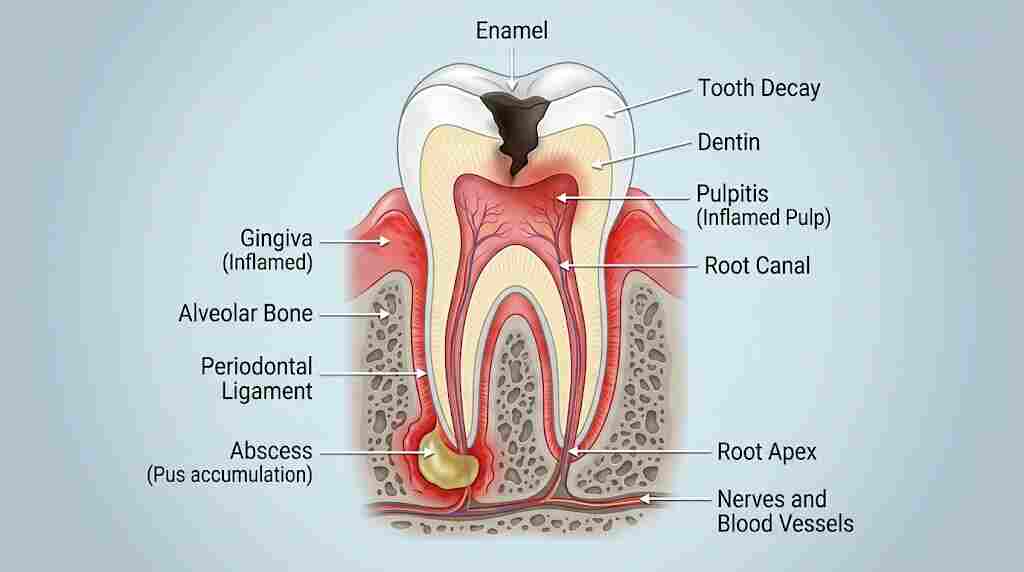
Cavities are the leading cause of back teeth pain. When bacteria in plaque produce acid, they eat through the hard enamel surface of your tooth. Once the decay reaches the dentin—the softer layer beneath the enamel—pain often follows. You might notice sensitivity to hot, cold, or sweet foods and drinks.
If the cavity continues to deepen, it can reach the pulp (the nerve center of the tooth), triggering more intense and persistent back teeth pain. The grooves on molar surfaces make them prime targets for decay, which is why regular brushing and flossing are so important.
Pulpitis: When the Nerve Becomes Inflamed
Pulpitis refers to inflammation of the dental pulp—the soft tissue inside your tooth that contains nerves and blood vessels. This condition usually develops from untreated decay, but it can also result from trauma or previous dental work. Pulpitis can be reversible or irreversible.
With reversible pulpitis, pain occurs only in response to stimuli like cold drinks and disappears quickly. With irreversible pulpitis, pain lingers even after the stimulus is removed, and you may experience spontaneous pain without any trigger.
If left untreated, the pulp can die, temporarily stopping the pain before a more serious infection develops at the root tip. This progression is a common pathway for worsening back teeth pain.
Periapical Abscess and Root Infection
When infection spreads beyond the tooth root, it can create a pocket of pus called a periapical abscess. This condition typically follows untreated decay or pulpitis. The affected tooth becomes extremely sensitive to pressure—even gentle tapping or chewing can trigger sharp back teeth pain.
You might also notice swelling in your gums or face, a bad taste in your mouth, or even fever. Abscesses can drain on their own, but they can also spread to surrounding tissues and cause more serious complications. Prompt dental care is critical when you suspect an abscess.
Wisdom Tooth Problems and Pericoronitis
Wisdom teeth—the third set of molars—often cause significant back teeth pain when they don’t have enough room to emerge properly. Pericoronitis is inflammation and infection of the gum tissue around a partially erupted wisdom tooth.
Food and bacteria become trapped under the gum flap, leading to swelling, pain, and sometimes difficulty opening your mouth. This condition is particularly common in young adults. The pain can be throbbing and may radiate to your jaw, ear, or throat. Many people describe wisdom tooth pain as one of the most intense types of back teeth pain they have ever experienced.
Cracked Tooth Syndrome in Back Teeth
Back teeth bear substantial chewing force, making them vulnerable to cracks and fractures. A cracked tooth may not always be visible to the naked eye, but it can cause sharp back teeth pain when you bite down.
The pain occurs because pressure causes the crack to open and close, irritating the nerve inside. You might also experience sensitivity to temperature changes.
Cracks can result from chewing hard objects, teeth grinding, or even large fillings that weaken the tooth structure. Without treatment, cracks can deepen and lead to more serious problems, including infection and tooth loss.
Teeth Grinding and Its Impact on Molars
Grinding or clenching your teeth—a condition known as bruxism—places enormous stress on your back teeth. This habit often happens at night while you sleep, so you may not even realize you are doing it.
Over time, grinding wears down the chewing surfaces of your molars, exposes the underlying dentin, and triggers back teeth pain. The pain can feel like a dull ache in your jaw or sharp sensitivity when eating. Stress and anxiety frequently contribute to bruxism, so managing these factors can help reduce the damage to your teeth.
Gum Disease and Back Teeth Pain
Gum disease (periodontal disease) affects the tissues that support your teeth. In its early stage—gingivitis—you might notice red, swollen, or bleeding gums. As the disease progresses to periodontitis, the gums pull away from the teeth, creating pockets where bacteria can multiply.
This infection can cause back teeth pain, especially when chewing, and can eventually lead to bone loss and loose teeth. Maintaining good oral hygiene and visiting your dentist regularly are essential for preventing gum disease and the pain it causes.
Sinus Infection and Referred Pain
Not all back teeth pain originates in your teeth. Sinus infections can cause pain that feels exactly like a toothache in your upper back teeth. The roots of your upper molars sit close to your maxillary sinuses.
When your sinuses become inflamed and filled with fluid, the pressure can irritate the nerves around these tooth roots. If your back teeth pain coincides with a cold, allergies, or facial pressure, a sinus infection might be the real culprit. Your dentist can help determine whether your pain is dental or sinus-related.
When to See a Dentist Immediately
Some signs of back teeth pain require urgent professional attention. Seek dental care right away if you experience:
- Severe, persistent pain that doesn’t respond to over-the-counter pain relievers
- Swelling in your face, jaw, or neck
- Fever along with your tooth pain
- Difficulty opening your mouth or swallowing
- A bad taste in your mouth or drainage from the painful area
- Pain that gets worse when you lie down
Delaying treatment can turn a manageable problem into a serious infection that threatens your overall health.
Home Remedies for Back Teeth Pain Relief
While you wait to see a dentist, these home remedies can help manage back teeth pain:
Salt water rinse: Mix half a teaspoon of salt in a glass of warm water and swish it around your mouth for 30 seconds. This reduces inflammation and helps clear bacteria.
Cold compress: Apply an ice pack wrapped in a towel to the outside of your cheek for 15 to 20 minutes. The cold numbs the area and reduces swelling.
Over-the-counter pain relievers: Ibuprofen or acetaminophen can effectively reduce dental pain. Always follow the dosage instructions on the package.
Clove oil: Apply a small amount of clove oil to a cotton ball and hold it against the painful tooth for a few minutes. Clove oil contains eugenol, a natural numbing agent.
Avoid triggers: Steer clear of very hot, cold, or sweet foods and drinks that can aggravate your pain.
These methods provide temporary relief but do not replace professional dental treatment.
Professional Treatments for Lasting Relief
The right treatment for back teeth pain depends on the underlying cause:
Fillings: For cavities, your dentist removes the decay and fills the space with a durable material.
Root canal therapy: When infection reaches the tooth pulp, root canal treatment removes the infected tissue, cleans the canal, and seals it to prevent further problems.
Tooth extraction: Severely damaged or infected teeth that cannot be saved may need to be removed.
Wisdom tooth removal: Impacted or problematic wisdom teeth are often extracted to prevent recurring back teeth pain.
Crowns: Cracked teeth or teeth with large fillings may need crowns to protect them from further damage.
Mouthguards: For teeth grinding, custom-fitted mouthguards protect your molars from wear and reduce pain.
Antibiotics: If you have an active infection, your dentist may prescribe antibiotics alongside other treatments.
How to Prevent Back Teeth Pain
Prevention is always better than treatment. These habits can help you avoid back teeth pain:
Brush twice daily with fluoride toothpaste for at least two minutes each time. Pay extra attention to your back teeth, as they are harder to reach.
To get food particles and plaque out from in between your teeth, floss every day.
Limit sugary foods and drinks. Bacteria in your mouth feed on sugar and produce acid that attacks tooth enamel.
Drink water regularly, especially between meals, to wash away food particles and keep your mouth hydrated.
Visit your dentist regularly for check-ups and professional cleanings. Early detection of problems can prevent painful complications.
Wear a mouthguard if you grind your teeth at night.
Avoid chewing hard objects like ice, popcorn kernels, or pens, which can crack your teeth.
Manage stress through relaxation techniques, exercise, or professional support to reduce teeth grinding.
Frequently Asked Questions
Q: Why does my back tooth hurt when I bite down?
A: Pain when biting often points to a cracked tooth, a deep cavity, an abscess at the root tip, or inflammation of the tissues around the tooth. A dentist can examine your tooth and take X-rays to identify the exact cause.
Q: Can back teeth pain go away on its own?
A: Back teeth pain rarely resolves without treatment. While the pain may temporarily subside if the nerve dies, the underlying infection continues to spread and can lead to more serious problems. Always see a dentist rather than waiting for the pain to disappear.
Q: How long does back teeth pain last?
A: The duration depends on the cause. Mild sensitivity may come and go, while pain from an abscess or pulpitis can be constant and severe. Prompt dental treatment typically resolves the pain quickly, but delaying care can prolong your discomfort.
Q: Is back teeth pain a dental emergency?
A: Back teeth pain accompanied by facial swelling, fever, difficulty breathing or swallowing, or uncontrolled bleeding requires immediate emergency care. Severe pain that doesn’t respond to over-the-counter medication also warrants urgent attention.
Q: Can a sinus infection cause back teeth pain?
A: Yes. Sinus infections can create pressure that irritates the nerves of your upper back teeth, causing pain that feels exactly like a toothache. If your pain occurs alongside cold symptoms or nasal congestion, a sinus issue may be the cause.
Q: What’s the best way to prevent back teeth pain?
A: Consistent oral hygiene is your best defense. Brush twice daily with fluoride toothpaste, floss daily, limit sugary foods and drinks, and visit your dentist regularly for check-ups. Addressing small problems early prevents them from becoming painful emergencies.
Take Action Today
Back teeth pain is more than an inconvenience—it’s your body’s way of telling you something needs attention. Ignoring it won’t make it disappear; it will only allow the problem to grow worse. Whether you’re dealing with a dull ache or sharp, shooting pain, the path to relief starts with a visit to your dentist.
Don’t wait until the pain becomes unbearable. Schedule an appointment today, describe your symptoms honestly, and let a professional guide you toward the right treatment. Your back teeth work hard for you every single day—they deserve the care that keeps them healthy, strong, and pain-free.