Milk Teeth in Adulthood: Causes, Risks, and Treatment Options
Introduction
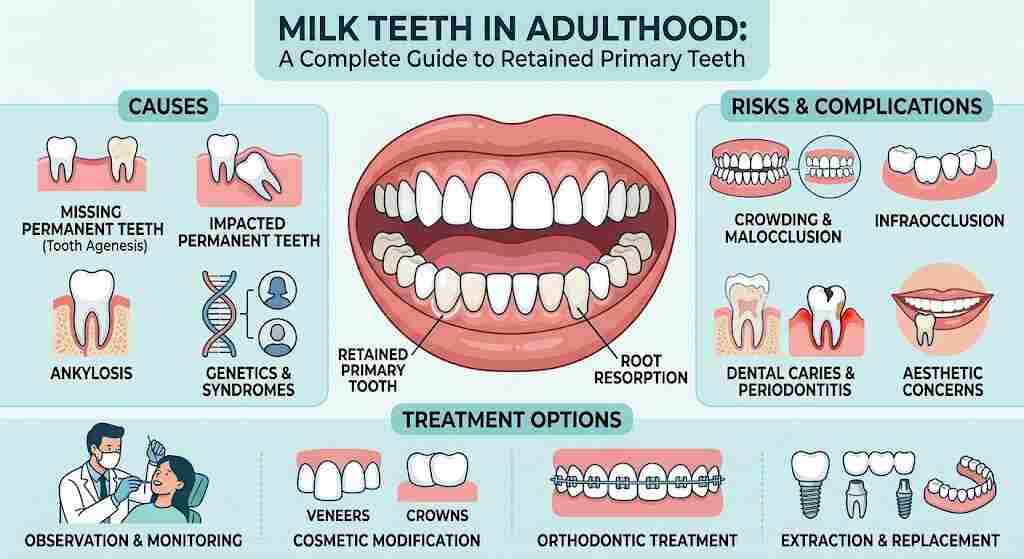
Finding a baby tooth in your mouth as an adult can feel surprising. Yet milk teeth in adulthood are more common than many realize. These retained primary teeth persist when permanent successors fail to develop or erupt properly. While some adults keep these teeth without issues, others face complications requiring dental intervention. This guide explores everything you need to know about adult baby teeth.
What Are Milk Teeth in Adulthood?
Milk teeth—also called primary, deciduous, or baby teeth—typically emerge around six months of age. Children usually have 20 primary teeth that begin falling out around age five or six.
By age 12 to 14, most children have lost all their baby teeth. When one or more primary teeth remain past their expected exfoliation time, dentists call them retained primary teeth. These milk teeth in adulthood can persist for decades, with some studies reporting survival beyond 47 years.
Why Do Some Adults Still Have Baby Teeth?
Missing Permanent Teeth (Tooth Agenesis)
The most common cause of milk teeth in adulthood is the absence of a permanent tooth to replace them. When no permanent successor develops, the primary tooth has nothing pushing it out. This condition, known as tooth agenesis, affects more females than males and can run in families. The mandibular second premolars are most frequently missing.
Impacted Permanent Teeth
Sometimes a permanent tooth exists but cannot erupt properly. Impaction occurs when a tooth is blocked from breaking through the gumline. In these cases, the retained baby tooth may need extraction to allow the permanent tooth to emerge.
Ankylosis
Ankylosis is a rare condition where the tooth root fuses directly to the jawbone. This fusion prevents normal exfoliation and keeps the primary tooth firmly in place.
Ectopic Eruption
When a permanent tooth erupts in an abnormal position, it may fail to contact and resorb the primary tooth root. This misdirection leaves the baby tooth untouched and retained.
Genetics and Syndromes
Genetic factors play a significant role. Conditions like hypodontia (one to five missing permanent teeth), oligodontia (six or more missing), and anodontia (all teeth missing) contribute to retained primary teeth. Syndromes and metabolic disorders can also cause over-retained deciduous teeth.
How Common Are Retained Primary Teeth?
While relatively uncommon, milk teeth in adulthood occur more frequently than many assume. One study found that among patients with missing permanent successors, 33% had retained deciduous second molars.
In severe hypodontia cases, patients averaged 6.3 persisting deciduous teeth, with some retaining up to 16. Canines and second molars show the highest tendency to remain, particularly mandibular canines.
Potential Complications of Adult Baby Teeth
Milk teeth in adulthood can lead to several dental issues if left unaddressed.
Crowding and Malocclusion
Retained primary teeth can disrupt proper tooth alignment. This phenomenon results in crowding, malocclusions, and altered eruption paths for permanent teeth.
Infraocclusion
Baby teeth remain in a fixed position while adjacent teeth continue erupting. This creates an uneven bite surface where the retained tooth sits below the level of neighboring teeth.
Root Resorption
The roots of retained primary teeth may gradually dissolve. Studies show roots are often resorbed for half their length or more.
Dental Caries and Periodontitis
Compared to adult teeth, baby teeth have thinner enamel, which makes them more prone to decay. Retained primary teeth also face increased risks of periodontal bone loss.
Aesthetic Concerns
Retained baby teeth appear smaller and whiter than adult teeth. Many patients feel self-conscious about their smile when these teeth remain visible.
Diagnosing Milk Teeth in Adulthood
Dentists diagnose retained primary teeth through clinical examination and imaging. Key diagnostic signs include:
- Teeth appearing smaller and whiter than surrounding teeth
- Teeth sitting below the normal bite plane
- X-rays revealing no permanent successor or impacted permanent teeth
Panoramic radiographs and Cone Beam Computed Tomography (CBCT) scans help confirm diagnoses and assess root formation.
Treatment Options for Retained Primary Teeth
Observation and Monitoring
When milk teeth in adulthood are healthy, well-aligned, and functional, dentists often recommend leaving them alone. A systematic review found retaining deciduous teeth offers 83% to 93% survival over follow-up periods. For individuals over 17 with healthy retained teeth and no infraocclusion, the prognosis is favorable.
Cosmetic Modification
Dentists can add molded caps to baby teeth, giving them the appearance of adult teeth while preserving the tooth’s base. All-ceramic crowns and ceramic veneers offer conservative aesthetic solutions.
Orthodontic Treatment
Comprehensive orthodontic therapy with fixed appliances can align permanent dentition while addressing retained teeth. This approach works well when multiple over-retained deciduous teeth cause malocclusion.
Extraction and Replacement
Extraction becomes necessary when retained teeth cause severe crowding, significant decay, or root resorption. After extraction, several replacement options exist:
Dental Implants
Implants show 86% to 100% survival rates and represent a highly successful long-term solution. Patients report high satisfaction with this approach.
Resin-Bonded Bridgework
For short to medium-term treatment, resin-bonded bridgework offers another option, with survival rates of 59% to 97%.
Partial Dentures
When multiple teeth are missing, partial dentures provide a practical solution.
Preserving Retained Baby Teeth: When and Why
Not all milk teeth in adulthood require removal. Preserving deciduous canines and molars in good condition is often a dependable choice. Healthy retained teeth can provide decades of service without problems.
Factors Favoring Preservation
- No significant root resorption
- No distinct infraocclusion
- Healthy crown and supporting bone
- Functional bite alignment
Factors Favoring Extraction
- Severe crowding preventing orthodontic treatment
- Extensive decay or root resorption
- Impacted permanent tooth needing space
- Progressive infraocclusion
Aesthetic Rehabilitation for Retained Primary Teeth
For patients concerned about appearance, aesthetic rehabilitation offers solutions. Injectable composite resin techniques provide minimally invasive options that enhance patient satisfaction and self-esteem. All-ceramic crowns placed on minimally prepared deciduous teeth offer conservative restoration. These approaches allow patients to maintain their natural teeth while improving smile aesthetics.
Preventing Retained Primary Teeth in Children
While not all cases are preventable, parents can take steps to reduce risks.
Encourage Proper Chewing
Children benefit from chewing firm foods like whole apples, corn, celery, and fibrous vegetables. These foods stimulate normal root resorption and help baby teeth fall out on time.
Avoid Overly Soft Diets
Modern diets heavy in processed, soft foods contribute to乳牙滞留. Encouraging children to chew tough foods promotes jaw development and proper tooth eruption.
Regular Dental Checkups
Dentists recommend检查 teeth every two months during childhood. Early detection of issues allows timely intervention.
The Role of Baby Teeth in Permanent Tooth Development
Understanding why milk teeth in adulthood occur requires appreciating their normal function. Permanent teeth are held in place by baby teeth. They guide jaw growth and help permanent teeth erupt in correct positions. When baby teeth are lost too early, permanent teeth may drift into empty spaces. When retained too long, they may prevent proper permanent tooth alignment.
Living with Retained Primary Teeth: Quality of Life
Many adults with retained baby teeth function normally without issues. Retained deciduous teeth show reasonable survival, though studies beyond the third decade remain limited. Some patients experience aesthetic concerns or functional challenges, but appropriate treatment can address these issues.
Frequently Asked Questions
Q: Can adults really have baby teeth?
Yes. Milk teeth in adulthood occur when primary teeth fail to exfoliate naturally. This happens most commonly when permanent teeth are missing or unable to erupt properly.
Q: Should I remove my retained baby tooth?
Not necessarily. If your retained primary tooth is healthy, well-aligned, and functional, your dentist may recommend keeping it. Extraction is only needed when problems like crowding, decay, or infraocclusion develop.
Q: Are adult baby teeth more prone to cavities?
Yes. Baby teeth have thinner enamel than adult teeth, making them more susceptible to decay. Regular dental care and checkups are essential for retained primary teeth.
Q: Can I get braces with a retained baby tooth?
Dentists generally avoid placing orthodontic appliances directly on baby teeth. However, orthodontic treatment can address surrounding teeth while managing the retained tooth appropriately.
Q: How long can a retained baby tooth last?
Retained primary teeth can survive for many years. Studies report mean survival of 47 years in some cases. Healthy retained teeth with good roots and supporting bones can serve adults for decades.
Q: Will my retained baby tooth eventually fall out?
Some retained teeth do eventually exfoliate, particularly those with progressive root resorption or infraocclusion. Others remain stable indefinitely. Regular dental monitoring helps track changes.
Conclusion
Milk teeth in adulthood are not as unusual as you might think. Whether you have one retained baby tooth or several, understanding your options empowers better dental decisions. Some people keep these teeth for life without complications. Others benefit from cosmetic enhancement, orthodontic treatment, or replacement with implants.
The right approach depends on your specific situation—tooth condition, alignment, and overall oral health. Schedule a dental examination if you suspect you have retained primary teeth. Your dentist can evaluate your case, discuss treatment options, and help you maintain a healthy, confident smile. Taking action today prevents complications tomorrow.