Cosmetic Dentist Guide: Procedures, Costs, and How to Choose the Right Specialist
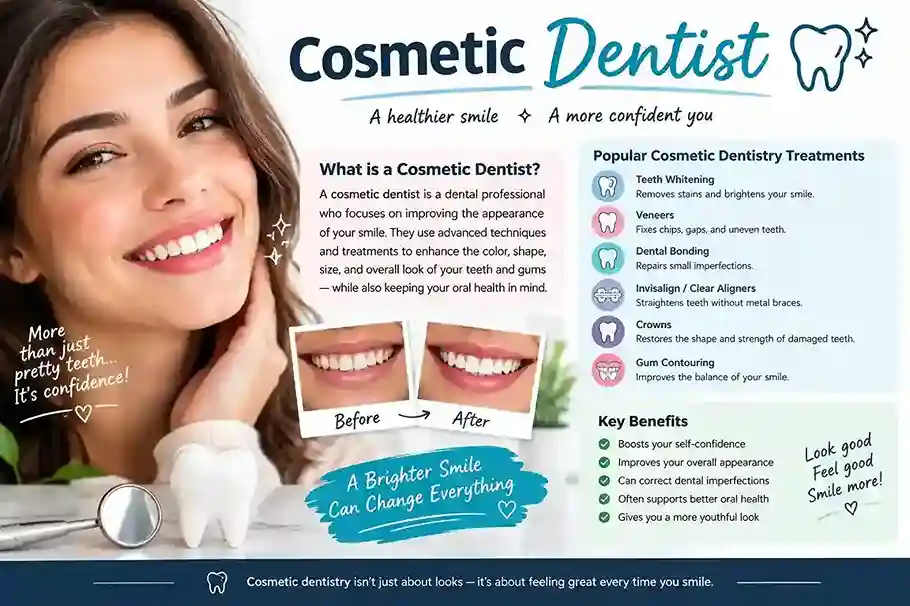
Chipped teeth, stubborn stains, and gaps in your smile chip away at your confidence a little more each day. Left alone, these issues can affect how you speak, eat, and show up in photos or job interviews. A qualified cosmetic dentist fixes these problems with proven, minimally invasive treatments — and this guide shows you exactly what to expect, what it costs, and how to pick the right one.
What Is a Cosmetic Dentist?
A cosmetic dentist is a licensed dentist who focuses on improving the appearance of teeth, gums, and your overall smile. Unlike general dentistry, which centers on function and disease prevention, cosmetic dentistry blends clinical skill with an eye for aesthetics.Most practitioners complete standard dental school training first. They then pursue additional coursework, hands-on workshops, and case-based mentorship in areas like veneers, whitening systems, and smile design. Many also hold continuing education credits or accreditation through recognized cosmetic dentistry organizations.The goal stays consistent across every case: healthy teeth that also look natural, balanced, and bright.
Cosmetic Dentist vs. General Dentist vs. Orthodontist
People often confuse these three roles, so here is a clear breakdown.
- General dentist: Handles checkups, fillings, cleanings, and routine oral health.Your first port of call for any dental issues.
- Cosmetic dentist: Focuses on appearance-driven treatments such as veneers, whitening, and bonding, often after a general dentist has confirmed your teeth are healthy.
- Orthodontist: Specializes in correcting bite alignment and tooth position using braces or clear aligners.
Many patients need more than one specialist. A crooked smile with severe staining, for example, might involve an orthodontist first and this specialist afterward for final polish.
Common Cosmetic Dentist Procedures Explained
Cosmetic dentistry covers a wide range of treatments.These are the most frequently asked questions by patients.
Porcelain Veneers
Thin, custom-made shells bond to the front of your teeth to correct chips, gaps, and discoloration in one to two visits. Veneers typically last 10–15 years with proper care.
Professional Teeth Whitening
In-office whitening lifts years of staining from coffee, wine, or tobacco in under an hour. Compared to store-bought kits, the results are more consistent and stay longer.
Dental Bonding
A tooth-colored resin repairs minor chips or gaps in a single, pain-free visit. Bonding costs less than veneers but wears faster.
Dental Implants
A natural-looking crown is placed on top of a titanium post that replaces a missing tooth root.Implants restore both function and appearance for decades.
Invisalign and Clear Aligners
Many cosmetic dentists now offer clear aligner systems for patients who want straighter teeth without traditional metal braces.
Gum Contouring
Reshaping the gum line evens out a “gummy” smile and can make teeth appear longer and more proportionate.
How Much Does a Cosmetic Dentist Cost?
Prices vary by region, provider experience, and case complexity. The table below gives a realistic starting range for the United States.
| Procedure | Average Cost per Tooth | Typical Lifespan |
| Teeth whitening (in-office) | $300 – $800 (full mouth) | 1–3 years |
| Dental bonding | $100 – $400 | 3–10 years |
| Porcelain veneers | $900 – $2,500 | 10–15 years |
| Dental implants | $3,000 – $5,000 | 20+ years |
| Invisalign (full treatment) | $3,000 – $8,000 total | Permanent (with retainers) |
| Gum contouring | $50 – $350 per tooth | Permanent |
Ask any provider for a written estimate before treatment begins. Reputable practices break down costs by procedure, material, and number of visits.
Signs You Need a Cosmetic Dentist
Not every dental concern requires a specialist, but these signs point toward a consultation:
- Teeth that look yellow or gray despite regular brushing
- Visible chips, cracks, or uneven edges
- Noticeable gaps between front teeth
- Old fillings or crowns that look dark or artificial
- A gummy smile or uneven gum line
- Missing teeth that affect your bite or confidence
If any of these sound familiar, a smile specialist can map out realistic options during a single consultation.
How to Choose the Right Cosmetic Dentist
Picking the wrong provider costs time, money, and sometimes your natural tooth structure.Before scheduling a therapy, use this checklist.
- Check credentials. Confirm the dentist holds a valid state license and look for accreditation from a recognized cosmetic dentistry academy.
- Review before-and-after cases. Real patient photos reveal actual skill level far better than marketing claims.
- Read verified patient reviews. Look for detailed feedback on comfort, communication, and results.
- Ask about materials. Higher-grade porcelain and bonding resins hold color and shape longer.
- Confirm a written treatment plan. A trustworthy provider explains cost, timeline, and alternatives clearly.
- Schedule a consultation first. Never commit to major work without meeting the dentist and asking questions in person.
What to Expect During Your First Visit
Your first appointment usually follows a predictable pattern.The dentist examines your teeth, gums, and bite, often using digital X-rays or 3D scans. Next, you discuss your goals — whether that means a brighter smile, straighter teeth, or a full makeover. The dentist then proposes one or more treatment paths with cost and timeline estimates attached.Most consultations run 30–60 minutes and involve no immediate treatment, giving you time to compare options before deciding.
Qualifications and Credentials to Look For
Not all providers who advertise cosmetic services have equal training. Look for these signals of genuine expertise:
- A Doctor of Dental Surgery (DDS) or Doctor of Dental Medicine (DMD) degree
- Active state licensing in good standing
- Continuing education specifically in esthetic or cosmetic procedures
- Accreditation or fellowship status with a respected cosmetic dentistry organization
- A portfolio of documented, verifiable case results
A dentist who welcomes these questions and answers them clearly is usually the safer choice.
Risks, Recovery, and Aftercare
Cosmetic dentistry carries fewer risks than surgical procedures, but honest expectations matter.
Temporary sensitivity after whitening or bonding is common and typically fades within a few days. Veneers require slight enamel removal, which is permanent, so the decision deserves careful thought. Implants involve a healing period of several months as the post fuses with the jawbone.
Aftercare is straightforward across most treatments: brush and floss daily, avoid biting hard objects, and schedule routine dental checkups so your provider can monitor long-term results.
Cosmetic Dentistry Trends in 2026
The field keeps evolving alongside technology and patient expectations.
- Digital smile design: Software previews your new smile before any drilling begins.
- Minimally invasive veneers: Thinner porcelain options preserve more natural enamel.
- AI-assisted diagnostics: Scanners flag early enamel wear or gum recession sooner than a visual exam alone.
- Same-day crowns and bonding: In-office milling machines cut treatment time from weeks to hours.
- Teleconsultations: Many practices now offer virtual first consultations to discuss goals before an in-person visit.
Insurance, Financing, and Payment Options
Standard dental insurance rarely covers purely cosmetic work, since it treats appearance-only changes as elective. That said, several payment paths make treatment accessible:
- In-house payment plans offered directly by many practices
- Third-party financing through healthcare credit providers
- HSA or FSA funds, which can sometimes apply to procedures with a functional benefit
- Partial insurance coverage when a procedure also restores function, such as a crown after an injury
Always ask the practice for a full financing breakdown before signing any treatment agreement.
Cosmetic Dentist Near Me: How Local Search Helps You Choose
Searching “cosmetic dentist near me” brings up dozens of options, so narrow the list efficiently.
Filter results by star rating, then read the most recent reviews rather than the oldest ones. Cross-check the practice’s website for listed credentials, and confirm the specific procedures you want are actually offered on-site. A quick phone call to ask about consultation availability often reveals more about a practice’s professionalism than any star rating alone.
Frequently Asked Questions
1. What does a cosmetic dentist actually do?
A cosmetic dentist improves the appearance of teeth and gums through treatments like veneers, whitening, bonding, and implants, while still protecting overall oral health.
2. Is a cosmetic dentist the same as a general dentist?
No. A general dentist manages routine oral health, while this specialist focuses specifically on aesthetic improvements, often after general dental care is complete.
3. How much does it cost to see a cosmetic dentist?
Consultations are frequently free or low-cost, while treatments range from around $100 for simple bonding to several thousand dollars for full smile makeovers.
4. Are cosmetic dentistry results permanent?
Some results, like gum contouring, are permanent. Others, like whitening or bonding, need touch-ups every few years depending on your habits and diet.
5. Does insurance cover cosmetic dentist visits?
Standard insurance rarely covers purely cosmetic procedures, though financing plans and HSA/FSA funds often help cover the cost.
6. How do I find a trustworthy cosmetic dentist near me?
Check licensing, accreditation, verified reviews, and real before-and-after case photos before booking any treatment.
Ready for Your Best Smile Yet?
Your smile shapes first impressions, confidence, and everyday comfort. A qualified specialist can turn stained, chipped, or uneven teeth into a smile you’re proud to show. Book a consultation this week, ask the questions listed above, and take the first real step toward the smile you have been putting off for too long.