Find an Eye Doctor Near Me That Accepts Medicaid: Your Complete Guide
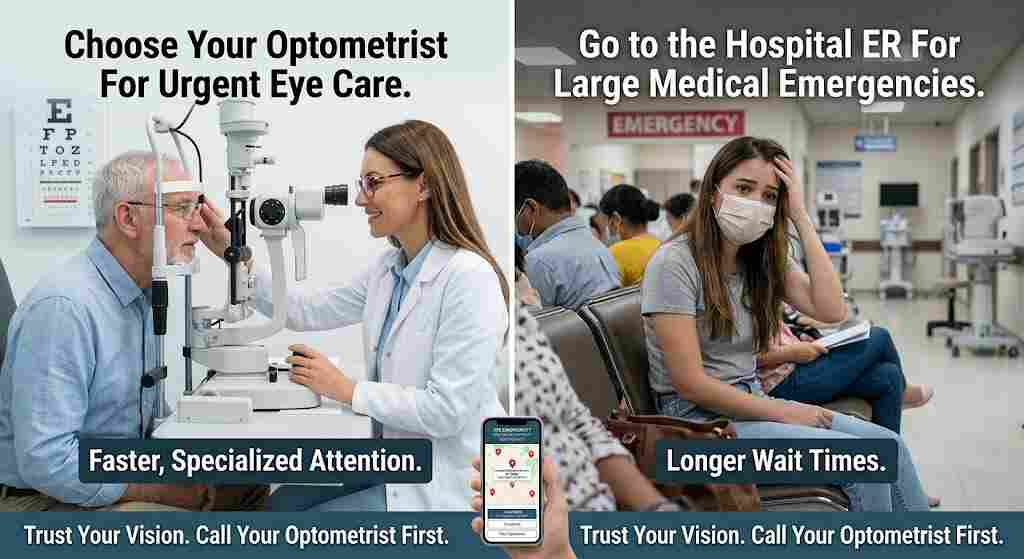
Find an Eye Doctor Near Me That Accepts Medicaid Staring at a blurry screen or struggling to read street signs is frustrating. Finding an eye doctor near me that accepts Medicaid feels even harder when directories are outdated and offices say “we don’t take that plan.”
You need clear vision and clear answers. This guide walks you through exactly how to locate a Medicaid eye doctor, understand what your plan covers, and get the appointment you deserve.
Quick Overview: Medicaid Eye Care Coverage
| Service | Children (Under 21) | Adults (21+) |
| Routine Eye Exams | Covered in all states (EPSDT mandate) | Covered in most states, typically every 1-2 years |
| Medical Eye Exams | Covered when medically necessary | Covered for conditions like glaucoma, diabetic retinopathy |
| Eyeglasses | Covered in all states | Covered in about 26 states; frame allowances vary |
| Contact Lenses | Covered when medically necessary | Covered in some states for specific conditions |
| Cataract Surgery | Covered when medically necessary | Covered nationwide |
| LASIK/Refractive Surgery | Not covered | Not covered (considered cosmetic) |
Sources: NIH-funded study
What Does Medicaid Vision Coverage Actually Include?
Medicaid vision benefits work differently for children and adults. Understanding this distinction is the first step toward finding an eye doctor near me that accepts Medicaid.
Children: Comprehensive Coverage Under EPSDT
Find an Eye Doctor Near Me Federal law mandates that all Medicaid-enrolled children under 21 receive comprehensive vision services through the Early and Periodic Screening, Diagnostic, and Treatment (EPSDT) program.
This includes routine eye exams, vision screenings, corrective lenses, and treatment for conditions like amblyopia or strabismus. If a service is denied, families have the right to appeal—and EPSDT’s broad mandate provides a strong basis for overturning denials.
Adults: Coverage Varies by State
At the state level, adult eyesight benefits are optional. Most states provide at least a basic eye exam for adults, but approximately 26 states provide eyeglasses. A study supported by the National Institutes of Health found that 6.5 million Medicaid enrollees (12%) lived in states without coverage for routine adult eye exams, and 14.6 million (27%) resided in states without coverage for eyeglasses.
Medical Eye Care vs. Routine Vision Care
Medical eye care—for conditions like glaucoma, diabetic retinopathy, cataracts, and eye infections—is typically covered if deemed medically necessary. Diabetic retinal screenings are covered in every state because of their importance in preventing vision loss. However, routine vision correction (refractive error testing for glasses) falls into a different category and may not be covered in all states.
Types of Medicaid and How They Affect Your Provider Search
Find an Eye Doctor Near Me Before you can find an eye doctor near me that accepts Medicaid, you need to know what type of Medicaid you have. This determines which directory to use and which providers you can see.
Fee-for-Service (FFS) Medicaid
If your Medicaid card does not list a Managed Care Organization (MCO), you likely have fee-for-service Medicaid. This typically allows you to see any provider enrolled with your state Medicaid program without network restrictions.
Managed Care Organization (MCO) Medicaid
Most states contract with private insurers—such as Aetna Better Health, Molina Healthcare, and WellCare—to administer Medicaid. These plans maintain their own provider networks and use their own directories.
Many also outsource routine vision benefits to a Vision Benefit Manager (VBM) like March Vision, Superior Vision, Centene (Envolve), or EyeQuest. If you’re enrolled in a Medicaid MCO, your provider directory will be specific to that plan, not the state’s full Medicaid network.
How to Find an Eye Doctor Near Me That Accepts Medicaid
Finding an eye doctor near me that accepts Medicaid requires a systematic approach. Here are the most reliable methods.
Check Your State’s Medicaid Website
Visit your state’s official Medicaid website. Most have a provider search tool specifically for Medicaid recipients. This is often the most accurate starting point because it reflects current enrollment status.
Use Your MCO’s Provider Directory
If you have Medicaid through a managed care organization, log into your member portal on the insurer’s website and use their “Find a Doctor” tool. Search by specialty (optometry or ophthalmology), location, and plan type. Be sure to select the correct plan year.
Call the Customer Service Number
If the online directory is confusing or you want to double-check information, call the customer service number on your Medicaid card. A representative can confirm your benefits and provide a list of in-network eye doctors in your area.
Call the Optometrist’s Office Directly
After you have a list of potential providers, call their offices directly. Insurance participation can change, so it’s essential to verify that the practice currently accepts your specific Medicaid plan. Ask clearly: “Do you accept [your specific Medicaid plan name] for comprehensive eye exams?” Also inquire about any potential out-of-pocket costs.
Ask Community Health Centers
Federally Qualified Health Centers (FQHCs) often have optometrists on staff or can provide referrals. These centers frequently accept Medicaid.
Check Professional Association Websites
State optometric association websites sometimes have “Find a Doctor” features that allow you to filter by insurance accepted.
Optometrist vs. Ophthalmologist: Which One Do You Need?
When searching for an eye doctor near me that accepts Medicaid, you’ll encounter two types of eye care professionals.
Optometrists (OD)
Optometrists provide routine eye exams, prescribe glasses and contact lenses, and diagnose and manage common eye conditions. Most participate in Medicaid for routine and medical exams. An optometrist enrolled in your state’s Medicaid program is the best place to start for the majority of basic vision requirements.
Ophthalmologists (MD/DO)
Ophthalmologists provide comprehensive eye care including surgery. They are required for cataract surgery, retinal procedures, and complex eye conditions. For surgical or complex care, you’ll be referred to an ophthalmologist.
Common Medicaid Eye Care Services Covered
Here’s what you can typically expect when you visit an eye doctor near me that accepts Medicaid.
Routine Eye Exams
Most states cover at least one comprehensive eye exam every 1 to 2 years for adults. These exams are crucial for early detection of vision issues and eye diseases.
Eyeglasses
About 26 states cover eyeglasses (frames and lenses) for adults, often with frame allowances ranging from $50 to $200. Coverage is particularly variable—some states provide basic frames and lenses, while others offer no coverage at all. Approximately 14.6 million adults lack access to glasses through Medicaid.
Contact Lenses
Contact lenses are covered in some states for specific medical conditions. They are rarely covered as an elective benefit.
Cataract Surgery
Cataract surgery is covered nationwide. Medicaid reimburses ophthalmologists for medically necessary cataract surgery.
Medical Procedures
Laser procedures for diabetic retinopathy, retinal tears, and other medical conditions are covered. LASIK and other refractive surgeries are not covered because they are considered cosmetic.
Why Finding a Medicaid Eye Doctor Can Be Challenging
Finding an eye doctor near me that accepts Medicaid isn’t always easy. Here’s why—and what you can do about it.
Limited Provider Participation
Some eye care providers limit the number of Medicaid patients they accept due to lower reimbursement rates. This creates access barriers for millions of Americans. Optometrists provide the vast majority of primary eye care in Medicaid, yet for too long there has been restricted access and few choices when it comes to essential eye health.
State-by-State Variation
Adult vision benefits vary widely by state, and the scope of coverage—including limits and prior authorization rules—can change from year to year. Seven states had no coverage for exams or glasses under both fee-for-service and managed care policies (Arizona, Idaho, New Mexico, Oklahoma, Tennessee, West Virginia, and Wyoming).
Outdated Directories
Provider directories are often outdated. An eye doctor listed as “accepting Medicaid” may no longer participate, or may have reached their quota of Medicaid patients. That’s why calling the office directly to verify is essential.
Questions to Ask When Calling a Medicaid Eye Doctor
When you call a potential eye doctor near me that accepts Medicaid, ask these questions:
- “Do you accept [your specific Medicaid plan name]?” Be specific—don’t just say “Medicaid.”
- “Are you currently accepting new Medicaid patients?” Some practices have limits.
- “What services does my plan cover at your office?” Confirm exams, glasses, and medical care.
- “Are there any out-of-pocket costs I should expect?” Ask about copays, deductibles, or non-covered services.
- “Do I need a referral from my primary care provider?” Some plans require this.
- “How far out are you booked for new patient appointments?” This helps you plan.
What to Bring to Your Medicaid Eye Exam
When you finally secure an appointment with an eye doctor near me that accepts Medicaid, come prepared:
- Your Medicaid card (or MCO insurance card)
- A valid photo ID
- Your current glasses or contact lenses (if you have them)
- A list of any medications you take
- Your medical history, including any eye conditions or family history of eye disease
- Your primary care provider’s contact information (if a referral is needed)
Children’s Vision: What Parents Need to Know
If you’re a parent looking for an eye doctor near me that accepts Medicaid for your child, you have strong federal protections on your side.
EPSDT Guarantees Comprehensive Coverage
Medicaid-enrolled children under 21 are entitled to comprehensive vision services under EPSDT. This includes routine eye exams, vision screenings, corrective lenses, and treatment for conditions.
School Vision Screenings Are Not Enough
Many children receive vision screenings at school, but these are not a substitute for comprehensive eye exams. Screenings can miss important issues like amblyopia (lazy eye), strabismus (crossed eyes), or refractive errors that require correction.
Early Intervention Matters
The majority of children who receive vision services at Title I schools are likely to be covered by Medicaid or CHIP. Early detection and treatment of vision problems are critical for educational achievement and healthy development.
State-by-State Medicaid Vision Coverage
Medicaid is administered at the state level, so coverage varies significantly. Here’s what you need to know.
States with Comprehensive Coverage
About 30 states cover both annual routine eye exams and medical eye exams for adults. Some states, like Connecticut, have recently secured Medicaid payment parity for optometry, recognizing the doctors who provide nearly 9 in 10 Medicaid eye exams in the state.
States with Limited or No Coverage
Seven states had no coverage for exams or glasses under both fee-for-service and managed care policies: Arizona, Idaho, New Mexico, Oklahoma, Tennessee, West Virginia, and Wyoming. In 20 states, fee-for-service Medicaid policies did not cover glasses at all; in 12 of those states, eye exams were also not covered.
How to Find Your State’s Specific Coverage
Visit your state’s Medicaid website or call the customer service number on your Medicaid card. You can also check with your state’s optometric association for provider directories and coverage information.
The Importance of Regular Eye Exams
Finding an eye doctor near me that accepts Medicaid isn’t just about getting glasses—it’s about protecting your overall health.
Eye Exams Detect More Than Vision Problems
Thorough eye exams can identify early indicators of systemic diseases including diabetes, hypertension, and even some types of cancer. Exams conducted by an eye care provider are the only way to detect eye diseases early, when treatment has the best chance to prevent vision loss.
Vision Impairment Has Serious Consequences
According to earlier studies, vision impairment can raise the likelihood of hip fractures and falls, as well as everyday life challenges, social isolation, despair, cognitive decline, and death.
The Cost of Skipping Eye Care
Out-of-pocket expenses for an uninsured adult for an eye exam and glasses can cost around $485—more than a third of the monthly income for a single adult living at or below the federal poverty level. Medicaid coverage makes eye care affordable and accessible.
Tips for a Smooth Medicaid Eye Care Experience
Verify Before You Go
Always call the office to confirm they accept your specific Medicaid plan before scheduling. Insurance participation can change, and you don’t want to be surprised with a bill.
Understand Your Benefits
Review your plan’s Summary of Benefits or call the customer service number on your insurance card to clarify coverage for eye exams, glasses, and contact lenses.
Know Your Rights
If a service is denied, you have the right to appeal. EPSDT’s broad mandate provides a strong basis for overturning denials for children’s services.
Be Persistent
If one eye doctor says they’re not accepting new Medicaid patients, don’t give up. Call another. Use multiple methods—online directories, phone calls, community health centers—to find an eye doctor near me that accepts Medicaid.
Frequently Asked Questions
Does Medicaid cover eye exams for adults?
Yes, in most states. Adult coverage varies by state, with most states providing at least a basic eye exam. However, 6.5 million Medicaid enrollees (12%) lived in states without coverage for routine adult eye exams. Medical eye exams for conditions like glaucoma or diabetic retinopathy are typically covered when medically necessary.
How do I find an eye doctor that accepts Medicaid near me?
Start by visiting your state’s Medicaid website or your MCO’s provider directory. Call the customer service number on your Medicaid card for a list of in-network providers. You can also call eye doctors’ offices directly to verify they accept your specific plan, or ask at Federally Qualified Health Centers (FQHCs).
Does Medicaid cover glasses for adults?
It depends on your state. Approximately 26 states provide eyeglasses for adults. Frame allowances typically range from $50 to $200. However, 14.6 million adults (27% of Medicaid enrollees) lived in states without coverage for eyeglasses. Check your state’s Medicaid website or call your plan for specific coverage details.
What’s the difference between an optometrist and an ophthalmologist?
Optometrists (OD) provide routine eye exams, prescribe glasses and contacts, and manage common eye conditions. Ophthalmologists (MD/DO) are medical doctors who provide comprehensive eye care including surgery for conditions like cataracts and retinal procedures. For most routine needs, start with an optometrist. For surgical or complex care, you’ll be referred to an ophthalmologist.
Does Medicaid cover children’s eye exams?
Yes. Federal law mandates that all Medicaid-enrolled children under 21 receive comprehensive vision services through EPSDT. This includes routine eye exams, vision screenings, corrective lenses, and treatment for eye conditions. If a service is denied, families have the right to appeal.
Can I get contact lenses through Medicaid?
Contact lenses are covered in some states for specific medical conditions. They are rarely covered as an elective benefit. If you need contact lenses for a medical condition (such as keratoconus or severe refractive error), check with your state Medicaid program or MCO to see if they’re covered.
Your Next Steps: Finding an Eye Doctor Near Me That Accepts Medicaid
You don’t have to struggle with blurry vision or navigate this process alone. Start today by identifying your Medicaid type—check your card for an MCO name or call the number on the back. Then visit your state’s Medicaid website or your MCO’s provider directory.
Make a list of potential eye doctors, call each one to verify they accept your specific plan, and schedule your appointment.Regular eye exams are essential for your health, your safety, and your quality of life. With the right approach, you can find an eye doctor near me that accepts Medicaid and gets the care you deserve. Your vision is worth it.