How Many Teeth Do Humans Have? A Complete Guide to Your Smile
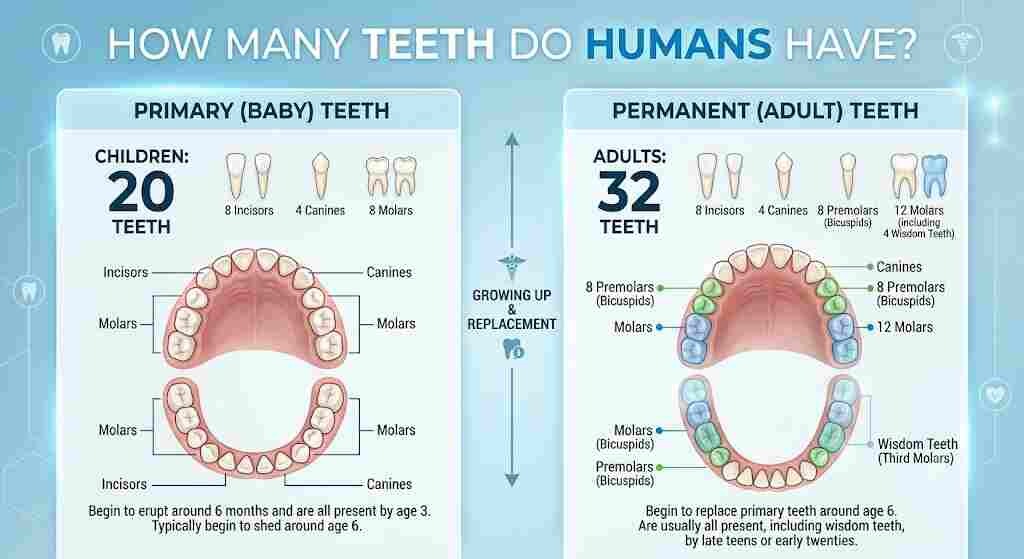
Have you ever wondered how many teeth people have? The answer changes with age. While most adults grow 32 permanent teeth, children begin with 20 baby teeth. This guide explains the number, types, and timeline of human teeth. You will also learn about common variations and how to care for your unique smile.
Why the Number of Teeth Changes from Childhood to Adulthood
Humans have two complete sets of teeth during their lives. This biological process is called diphyodont dentition. The first set, known as primary, baby, or milk teeth, prepares the mouth for adult teeth. The second set, permanent teeth, is designed to last a lifetime.
Children Have 20 Teeth
By the time they are three years old, most kids have twenty primary teeth. Eight incisors, four canines, and eight molars are among these teeth. In the jaw, baby teeth make room for the permanent teeth that will erupt later.
Adults Have 32 Teeth
There are thirty-two permanent teeth in an adult’s complete set. The majority of people have sixteen upper and sixteen lower teeth. However, the actual number varies because many adults have their wisdom teeth removed.
The Four Types of Human Teeth
Every tooth has a specific job. Together, the four permanent tooth kinds enable you to speak, consume, and smile.
Incisors: The Cutting Teeth
Eight incisors total—four on top and four on the bottom—are present in adults. At the front of your mouth are these flat, chisel-shaped teeth. They cut food when you take a bite.
Canines: The Tearing Teeth
Canines are four pointed teeth, one in each quadrant of your mouth. Their sharp shape helps tear food like meat and firm vegetables.
Premolars: The Grinding Teeth
Also called bicuspids, adults have eight premolars. These teeth sit between the canines and molars. They crush and grind food into smaller pieces.
Molars: The Chewing Teeth
The majority of adults have four wisdom teeth among their twelve molars. Molars do about 90% of your chewing. Eight molars remain after many people have their wisdom teeth extracted.
When Do Teeth Come In? A Complete Tooth Eruption Timeline
Teeth follow a predictable schedule for eruption and loss. Here is a detailed table based on data from the MSD Manual and the American Dental Association.
| Tooth Type | Number of Teeth | Eruption Age (Primary) | Eruption Age (Permanent) |
| Lower Central Incisors | 2 | 5–9 months | 6–7 years |
| Upper Central Incisors | 2 | 8–12 months | 7–8 years |
| Upper Lateral Incisors | 2 | 10–12 months | 8–9 years |
| Lower Lateral Incisors | 2 | 12–15 months | 7–8 years |
| First Molars | 4 | 10–16 months | 5–7 years |
| Canines | 4 | 16–20 months | 10–13 years |
| Second Molars | 4 | 20–30 months | 11–13 years |
| Third Molars (Wisdom Teeth) | 4 | N/A | 17–25 years |
Why Adults Might Have Fewer or More Than 32 Teeth
The number 32 is the standard, but many factors change the actual count. Understanding these variations helps you know what is normal for you.
Hypodontia: Missing Teeth
A disorder called hypodontia causes some people to be born without teeth. This can affect any tooth, but it is most common in wisdom teeth, second premolars, and upper lateral incisors.
Hyperdontia: Extra Teeth
Others develop extra teeth, called hyperdontia. These extra teeth can develop anywhere in the oral cavity. They sometimes require removal to prevent crowding.
Wisdom Teeth Removal
Many individuals have had their wisdom teeth extracted, leaving them with 28 teeth instead of 32. Wisdom teeth often lack space to erupt properly, leading to impaction, pain, or infection.
Tooth Loss from Disease or Injury
Tooth loss is common in older adults. Adults between the ages of 20 and 64 typically have 25.5 teeth left. This number decreases with age, as shown by data from the National Institute of Dental and Craniofacial Research.
Why Do People Ask How Many Teeth They Have?
Matters
The answer to the question how many teeth do humans have goes beyond simple curiosity. It is a fundamental part of understanding your health.
Dental Health and Overall Wellness
Your teeth are essential for digestion and speech. The number and condition of your teeth affect your nutrition and quality of life. Eating a diverse diet is made easier with a full set of teeth.
Planning for Orthodontic Treatment
Knowing the normal number of teeth helps dentists plan treatment. Jaw development and biting alignment might be impacted by missing or additional teeth.
Understanding Your Unique Anatomy
Variations in tooth number are common and usually harmless. Understanding your dental anatomy empowers you to make informed decisions about your care.
How to Count Your Own Teeth
You can count your teeth at home using a mirror and good lighting. Start at the upper right back and work your way around. Count each tooth you can see. Remember that wisdom teeth may be partially or fully hidden under the gums.
Common Questions About Human Teeth
Here are answers to the most frequently asked questions about human teeth.
How many teeth do humans have including wisdom teeth?
- There are 32 teeth in an adult human, including wisdom teeth. Eight incisors, four canines, eight premolars, and twelve molars make up this total.
How many human teeth are devoid of wisdom teeth?
Without wisdom teeth, most adults have 28 teeth. This is the typical number following wisdom tooth extraction or in the event that the wisdom teeth never erupted.
When do people have all of their teeth?
By the age of 21, the majority of adults have all 32 permanent teeth. The last teeth to erupt are the third molars, which typically come in between ages 17 and 25.
Do all humans have the same number of teeth?
No. While most humans have 20 primary and 32 permanent teeth, variations are common. Some people have extra teeth, while others are born without any.
Are wisdom teeth always removed?
No, wisdom teeth are not always removed. They only require extraction if they are impacted, cause pain, or threaten the health of adjacent teeth.
How many teeth do children have compared to adults?
Children typically have 20 teeth, while adults have 32. The four types of teeth in children are incisors, canines, and molars. Adults also have premolars, which children do not have.
How Many Teeth Do Humans Have? A Clear Summary
| Life Stage | Number of Teeth | Details |
| Child (Primary) | 20 | Includes incisors, canines, and molars |
| Adult (Permanent) | 32 | Includes incisors, canines, premolars, and molars |
| Adult (Wisdom Teeth Removed) | 28 | Standard after extraction |
| Adult (Average Remaining) | 25.5 | Average for adults aged 20–64 |
Protect Your Teeth for a Lifetime
Your teeth are designed to last a lifetime, but they need proper care.Visit your dentist on a regular basis, brush twice a day, and floss once. Understanding how many teeth do humans have is the first step toward maintaining a healthy, functional smile.
Take Charge of Your Dental Health Today
Now you know the answer to how many teeth do humans have. Use this knowledge to have informed conversations with your dentist. Schedule a checkup to learn about your unique dental anatomy. Your smile deserves expert care and attention.