How to Remove Plaque from Teeth: Your Complete Guide
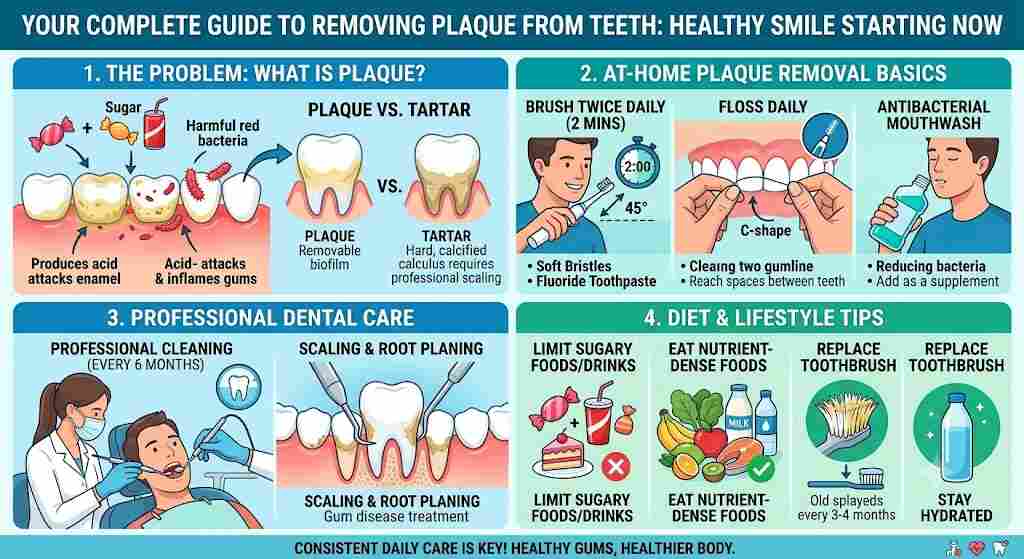
Learning how to remove plaque from teeth is the most powerful step you can take for your oral health. Every time you eat, bacteria in your mouth combine with food particles to form a sticky biofilm on your enamel. Leave that film for just 24 hours, and it hardens into tartar — a cement-like deposit that only a dentist can scrape off. You have the ability to stop that process yourself, starting today.
Plaque vs. Tartar: What’s the Difference?
It’s critical to comprehend the distinction between tartar and plaque. Plaque is soft and sticky — you can remove it yourself with regular brushing and flossing. But if plaque stays on your teeth for more than 24 hours, it starts to harden like cement. That hardened deposit is called tartar (or calculus), and once it forms, you cannot remove it with a toothbrush or floss.
Tartar bonds firmly to your teeth and requires professional cleaning to remove. Inside the tartar are bacteria that release acids that cause cavities, break down your enamel, and can tunnel inside the tooth toward the nerve and jaw bone, causing infection if left untreated.
Why Daily Plaque Removal Matters for Your Health
Removing plaque from your teeth isn’t just about having a nice smile — it’s about your overall health. Plaque-related bacteria can irritate and infect your gums, which damages gum tissue, the ligaments holding your teeth in place, and the jaw bone — potentially resulting in tooth loss.
Poor dental health is associated with conditions such as high blood pressure, heart problems, diabetes, rheumatoid arthritis, and even Alzheimer’s disease. Bacteria from plaque can travel to other parts of your body, including the brain, heart, and lungs. Simply removing the plaque can reduce the risk of pneumonia and stop the progression of existing illness.
How to Remove Plaque from Teeth at Home: The Basics
The most effective way to remove plaque from teeth at home is to brush twice a day with fluoride toothpaste and floss once daily. Brushing disrupts the biofilm on tooth surfaces, while flossing reaches the spaces between teeth where a brush cannot. Together, these two actions remove the vast majority of plaque before it can harden into tartar. Technique matters as much as frequency.
Brush for Two Full Minutes, Twice a Day
One minute of brushing removes only about 50% of plaque, while two minutes achieves approximately 80% removal. Two minutes is the consensus recommendation for a reason. Use a soft or extra-soft toothbrush — hard or medium bristles can wear away your enamel and gum line. Choose a fluoride toothpaste, as fluoride helps prevent cavities by removing plaque and strengthening your teeth.
Master the Proper Brushing Technique
The Modified Bass technique is the gold standard for plaque removal. Hold your toothbrush at a 45-degree angle to your gum line, with bristles pointing slightly toward the tooth root. Use gentle, short vibrating motions (about 1-2 mm amplitude) — think vibration, not scrubbing.
Multiple gentle vibrations (approximately 10-20 per tooth segment) dislodge plaque through gentle friction. After completing the vibratory motions on the gingival third of the tooth, roll the brush away from the gum toward the biting surface to clean the rest of the tooth. This two-phase approach ensures both gumline and surface plaque removal.
Floss Every Single Day
Flossing removes plaque between your teeth — the spots your toothbrush simply cannot reach. Proper technique matters: use about 18 inches of floss, wrap it around each side of the tooth in a “C” shape, and rub up and down gently against the tooth.
That friction is what removes plaque. The American Dental Association confirms that using floss or an interdental cleaner with toothbrushing is more effective than brushing alone at reducing plaque and gingivitis.
String floss is recommended over floss picks for full plaque removal. Water flossers can help remove food particles and plaque, but they shouldn’t replace string floss.
Use an Antibacterial Mouthwash
An antibacterial mouthwash can help reduce the bacteria that contribute to plaque, but it should be used as an addition to brushing and flossing, not a replacement. Some studies suggest that rinsing with a mouthwash containing a small amount of tea tree oil after brushing may lessen dental plaque. Additionally, chlorhexidine mouthwash works well to lessen gingivitis brought on by plaque bacteria.
Professional Plaque and Tartar Removal
Even with the best home routine, some plaque will always escape your brush and floss. Professional teeth cleaning by a dentist or hygienist can effectively remove plaque deposits lodged in hard-to-reach areas.
During a professional cleaning, your hygienist uses a small mirror to examine your mouth, then removes plaque and tartar using a scaler — either an ultrasonic vibrating instrument or a handheld tool.
The ultrasonic device uses vibration energy along with continuous water flow to loosen and remove plaque, tartar, and stains.After that, the tooth surfaces are polished to make them smooth. Most dentists recommend professional cleanings every six months.
Scaling and Root Planing for Deeper Cleaning
For patients with gum disease or significant tartar buildup below the gumline, a deeper cleaning called scaling and root planing may be necessary. Scaling removes plaque and tartar from below the gum line, while root planing smoothes the tooth root and helps the gums re-attach to the tooth. This procedure represents the gold-standard treatment for existing periodontitis.
Natural Approaches to Help Remove Plaque
Several natural remedies can support your plaque removal efforts, though they should supplement — not replace — brushing and flossing.
Baking Soda
Baking soda is mildly abrasive and can help remove plaque before it hardens into tartar. Mix a small amount of baking soda with water to form a paste, then gently brush your teeth with it.
A 2008 study found that toothpaste containing baking soda cleared more plaque than toothpaste without it. However, use baking soda sparingly — it can potentially damage tooth enamel if used excessively. Also, using baking soda as a replacement for toothpaste means you miss out on the benefits of fluoride.
Oil Pulling
Oil pulling is an ancient practice that involves swishing oil (typically coconut oil) in your mouth for 15-20 minutes to reduce bacteria and plaque buildup.
Research shows that oil pulling has antimicrobial and plaque-reducing properties, comparable in some cases to chlorhexidine mouthwash. Coconut oil is high in lauric acid, which helps remove bacteria and plaque from teeth and gums.
Herbal Remedies
Neem, clove, turmeric, and ginger-based herbal dentifrices and mouthwashes have demonstrated antibacterial qualities and were just as successful in lowering plaque and gingival irritation as fluoridated treatments.
A miswak stick (a natural toothbrush from the Salvadora persica tree) has been shown to significantly reduce plaque accumulation and gingival inflammation, performing comparably to or better than conventional toothbrushes.
Aloe Vera
Aloe vera has demonstrated anti-inflammatory and antibacterial effects that may help reduce plaque. Some natural remedies suggest using aloe vera gel as a mouth rinse or toothpaste alternative.
The Role of Diet in Plaque Formation
What you eat directly affects how much plaque forms on your teeth. Eating foods rich in sugars and carbohydrates leads to plaque buildup. Different types of sugars have different effects on the formation of dental plaque. A well-balanced diet rich in proteins with restricted sugar intake is considered a possible tool in the prevention and control of plaque-induced gingivitis.
Not eating enough nutrient-dense foods like fruits, vegetables, lean meats, whole grains, and dairy increases the risk of tooth decay and oral diseases. Throughout the day, stay hydrated to help remove bacteria and food particles.
How to Remove Plaque from Teeth for Children
Teaching children how to remove plaque from teeth sets them up for a lifetime of good oral health. Dentists recommend that children brush their teeth twice a day using fluoride toothpaste and floss once a day.
Studies show that instruction using dental models is the most effective and sustainable method for reducing dental plaque in children. Parents should supervise brushing until children develop proper technique — typically around age 7 or 8.
Electric vs. Manual Toothbrushes: Which Removes More Plaque?
Electric toothbrushes with oscillating-rotating technology demonstrate 10-15% superior plaque removal compared to manual brushing with standard technique. They do the circular motion for you and have a built-in timer to ensure you brush for the full two minutes.
However, it’s not the toothbrush that matters most — it’s the technique. You might have a brush that does all the work for you, but if you don’t have an excellent brushing technique, you’ll miss plaque, even with an electric toothbrush. Patients with limited manual dexterity, arthritis, or developmental disabilities benefit substantially from electric toothbrushes.
Common Mistakes That Prevent Effective Plaque Removal
Many people brush incorrectly, using excessive force, wrong angles, or inefficient patterns. Common mistakes include:
- Brushing too hard: This wears away enamel and damages gums. Use gentle pressure.
- Using the wrong angle: A 45-degree angle to the gum line is essential. Perpendicular angles miss subgingival plaque.
- Brushing for less than two minutes: One minute removes only about 50% of plaque.
- Skipping flossing: Toothbrush bristles cannot reach between teeth — flossing removes about 80% of interproximal plaque when done correctly.
- Not replacing your toothbrush: Replace your brush every few months when bristles become splayed.
Can You Remove Tartar at Home?
Once plaque hardens into tartar, it bonds to the tooth and can only be removed professionally. No home remedy — baking soda, vinegar, or otherwise — can safely remove tartar once it has formed.
While some people try white vinegar rinses or orange peels, these methods are not scientifically proven and can damage enamel. Your dentist or hygienist has the proper tools and training to remove tartar safely without harming your teeth.
The Science of Plaque Biofilm
Dental plaque is not just a random collection of bacteria — it’s a structured biofilm community composed of multiple bacterial species embedded in an extracellular polysaccharide matrix.
This biofilm architecture resists simple rinsing and requires mechanical disruption for effective removal. Plaque-free tooth surfaces begin recolonizing within 24 hours if mechanical cleaning is discontinued. Supragingival biofilm (plaque above the gum line) accumulates progressively, which is why daily removal is essential.
How to Remove Plaque from Teeth: A Daily Routine
Follow this daily routine for optimal plaque removal:
- Floss first — before brushing, floss to remove plaque and debris from between teeth.
- Brush for two minutes — use a soft-bristled brush at a 45-degree angle with gentle circular motions.
- Brush your tongue — this removes bacteria that can contribute to plaque formation.
- Rinse — use an antibacterial mouthwash if desired.
- Drink water — stay hydrated to help wash away food particles.
Why Consistency Matters More Than Intensity
Plaque begins hardening within 24 hours, so skipping even one day of brushing or flossing allows buildup to progress toward tartar. Consistency is the key to effective plaque removal. A perfect routine once in a while doesn’t protect your teeth — a good routine every single day does.
Frequently Asked Questions
Q: How often should I brush to remove plaque from teeth?
A: Brush twice daily for two full minutes each time using fluoride toothpaste. One minute of brushing removes approximately 50% of plaque, while two minutes achieves about 80% removal.
Q: Can I use mouthwash alone to eliminate plaque from my teeth?
A: No. Plaque is so sticky that rinsing alone cannot effectively dislodge the bacteria — only mechanical action from brushing can. Mouthwash is a helpful addition to brushing and flossing, not a replacement.
Q: How do I know if I have plaque buildup?
A: You may feel a fuzzy coating on your teeth when you run your tongue across the surface. You might also notice bad breath, bleeding gums when brushing, or visible yellow buildup along the gum line.
Q: Is baking soda safe for removing plaque from teeth?
A: Baking soda can help remove plaque when used occasionally, but it should not replace fluoride toothpaste. Use it sparingly, as excessive use can damage tooth enamel.
Q: How often should I get professional plaque removal?
A: A professional cleaning every six months is advised by the majority of dentists. Your dentist may recommend more frequent visits if you have gum disease or a history of heavy tartar buildup.
Q: Can plaque cause health problems beyond my mouth?
A: Yes. Bacteria from plaque can travel to other parts of your body, including the brain, heart, and lungs. Poor dental health is associated with high blood pressure, heart problems, diabetes, and other systemic conditions. Removing plaque reduces the risk of pneumonia and helps stop the progression of existing illness.
Your Next Step Toward a Healthier Smile
You now know exactly how to remove plaque from teeth — and why it matters so much. The tools are simple: a soft toothbrush, fluoride toothpaste, dental floss, and two minutes twice a day. The results are profound: healthier gums, stronger teeth, fresher breath, and a lower risk of serious health problems.
Start tonight. Floss before you brush. Spend two full minutes brushing with proper technique. Make it a non-negotiable part of your day. Your smile — and your whole body — will thank you.