Lower Right Back Pain: A Complete Guide to Causes, Diagnosis, Treatment, and Relief
Introduction
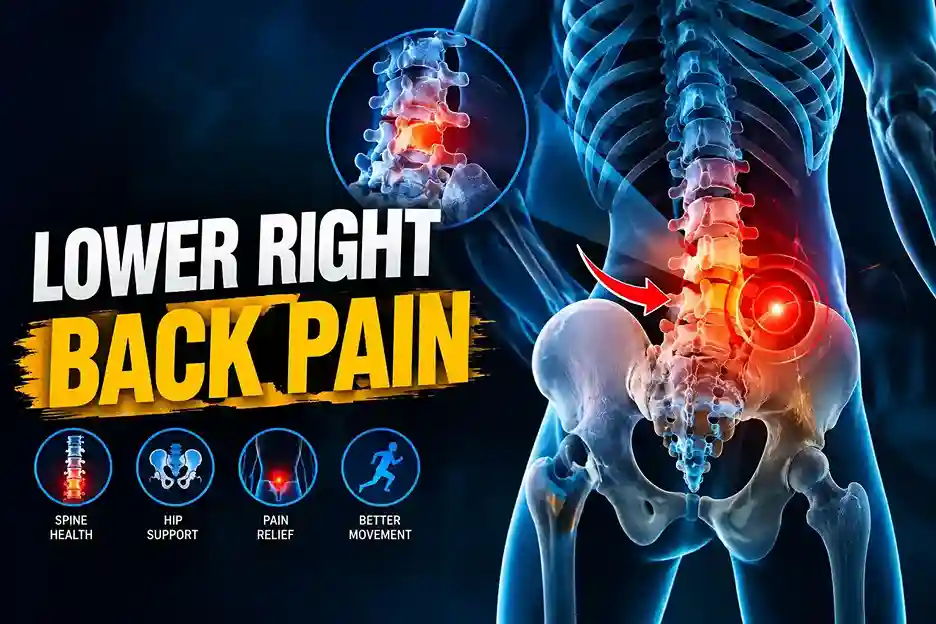
You reach for your lower right back. The pain stops you mid-step. Whether it’s a dull ache that lingers or a sharp stab that steals your breath, pain in this specific area deserves attention. Your lower right back holds muscles, joints, and nerves. Organs like your right kidney and appendix sit nearby. That means the source of your pain could be musculoskeletal, or it could signal something deeper. This guide walks you through every possible cause, proven treatments, and the exact moments when you should call a doctor.
What Makes Lower Right Back Pain Different From General Back Pain?
Pain in your lower right back isn’t random. The location matters. Your lumbar spine on the right side supports your body’s weight differently than the left. Muscles, ligaments, and facet joints on the right side can become strained from twisting, lifting, or even sleeping in an awkward position. Beyond the spine, your right kidney sits just behind the lower ribs. Your appendix rests in the lower right abdomen. Problems in these organs can send pain signals directly to your lower right back.
- Mechanical causes stem from muscles, bones, discs, or joints
- Visceral causes originate from organs like kidneys, appendix, or reproductive organs
- Referred pain travels from a distant source to your back
A study in the Journal of Family Medicine and Primary Care highlights that persistent lower back pain can sometimes signal serious conditions like lymphoma affecting the lumbosacral plexus, emphasizing the need for careful evaluation. Location-specific pain gives your doctor a crucial diagnostic clue.
What Are the Most Common Musculoskeletal Causes?
Muscles and ligaments in your lower right back work hard every day. They support your spine, help you bend, and stabilize your core. When they fail, pain follows.
Muscle strains and ligament sprains top the list. Lifting something heavy, twisting suddenly, or even a violent sneeze can tear tiny fibers in your lower right back. The American Association of Neurological Surgeons reports these injuries are the most common cause of lower back pain. You’ll feel a dull ache or a sharp pull when you move.
Herniated discs occur when the soft cushion between your vertebrae slips out of place. The disc material presses against nearby nerve roots. On the right side, this creates shooting pain that may travel down your right leg. Medical News Today notes that herniated discs frequently trigger radiculopathy, where nerve root compression causes pain, numbness, or weakness.
Facet joint arthritis develops as the small joints along your spine wear down. These joints carry most of your body weight in the lower back. Mayo Clinic experts explain that facet joints allow you to bend and twist, and when arthritis strikes, every movement hurts.
Spinal stenosis narrows the space around your spinal cord. Pressure builds on the nerves, causing pain and cramping that worsens when you stand or walk.
Common Musculoskeletal Causes at a Glance
| Cause | Typical Sensation | Aggravating Factors | Common Treatment |
| Muscle strain | Dull ache, stiffness | Bending, lifting | Rest, ice/heat, NSAIDs |
| Herniated disc | Sharp, shooting pain | Sitting, coughing | Physical therapy, injections |
| Facet arthritis | Deep, aching pain | Extension, standing | NSAIDs, physical therapy |
| Spinal stenosis | Cramping, heaviness | Walking, standing | Injections, surgery (severe) |
How Do Kidney Problems Cause Lower Right Back Pain?
Your right kidney sits in a protective pocket of fat and muscle just below your rib cage. When something goes wrong inside it, the pain often shows up in your lower right back.
Kidney stones form when minerals crystallize in your urine. As a stone moves through your kidney or ureter, it creates waves of intense pain. Spine-health reports that kidney stones cause low back pain on one side, along with painful urination, nausea, and sometimes blood in the urine. The pain often comes in waves that last 20 to 60 minutes.
Kidney infections (pyelonephritis) develop when bacteria travel from your bladder to your kidney. Fever, chills, and tenderness in your lower right back near the kidney are classic signs. You may also feel burning when you urinate.
Key difference: Kidney pain usually comes with urinary symptoms. Muscle pain does not.
- Pain with urination
- Nausea or vomiting
- Fever and chills
- Blood in urine
- Pain that comes in waves
Can Appendicitis Cause Lower Right Back Pain?
Yes, and this is a medical emergency. Your appendix is a small pouch attached to your large intestine in the lower right abdomen. When it becomes inflamed, pain typically starts near your belly button and moves to your lower right abdomen. But the appendix sits close to your back muscles. Inflammation can irritate nerves that refer pain to your lower right back.
Spine-health notes that if the appendix becomes inflamed, starts leaking, or ruptures, it may cause lower right back pain along with fever, nausea, and vomiting. The pain often worsens when you cough, walk, or make sudden movements.
Warning signs of appendicitis:
- Sudden pain that starts around your belly button and moves to your lower right side
- Pain that worsens with coughing, walking, or jarring movements
- Nausea and vomiting
- Loss of appetite
- Low-grade fever
- Abdominal swelling
If you suspect appendicitis, go to an emergency room immediately. A ruptured appendix can be life-threatening.
What Gynecological Conditions Cause Lower Right Back Pain?
For women, the reproductive organs in the pelvis can refer pain to the lower right back.
Endometriosis occurs when tissue similar to your uterine lining grows outside your uterus. This tissue can attach to ligaments and organs in your pelvis, creating sharp, sporadic pain that radiates to your lower right back.
Uterine fibroids are noncancerous growths in your uterus. Large fibroids can press against nerves and muscles, causing lower right back pain along with heavy periods, frequent urination, and pain during intercourse.
Ovarian cysts can grow large enough to press on surrounding structures. When a cyst on your right ovary ruptures or twists, the pain can be sudden and severe.
Pregnancy changes everything. As your baby grows, your center of gravity shifts forward. Your lower back muscles work harder to keep you balanced. The result is often a dull ache in your lower right back that worsens as the day goes on.
What Are Red Flag Symptoms That Require Immediate Medical Attention?
Most lower right back pain improves with time and self-care. But certain symptoms demand urgent evaluation. The UPMC HealthBeat warns that intolerable, radiating pain that makes it impossible to use the bathroom is a red flag, as is loss of sensation around your groin.
Seek emergency care if you experience:
- Loss of bladder or bowel control
- Numbness in your groin or saddle area
- Progressive weakness in both legs
- Severe pain after a fall or accident
- Fever above 101°F (38.3°C) with back pain
- Unexplained weight loss with persistent pain
- Pain that wakes you at night and doesn’t improve with rest
Cleveland Clinic experts add that fever, worsening pain, progressive movement of pain from the back into the leg, numbness, and pain unrelieved at rest all warrant urgent medical evaluation.
The takeaway: Don’t wait. These symptoms could signal a spinal infection, cauda equina syndrome, or a tumor. Early treatment saves lives.
How Do Doctors Diagnose Lower Right Back Pain?
Your doctor starts with a conversation and a physical exam.
Medical history: Your doctor asks when the pain started, what makes it better or worse, and whether you have other symptoms like fever, urinary problems, or weight loss. Be specific about the location.
Physical examination: Your doctor checks your range of motion, tests your reflexes, and presses on specific areas of your back and abdomen. They may perform a straight leg raise test to check for nerve irritation.
Imaging tests:
- X-rays reveal bone problems like fractures or arthritis
- MRI scans show discs, nerves, and soft tissues in detail
- CT scans provide detailed images of bones and organs
- Ultrasound examines your kidneys, gallbladder, and reproductive organs
Laboratory tests:
- Urinalysis detects kidney stones, infections, or blood
- Blood tests check for infection, inflammation, or kidney function
- Complete blood count reveals signs of infection or anemia
A study published in the Journal of Family Medicine and Primary Care emphasizes that persistent lower back pain with unusual fatigue may warrant imaging to rule out serious conditions like lymphoma. Your doctor will choose the right tests based on your symptoms and risk factors.
What Home Treatments Relieve Lower Right Back Pain?
You can do a lot at home to ease your pain. Start with these proven strategies.
Movement and Rest
- Gentle walking keeps your back from stiffening. Short walks throughout the day are better than one long walk.
- Avoid bed rest beyond one or two days. Prolonged rest weakens your back muscles and makes pain worse.
- Sleep smart: Lie on your side with a pillow between your knees. This takes pressure off your lower back.
Ice and Heat
- Ice packs for the first 48 hours reduce inflammation and numb sharp pain. Apply for 15-20 minutes every two hours.
- Heating pads after 48 hours relax tight muscles and increase blood flow. Use for 15-20 minutes at a time.
- Never sleep with a heating pad on. You could burn your skin.
Over-the-Counter Medications
- NSAIDs like ibuprofen (Advil, Motrin) reduce inflammation and pain
- Acetaminophen (Tylenol) relieves pain but doesn’t reduce inflammation
- Topical creams with menthol or capsaicin provide localized relief
- Muscle relaxants help if spasms are your main problem
Mayo Clinic advises that ice, heat, and pain relievers are effective first-line treatments for most back pain episodes.
Exercises That Help
- Knee-to-chest stretch: Lie on your back. Pull one knee toward your chest. Hold 30 seconds. Switch sides.
- Pelvic tilts: Lie on your back with knees bent. Flatten your lower back against the floor by tightening your abdominal muscles. Hold 5 seconds. Repeat 10 times.
- Cat-cow stretch: On your hands and knees, alternate arching and rounding your back. This mobilizes your spine.
- Bridges: Lie on your back with knees bent. Lift your hips toward the ceiling. Hold 5 seconds. Repeat 10 times.
- Clamshells: Lie on your side with knees bent. Open your top knee like a clamshell. This strengthens your glutes and supports your lower back.
A clinical resource from MSK Doctors notes that strengthening your core and glutes relieves strain on your lower back and balances muscular workloads.
Home Treatment Comparison
| Method | Best For | How to Use | Precautions |
| Ice | Acute pain, swelling | 15-20 min every 2 hours | Wrap in cloth; never on bare skin |
| Heat | Muscle spasms, stiffness | 15-20 min several times daily | Avoid while sleeping |
| Walking | Stiffness, mild pain | 5-10 min several times daily | Stop if pain worsens |
| NSAIDs | Inflammation, pain | Follow package directions | Take with food |
| Stretching | Flexibility, tension | Gentle, slow movements | No bouncing |
| Strengthening | Long-term prevention | 2-3 times per week | Start slow |
What Professional Treatments Are Available?
When home care isn’t enough, professional treatments can help.
Physical therapy teaches you exercises to strengthen your back and core muscles. A physical therapist also shows you how to move safely to avoid re-injury. Mayo Clinic reports that physical therapy can increase flexibility, strengthen back and abdominal muscles, and improve posture.
Chiropractic care uses spinal adjustments to improve alignment and reduce pain. Many people find relief from regular adjustments, especially for mechanical back pain.
Massage therapy relaxes tight muscles and improves circulation. It works well for muscle strains and spasms.
Acupuncture involves inserting thin needles at specific points on your body. Some studies show it reduces back pain, though results vary.
Injections:
- Cortisone injections reduce inflammation around nerves and joints
- Trigger point injections release tight muscle knots
- Nerve blocks interrupt pain signals from specific nerves
Prescription medications:
- Muscle relaxants for severe spasms
- Antidepressants like duloxetine for chronic pain
- Opioids only for short-term, severe pain under close supervision
Surgery is a last resort. It’s reserved for cases where:
- Nerve compression causes progressive weakness
- Structural problems like herniated discs don’t respond to other treatments
- Spinal instability threatens your mobility
Cleveland Clinic spine specialists report treating over 16,000 adults annually for conditions ranging from simple low back pain to complex spinal deformities.
How Can You Prevent Lower Right Back Pain?
Prevention beats treatment every time. These habits protect your back.
Exercise regularly. Strengthen your core, glutes, and back muscles. A strong core acts like a natural corset for your spine.
Practice good posture.
- Sit with your feet flat on the floor
- Keep your shoulders back and relaxed
- Position your screen at eye level
- Take breaks every 30 minutes to stand and stretch
Lift properly.
- Bend your knees, not your waist
- Keep the load close to your body
- Avoid twisting while lifting
- Ask for help with heavy objects
Maintain a healthy weight. Extra pounds strain your lower back. Even losing 5-10 pounds can make a difference.
Stay hydrated. Drinking enough water helps prevent kidney stones, a common cause of lower right back pain.
Quit smoking. Smoking reduces blood flow to your spine and speeds disc degeneration.
Listen to your body. If an activity causes pain, modify it. Pushing through pain often makes things worse.
When Should You See a Doctor for Lower Right Back Pain?
Most lower right back pain improves within four to six weeks. Mayo Clinic reports that about 80% of adults experience lower back pain at some point, and most improve significantly within 14 days.
See your doctor if:
- Pain lasts longer than six weeks
- Pain worsens despite rest and medication
- You develop new symptoms like numbness or weakness
- You have a history of cancer
- You’re over 50 and this is your first episode of severe back pain
- You have a fever or unexplained weight loss
Go to the emergency room if:
- You lose control of your bladder or bowels
- You feel numbness in your groin or inner thighs
- You have severe pain after a fall or accident
- Both legs become weak
Chapter Detailing Table
| Chapter | Focus Area | Key Insight | Primary Source |
| 1 | Introduction | Pain location guides diagnosis | — |
| 2 | What Makes It Different | Mechanical vs. visceral vs. referred | Journal of Family Medicine |
| 3 | Musculoskeletal Causes | Strains, discs, arthritis, stenosis | Mayo Clinic |
| 4 | Kidney Problems | Stones, infections, urinary symptoms | Spine-health |
| 5 | Appendicitis | Emergency warning signs | Spine-health |
| 6 | Gynecological Conditions | Endometriosis, fibroids, pregnancy | Spine-health |
| 7 | Red Flags | When to seek emergency care | UPMC HealthBeat |
| 8 | Diagnosis | Imaging, labs, physical exam | Cleveland Clinic |
| 9 | Home Treatments | Ice, heat, exercise, OTC meds | MSK Doctors |
| 10 | Professional Treatments | PT, injections, surgery | Mayo Clinic |
| 11 | Prevention | Posture, lifting, lifestyle | — |
| 12 | When to See a Doctor | Timeline and warning signs | Mayo Clinic |
Conclusion: Take Control of Your Lower Right Back Pain
Your lower right back pain has a story. It might be a simple muscle strain that heals in a few weeks. It might be a kidney stone that needs medical attention. Or it might be something more serious that demands immediate care. Now you know the difference.