Tongue Piercing: The Complete Guide to Pain, Healing, and Aftercare
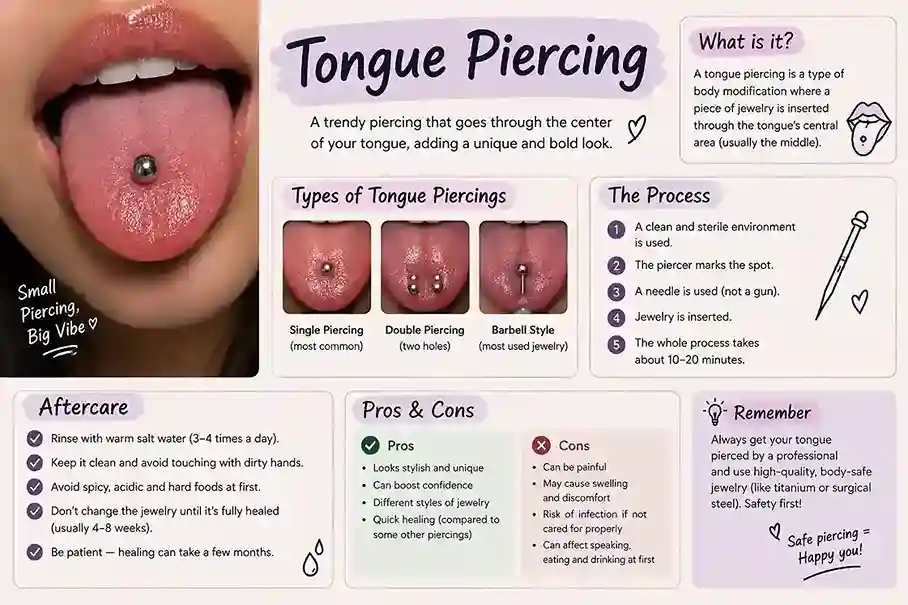
A tongue piercing looks simple in photos, but it comes with real decisions: pain you can’t predict, a healing window that tests your patience, and aftercare rules that protect your health. Skip a step, and you risk swelling, infection, or a piercing that never sits right. This guide breaks down exactly what to expect, so you walk into the studio informed and walk out confident.
What Is a Tongue Piercing, Exactly?
A tongue piercing is a puncture through the tongue’s muscle, most often placed at the midline, where jewelry sits without hitting major nerves or blood vessels. A piercer uses a hollow needle to create the channel, then inserts a barbell to hold it open while it heals.
Unlike ear or nose piercings, this one sits inside a muscle that moves constantly — talking, eating, swallowing. That movement is exactly why healing rules matter more here than almost anywhere else on the body.
Related terms you’ll see: tongue web piercing, venom piercing (double tongue piercing), tongue ring, and oral piercing — the broader category that also covers lip and cheek piercings.
How Much Does a Tongue Piercing Hurt?
Pain is subjective, but most people rate a tongue piercing between 3 and 5 out of 10. The needle pass itself takes only a few seconds. What follows — swelling, tenderness, and a metallic taste — bothers people more than the piercing itself.
What actually causes the discomfort:
- The initial needle puncture (brief, sharp)
- Swelling pressing against the barbell for the first 3–5 days
- Accidental bites while your tongue adjusts to the new weight
Pain typically fades fast. Most people report the sharpest discomfort easing within 48–72 hours, with residual soreness settling by the end of week one.
How Much Time Does It Take for a Tongue Piercing to Heal?
A tongue piercing generally heals in 4 to 6 weeks for the surface tissue, though full internal healing can stretch longer depending on your immune response, oral hygiene, and how well you follow aftercare.
| Healing Stage | Timeframe | What Happens |
| Acute swelling | Days 1–5 | Tongue swells noticeably; speech and eating are harder |
| Early healing | Week 1–2 | Swelling drops; tenderness continues; crusting around barbell is normal |
| Mid healing | Week 3–4 | Discomfort mostly gone; piercing still fragile internally |
| Late healing | Week 5–8 | Surface feels normal; avoid changing jewelry too early |
| Full maturity | Month 3+ | Internal tissue fully stabilizes; safe for long-term jewelry changes |
Don’t judge healing by how it looks. A tongue piercing can appear calm on the surface while the internal channel is still forming new tissue underneath.
Tongue Piercing Aftercare: Step-by-Step
Aftercare decides whether your tongue piercing heals cleanly or turns into a dental visit. Follow these steps every day until your piercer confirms full healing.
- Rinse after every meal with an alcohol-free antibacterial mouthwash.
- Switch to a soft-bristled toothbrush and brush gently around the jewelry.
- Suck on ice chips during the first few days to reduce swelling.
- Eat soft, cold, bland foods — think yogurt, mashed potatoes, smoothies.
- Avoid spicy, acidic, or crunchy foods that irritate raw tissue.
- Don’t touch the piercing with unwashed hands or your teeth.
- Skip kissing, oral contact, and shared utensils until healing completes.
- Leave the original barbell in place for the full healing period — swapping jewelry early raises infection risk.
The American Dental Association recommends rinsing with an alcohol-free mouth rinse consistently through the entire healing window, not just the first few days, since bacteria buildup remains a risk until tissue fully closes.
Tongue Piercing Types and Placements
Not every tongue piercing sits in the same spot. Placement changes both the healing process and the visible style.
| Type | Placement | Healing Difficulty |
| Standard midline | Center of the tongue | Easiest, most common |
| Horizontal | Side to side through the tongue | Moderate; higher nerve risk |
| Venom (double) | Two piercings placed symmetrically | Harder; longer healing |
| Tongue web | Under the tongue, through the frenulum | Fast healing, less painful |
| Frenulum-adjacent | Near the tongue web, off-center | Moderate |
Standard midline placement remains the safest starting point for anyone getting their first tongue piercing, since it avoids the dense nerve clusters found near the sides and underside.
Tongue Piercing Jewelry: Materials and Sizes
Your starting jewelry isn’t just decoration — it’s a medical-grade tool that keeps the wound stable while it heals.
Best materials for initial healing:
- Implant-grade titanium (lowest allergy risk)
- Niobium
- Solid 14k gold (only after full healing)
Avoid during healing:
- Nickel-based alloys (common allergy trigger)
- Acrylic or plastic barbells for the initial piece
Standard starter barbells run 14 gauge, with a longer post to accommodate swelling. A shorter, downsized barbell typically replaces it once the tongue piercing has fully healed, reducing the risk of chipped teeth from a bar that’s too long.
Tongue Piercing Risks and Complications
Every piercing carries risk, but a tongue piercing sits in a category of its own because it interacts with speech, chewing, and dental structure daily.
Documented risks include:
- Infection from bacteria in the mouth
- Prolonged swelling that affects breathing (rare, but serious)
- Nerve damage causing numbness or altered taste
- Chipped or cracked teeth from jewelry contact
- Gum recession where the barbell rubs against tissue
- Piercing rejection or migration
The Association of Professional Piercers advises choosing a licensed piercer who follows strict sterilization protocols, since studio hygiene standards directly influence infection rates far more than aftercare alone.
Signs Your Tongue Piercing Is Infected
Some swelling and tenderness are normal. These signs are not:
- Fever, chills, or a general unwell feeling
- Red streaking spreading from the piercing site
- thick green or yellow discharge (not clear fluid)
- Swelling that worsens after day 5 instead of improving
- Difficulty breathing or swallowing
Contact a dentist or physician immediately if you notice any of these. A tongue piercing that swells severely enough to restrict your airway is a medical emergency, not a wait-and-see situation.
How Much Does a Tongue Piercing Cost?
Prices vary by location, studio reputation, and jewelry material.
| Cost Factor | Typical Range |
| Piercing service only | $30–$60 |
| Jewelry (titanium/steel) | $15–$40 |
| Jewelry (14k gold) | $50–$150 |
| Total starting cost | $50–$100 |
| Aftercare products | $10–$25 |
Choosing the cheapest studio available is one of the fastest ways to increase complication risk. A slightly higher price at a licensed, reviewed studio usually reflects better sterilization equipment and a more experienced piercer.
Choosing a Safe, Professional Piercer
Before booking a tongue piercing appointment, verify these details:
- The studio uses single-use, sterile needles (never a piercing gun)
- The piercer is licensed and follows local health department rules
- Tools are autoclaved and stored in sealed sterile packaging
- The studio has visible reviews, portfolio photos, and clear aftercare instructions
- Staff answer questions about placement, jewelry, and healing without hesitation
A rushed consultation is a warning sign. A professional piercer spends time examining your tongue’s anatomy — its length, frenulum, and vein placement — before marking where the piercing will go.
Foods to Eat and Avoid During Healing
| Eat | Avoid |
| Yogurt, smoothies, ice cream | Spicy foods |
| Mashed potatoes, soup (cooled) | Acidic fruit, citrus juice |
| Scrambled eggs | Crunchy chips, nuts, hard bread |
| Oatmeal | Alcohol |
| Cold water, herbal tea | Carbonated, sugary drinks |
Stick to this list for at least the first two weeks. Reintroduce normal foods gradually once swelling fully subsides and chewing no longer feels uncomfortable.
Frequently Asked Questions
1. Does a tongue piercing hurt more than an ear piercing?
Most people rate it slightly higher than a standard earlobe piercing, but lower than cartilage. The swelling afterward causes more discomfort than the piercing itself.
2. Can I talk normally right after getting a tongue piercing?
Not immediately. Swelling affects speech for the first few days. Clear speech usually returns within a week as swelling drops.
3. How soon can I change my tongue piercing jewelry?
Wait until full healing completes, typically 4–8 weeks. Changing it early disrupts the healing channel and raises infection risk.
4. Is a tongue piercing bad for your teeth?
It can be, over time. Constant contact between the barbell and teeth may cause chipping or gum recession, which is why downsizing the jewelry after healing matters.
5. What happens if my tongue piercing swells too much?
Mild swelling is normal for the first few days. Severe swelling that affects breathing needs immediate medical attention — this is rare but serious.
6. Can I get a tongue piercing if I play a wind instrument or sing professionally?
It’s possible, but the adjustment period can affect tongue placement and airflow control. Many professionals wait for off-season timing and consult their piercer about barbell size.
Final Word: Make the Decision With Confidence
A tongue piercing rewards patience. Choose a licensed piercer, follow every aftercare step without shortcuts, and give your body the full healing window it needs. Do that, and you’ll end up with a piercing that looks sharp and stays healthy for years. Ready to move forward? Book a consultation with a licensed piercer near you and ask every question on this list before you sit down in the chair.