Optometrist Emergency Near Me? Get Same-Day Care Now
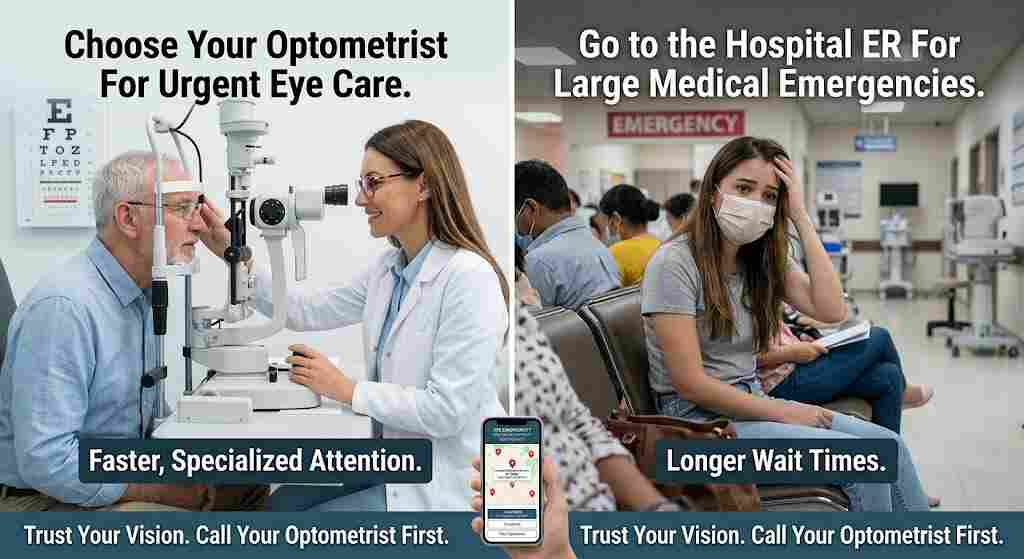
Optometrist Emergency Near Me Your eye suddenly hurts. You see flashes of light. Something flew into your eye. These moments feel terrifying. Many people rush to the emergency room. But your local optometrist can handle many eye emergencies faster and better.
Most optometry clinics reserve same-day appointment slots for urgent cases. They have specialized tools that general ERs lack. Knowing when to call an optometrist emergency near me can save your vision and hours of waiting.
What Makes an Eye Emergency?
Optometrist Emergency Near Me An eye emergency is any sudden or severe problem affecting your eyes or vision that needs prompt medical attention. Not every red eye or irritation counts as an emergency. But some symptoms demand immediate care. Left untreated, certain conditions can cause permanent vision loss or blindness.
The difference between a minor annoyance and a true emergency often comes down to severity and speed of onset. Gradual changes rarely signal an emergency. Sudden changes almost always do. Your optometrist can help you tell the difference.
10 Warning Signs You Need an Optometrist Emergency Near Me
These symptoms require urgent evaluation. Call your optometrist immediately if you experience any of them.
Sudden Vision Loss or Changes
Vision doesn’t usually change overnight without a reason. Sudden loss of vision—partial or total, in one or both eyes—could signal retinal detachment, optic neuritis, or even a stroke. Sudden blurriness or double vision also count as emergencies. When a patient has acute visual loss, optometrists are frequently the first medical professionals to assess them.
Flashes of Light
Seeing flashes that look like lightning bolts or camera flashes? This often means the vitreous gel is pulling on your retina. While sometimes harmless, it can signal a retinal tear or detachment. Any new flashes warrant an urgent optometrist visit.
Sudden Increase in Floaters
Floaters—those tiny specks or cobwebs drifting across your vision—are usually normal. But a sudden shower of new floaters, especially too many to count, is a red flag. This could mean bleeding inside the eye or a retinal tear. Call an optometrist emergency near me right away if this happens.
A Curtain or Shadow in Your Vision
A dark curtain, veil, or shadow moving across your field of vision is one of the most urgent warning signs. This often indicates retinal detachment. Prompt treatment can mean the difference between full recovery and permanent vision loss.
Severe Eye Pain
Regular discomfort is one thing. Sharp, intense, or throbbing eye pain is another. Severe pain could indicate acute angle-closure glaucoma, corneal abrasion, or uveitis. Pain accompanied by headache, nausea, or vomiting requires immediate care.
Chemical Exposure
Household cleaners, battery acid, industrial chemicals—any chemical splash in your eye is an emergency. Alkalis like ammonia and sodium hydroxide cause the most damage because they penetrate the eye’s outer layer quickly. Flush immediately with water for at least 15 to 30 minutes. Then call your optometrist.
Foreign Object in the Eye
Metal shavings, wood pieces, glass, or even an eyelash that won’t wash out needs professional removal. Never use tweezers or cotton swabs near your eye. Rubbing can press the object deeper. Your optometrist has the right tools to remove it safely.
Eye Injury or Trauma
Optometrist Emergency Near Me A blow to the eye from a sports injury, fall, or accident requires assessment. Even if the eye doesn’t look “that bad,” internal damage or scratches can still threaten your vision. Punctures, cuts, or blunt force trauma all count as emergencies.
Red, Painful Eye with Discharge
Some infections like pink eye are minor. Others are more serious, especially with swelling, light sensitivity, or yellow/green discharge. Contact lens wearers with red, painful eyes need particular attention. Infections can worsen quickly without proper treatment.
Different Pupil Sizes
Pupils that are noticeably different sizes (anisocoria) can signal neurological issues or eye injury. This symptom needs prompt evaluation by an eye care professional.
Can an Optometrist Really Handle Eye Emergencies?
Yes. Many people don’t realize that optometrists are fully equipped to handle urgent eye conditions. They have specialized diagnostic tools—slit-lamp microscopes, advanced retinal imaging, and tonometers for measuring eye pressure—that general emergency rooms rarely have.
Optometrists can treat six common eye care emergencies:
- Blunt eye trauma
- Eye cuts, punctures, or foreign bodies
- Chemical burns
- Sudden vision changes or loss
- Red eye
- Different-sized pupils
They can remove superficial foreign bodies, flush chemical exposures, prescribe antibiotics or eye drops, manage acute glaucoma attacks, and identify retinal problems. An optometrist can see the majority of emergency cases. If the problem is more complex, your optometrist will refer you to an ophthalmologist.
Optometrist vs. Emergency Room: Which One Should You Choose?
Here’s the truth: for many eye emergencies, your optometrist is the better first stop.
Choose Your Optometrist For:
- Embedded debris or foreign objects
- Sudden flashes, floaters, or curtain-like shadows
- Unexplained red, painful eyes
- Severe eye infections
- Chemical burns
- Scratched cornea (corneal abrasion)
- Contact lens-related issues
Go to the Hospital ER For:
- Severe facial or skull fractures
- Bleeding from the eyeball itself
- Sudden vision loss with neurological symptoms like dizziness, confusion, or difficulty speaking
- Large, penetrating injuries
- Trauma that’s part of a larger medical emergency
Nearly 25% of eye-related ER visits turn out to be non-emergencies that could have been treated by an optometrist in-office. Unnecessary ER visits cost more money and slow down care for everyone. Your optometrist can often see you the same day, avoiding long wait times and high costs.
What to Do in an Eye Emergency: Step-by-Step
Stay Calm
Panic clouds judgment. Take a breath. Your eye needs clear thinking.
Call Your Optometrist First
Call your optometrist’s office immediately. Explain your symptoms clearly. Many clinics reserve daily emergency slots specifically for urgent cases. You don’t need a referral for an emergency appointment.
Follow First Aid Rules
For Chemical Splashes:
Flush immediately. Hold your eyelids open under a gentle stream of clean, lukewarm water or saline for at least 15 to 30 minutes continuously. Only after flushing should you call or head to a facility.
For Scratches, Trauma, or Stuck Objects:
| DO | DON’T |
| Call your optometrist immediately | Rub your eye |
| Wash your hands before touching the area | Use tweezers, cotton swabs, or tools near the eye |
| Gently blink to wash away loose debris | Apply pressure or push on the eyeball |
| Shield the eye loosely with a paper cup or clean patch if there’s structural trauma | Apply over-the-counter drops or ointments |
For a Blow to the Eye:
Gently apply a cold compress to reduce swelling and pain. Don’t apply pressure.
Don’t Drive Yourself
If your vision is impaired, have someone else drive you.
Bring Key Information
When you arrive, provide:
- Your medical history, including eye conditions, allergies, and medications
- A detailed description of your symptoms and when they started
- Information about any trauma or chemical exposure
How Optometrists Assess Eye Emergencies
When you arrive for an emergency appointment, your optometrist performs a thorough examination. This typically includes:
- Patient history — asking about the injury, symptoms, and timing
- Visual acuity testing: determining your level of vision clarity
- Slit-lamp examination — using a specialized microscope to examine the front of your eye for scratches, foreign bodies, or infection
- Intraocular pressure measurement — checking for conditions like glaucoma
- Dilated fundus examination — examining the retina, optic nerve, and blood vessels at the back of your eye
- Imaging — using OCT (optical coherence tomography) for detailed retinal images when needed
This comprehensive approach means your optometrist can catch problems that general ERs might miss.
Finding an Optometrist Emergency Near Me
When an eye emergency strikes, speed matters. Here’s how to find help fast:
Call Your Regular Optometrist First
If you have an established optometrist, call their office. They know your history and can see you quickly.
Search Online
Use search engines with phrases like “optometrist emergency near me” or “eye doctor urgent care”. Many practices advertise their emergency services online.
Check Practice Websites
Many optometry websites list emergency protocols and after-hours contact information.
Use Telemedicine Options
Some optometrists offer telemedicine consultations for preliminary assessment before you travel.
Call Ahead
Always call before showing up. This lets the clinic prepare for your arrival and ensures they can accommodate you.
What to Expect During an Emergency Eye Appointment
Your emergency visit focuses on one thing: protecting your vision.
The optometrist will prioritize your case over routine appointments. You’ll receive a focused examination targeting your specific symptoms. Treatment might include removing a foreign object, prescribing medication, flushing the eye, or providing urgent referral to an ophthalmologist if needed.
The majority of patients depart with a precise diagnosis and course of treatment. Some may need follow-up care. In serious cases, your optometrist will coordinate with an ophthalmologist or hospital.
Preventing Eye Emergencies
While you can’t prevent every accident, you can reduce your risk:
- Wear protective eyewear during sports, DIY projects, and yard work
- Use safety goggles when handling chemicals
- Keep household cleaners out of reach
- Don’t rub your eyes, especially with dirty hands
- Replace contact lenses as directed
- Never sleep in contact lenses unless prescribed
- Get annual comprehensive eye exams
Regular eye exams help you understand any conditions you might experience and establish a relationship with your optometrist before an emergency happens.
Frequently Asked Questions
Q: Should I call an optometrist or go to the ER for an eye emergency?
A: Call your optometrist first for most eye emergencies. They have specialized equipment and training that general ERs lack. Choose the ER only for severe facial trauma, bleeding from the eyeball, or vision loss with neurological symptoms like dizziness or confusion.
Q: Can optometrists treat eye emergencies after hours?
A: Many optometrists offer same-day or emergency appointments during business hours. Some provide after-hours care for urgent issues. Call your optometrist’s office to learn about their emergency protocols.
Q: What eye symptoms require immediate attention?
A: Sudden vision loss, flashes of light, a sudden increase in floaters, a curtain or shadow in your vision, severe eye pain, chemical exposure, foreign objects, and eye injuries all require immediate care.
Q: Do I need a referral to see an optometrist for an eye emergency?
A: No. You don’t need a referral for an emergency appointment with an optometrist. You can call directly and make an appointment whether you’re an existing patient or not.
Q: How quickly can I get an emergency appointment with an optometrist?
A: Most optometry practices reserve same-day emergency slots. Many can see you within hours of your call. Contact your optometrist immediately to secure an appointment.
What distinguishes an ophthalmologist from an optometrist?
A: Optometrists provide primary eye care, vision testing, and treat many eye emergencies. Ophthalmologists are medical doctors who specialize in surgical and advanced medical eye care. Your optometrist can refer you to an ophthalmologist if needed.
Trust Your Vision to the Right Care
Eye emergencies are scary. But you don’t have to face them alone. Your optometrist stands ready to help—often faster and more effectively than a hospital ER. They have the training, the tools, and the expertise to protect your sight.The next time an eye emergency strikes, remember: call your optometrist first.
They can treat most urgent eye conditions right in their office. And if you need more advanced care, they’ll guide you to the right place.Don’t wait. Don’t rub. Don’t panic. Just call.Your vision is too precious to risk. Find an optometrist emergency near me today and save their number in your phone. You never know when you’ll need it.