Tongue Tie: Symptoms, Causes and Treatment Options Parents Need to Know
Medically reviewed content · Written by a certified pediatric health content specialist · Sources: Mayo Clinic, National Institutes of Health, American Academy of Pediatrics · Last updated September 2026Your baby won’t latch. Feeding leaves you both exhausted, and your nipples ache after every session. Somewhere online, someone mentioned tongue tie, and now you’re worried, confused, and unsure who to trust. This guide replaces the guesswork with facts: what tongue tie actually is, how doctors diagnose it, when treatment truly helps, and when it doesn’t. No panic. Just clear answers.
What Is Tongue Tie?
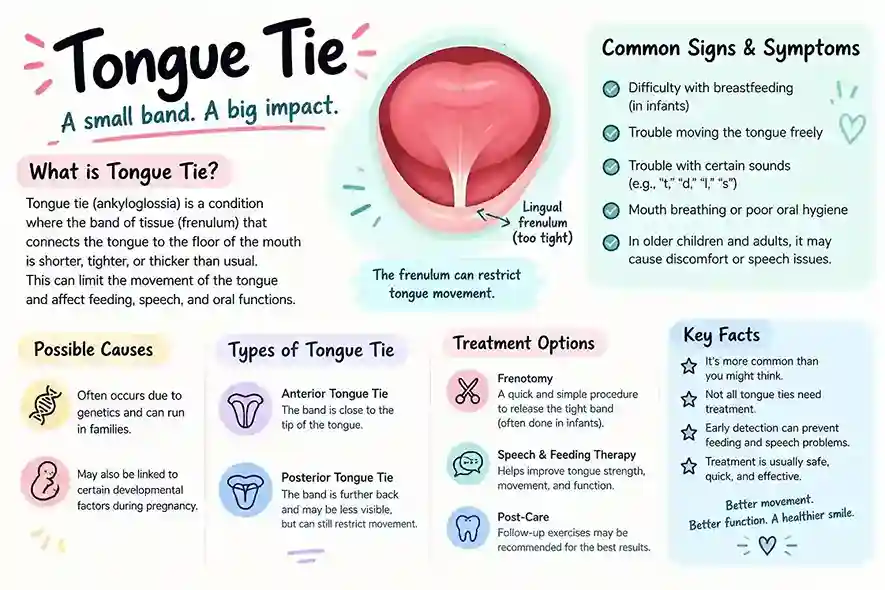
Tongue tie, medically named ankyloglossia, is a condition present from birth. A short, thick, or tight band of tissue called the lingual frenulum connects the underside of the tongue to the floor of the mouth more tightly than normal.This tissue usually loosens before a baby is born, giving the tongue full range of motion. When it stays tight, the tongue cannot move as freely as it should.Tongue tie affects roughly 4% to 10% of newborns, though estimates vary because there is still no single, universally accepted diagnostic standard among doctors.
What Causes Tongue Tie?
Doctors don’t fully know why the frenulum fails to loosen properly in some babies. Genetics appears to play a role, since tongue tie often runs in families.Boys are diagnosed more often than girls, at roughly a 3-to-1 ratio. Researchers haven’t pinned down why this gap exists.Tongue tie is not caused by anything a parent did during pregnancy. It is a structural feature present from the earliest stages of fetal development.
Types of Tongue Tie
Doctors classify tongue tie by where the frenulum attaches and how visible the restriction is.
| Type | Location | Appearance | Typical Impact |
| Anterior | Near the tip of the tongue | Easy to see; tongue often looks notched or heart-shaped | Usually more obvious, often diagnosed earlier |
| Posterior | Closer to the base of the tongue | Harder to spot; covered by a fold of tissue | Frequently missed on a quick visual check |
Posterior tongue tie causes more diagnostic disagreement among pediatricians because it requires a hands-on exam, not just a glance.
Symptoms of Tongue Tie in Babies
Feeding problems are usually the first clue. A baby with tongue tie may show one or more of these signs:
- Trouble latching or staying latched during feeds
- Clicking sounds while nursing
- Slow weight gain despite frequent feeding
- Dozing off at the breast before completing a feeding
- A tongue that can’t extend past the lower gum line
Mothers often notice their own symptoms first, including cracked nipples, persistent pain during feeds, or a shallow latch that doesn’t improve with repositioning.
Symptoms of Tongue Tie in Adults
Many adults live with tongue tie for decades without a diagnosis. It’s often discovered by accident, during a dental visit or a conversation about speech.
Common signs include
- Difficulty licking an ice cream cone or the lips
- Trouble sticking the tongue past the lower front teeth
- A visible gap between the bottom front teeth
- Struggling with certain sounds, such as “t,” “d,” “s,” or “r”
- Discomfort playing a wind instrument or kissing
None of these signs confirm tongue tie on their own. A dentist, ENT, or speech-language pathologist can properly assess tongue mobility.
How Doctors Diagnose Tongue Tie
Diagnosis starts with a physical exam. A pediatrician, lactation consultant, or ENT checks how far the tongue lifts, how far it extends, and how the frenulum attaches.For babies, feeding is watched directly. A lactation consultant may observe an actual nursing session to see how the restriction affects latch and milk transfer, not just how the tongue looks at rest.There is currently no single test everyone agrees on. This is one reason diagnosis rates vary so widely between clinics and countries.
Tongue Tie and Breastfeeding
This is where tongue tie causes the most day-to-day distress for new parents. A tight frenulum can limit how far the tongue extends and elevates, making it harder for a baby to grasp and compress the breast correctly.Studies reviewed by the National Institutes of Health link tongue tie to nipple pain, poor milk transfer, and early breastfeeding cessation in some infants. But the relationship isn’t automatic — plenty of babies with a tight frenulum breastfeed without any issue.The American Academy of Pediatrics stresses a key point in its 2024 clinical report: most breastfeeding difficulties are not caused by tongue tie at all. Latch problems, positioning, oversupply, and undersupply can all mimic the same symptoms.
Treatment Options for Tongue Tie
When treatment is genuinely needed, there are three main surgical approaches. All release the tight tissue, but the technique and complexity differ.
| Procedure | What Happens | Anesthesia | Recovery |
| Frenotomy | A quick snip of the frenulum with scissors or laser | Usually none for infants | Minutes to a few days |
| Frenectomy | Full removal of the restrictive tissue | Local, sometimes general | A few days |
| Frenuloplasty | Surgical release with stitches to reshape the area | Local or general | One to two weeks |
Frenotomy is the most common option for infants because it’s fast and rarely requires anesthesia. Frenuloplasty is typically reserved for older children or adults with thicker, more complex tissue.According to NIH-reviewed research, frenotomy is generally safe, with serious complications remaining rare across the studies examined.
Does Every Case of Tongue Tie Need Surgery?
No — and this is the single most important update in this field. In 2024, the American Academy of Pediatrics released a clinical report warning that tongue tie surgery has become overused for breastfeeding concerns.Dr. Maya Bunik, chair of the AAP Section on Breastfeeding, put it directly: most breastfeeding difficulties, including pain, are not caused by ankyloglossia. The AAP now encourages pediatricians to try nonsurgical support first, including lactation consultation and positioning changes, before recommending a frenotomy.This doesn’t mean surgery is never appropriate. It means surgery should follow a careful evaluation, not an assumption. If your baby is diagnosed, ask what specific feeding problem the procedure is expected to fix.
Recovery After Tongue Tie Release
Most infants recover quickly. A frenotomy involves minimal bleeding, and many babies nurse again within minutes of the procedure.
Aftercare typically includes
- Gentle stretching exercises to prevent the tissue from reattaching
- Extra feeding sessions in the first 24 hours
- Watching for signs of infection, such as unusual swelling or discharge
Older children and adults undergoing frenuloplasty face a longer recovery, often with dietary restrictions and speech or oral exercises during healing.
Tongue Tie and Speech Development
Tongue tie can affect specific sounds that require the tongue tip to lift and touch the roof of the mouth. Letters like “t,” “d,” “l,” “n,” “s,” “z,” and “r” are the most commonly affected.
Not every child with tongue tie develops a speech problem. Many compensate naturally as their mouth grows. A speech-language pathologist is the right professional to assess whether tongue tie is genuinely behind a child’s articulation delay.
Long-Term Effects of Untreated Tongue Tie
Left untreated, tongue tie doesn’t harm health in most cases. Some people live their entire lives with a tight frenulum and never notice a limitation.
For others, it can contribute to
- Difficulty clearing food debris, raising the risk of cavities and gum irritation
- A persistent gap between the lower front teeth
- Ongoing frustration with certain oral tasks, from playing an instrument to kissing comfortably
Severity varies enormously from person to person, which is exactly why a hands-on evaluation matters more than a checklist.
Supporting a Child With Tongue Tie at Home
Whether or not surgery is recommended, parents can take practical steps to ease day-to-day challenges:
- Work with a certified lactation consultant (IBCLC) on latch technique before assuming surgery is the fix
- Track weight gain and feeding duration to share concrete data with your pediatrician
- Practice tongue and lip exercises recommended by a speech-language pathologist, if speech is affected
- Keep follow-up appointments after any procedure to confirm proper healing
Small, consistent adjustments often resolve feeding struggles faster than parents expect.
When to See a Doctor About Tongue Tie
Book an appointment if
- Your baby struggles to gain weight or feed effectively
- Breastfeeding causes ongoing pain that doesn’t improve with positioning help
- A speech-language pathologist flags tongue mobility as a factor in speech delay
- An older child or adult has trouble eating, speaking, or reaching the back teeth comfortably
A pediatrician, pediatric dentist, or ENT specialist can confirm whether tongue tie is truly the cause.
Frequently Asked Questions
What does tongue tie look like?
A tongue tie often makes the tongue appear notched or heart-shaped when stuck out, with limited ability to lift or extend past the lower gum line.
Can tongue tie fix itself without treatment?
Sometimes. Mild cases may cause no functional problems at all and never require intervention, especially as the mouth grows.
Is tongue tie surgery painful for a baby?
A frenotomy involves very few nerve endings in that tissue, so most infants show only brief discomfort and often nurse right afterward.
Can adults have tongue tie treated?
Yes. Adults typically undergo frenuloplasty under local anesthesia, followed by guided tongue exercises during recovery.
Does tongue tie always affect speech in older kids?
No. Many children with tongue tie develop clear speech naturally; a speech-language pathologist can confirm whether it’s a genuine factor.
How much does tongue tie treatment cost?
Costs vary widely by provider, location, and procedure type, ranging from a simple in-office frenotomy fee to a higher cost for surgical frenuloplasty. Check with your insurer, since coverage differs by plan.
Take the Next Step With Confidence
Tongue tie doesn’t have to feel like a mystery anymore. You now know the real symptoms, the honest treatment picture, and the questions worth asking before agreeing to any procedure. Talk to your pediatrician, ask for a hands-on evaluation, and trust data over guesswork. Your family deserves answers built on evidence, not fear.