What Causes Herpes on Tongue? Symptoms & Treatments
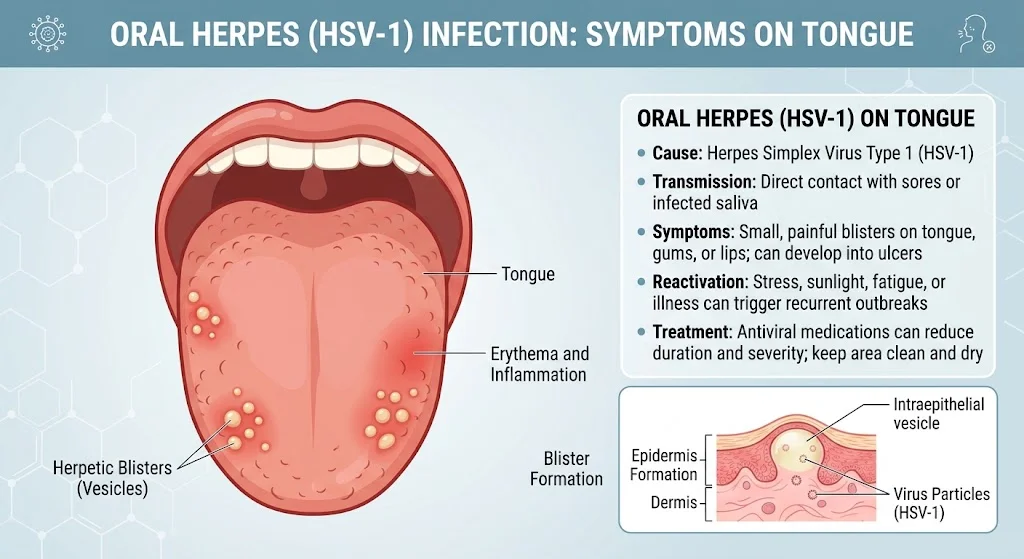
Finding a painful sore on your mouth makes eating and drinking miserable. You might worry about spreading the infection to your partner or children. Identifying herpes on tongue early helps you manage symptoms effectively and speeds up your recovery time. Let us look at exactly what this infection is and how to treat it fast.
What Exactly is Herpes on Tongue?
Oral herpes is a viral infection caused by the Herpes Simplex Virus. When this virus affects the mouth, it often results in cold sores or fever blisters. Experiencing herpes on tongue is simply an outbreak of this common virus inside your mouth rather than on your lips.
According to the Centers for Disease Control and Prevention (CDC), most oral herpes cases stem from HSV-1. The virus remains dormant in your nerve cells until a trigger wakes it up.
How Do You Get Herpes on Tongue?
The virus spreads through direct skin-to-skin contact. You can contract herpes on tongue by kissing someone who has an active cold sore. Sharing utensils, razors, or lip balm with an infected person also passes the virus.
The virus enters your body through tiny cuts in your skin or mucous membranes. Parents must be careful not to transmit the virus to children through innocent kisses, especially during an active outbreak.
Early Signs of Herpes on Tongue
Recognizing the early symptoms helps you act fast. You will often feel a tingling, burning, or itching sensation on your tongue before any visible sore appears. This prodrome stage lasts a day or two.
Once the blisters form, herpes on tongue looks like small, fluid-filled bumps on the surface or sides of your tongue. These blisters soon pop, leaving behind painful, shallow ulcers that take one to two weeks to heal.
The Stages of an Oral Herpes Outbreak
An outbreak follows a predictable pattern. Dealing with herpes on tongue requires patience as you move through these uncomfortable stages:
- Tingling Stage: You feel pain, itching, or tingling around the tongue.
- Blister Stage: Small, fluid-filled blisters emerge on the tongue surface.
- Ulcer Stage: The blisters burst, leaving shallow, weeping sores.
- Crusting Stage: The sores dry out and form a protective crust.
- Healing Stage: The crust falls off, and the skin completely heals without scarring.
Herpes on Tongue vs. Canker Sores: How to Tell the Difference
People often confuse cold sores with canker sores. Canker sores are non-contagious ulcers that occur only inside the mouth. Herpes on tongue usually starts as a fluid-filled blister before popping into an ulcer. Canker sores start directly as flat, open lesions.
Furthermore, cold sores often appear on the outside of the mouth, while canker sores stay strictly inside. Knowing the difference dictates your treatment plan.
What Triggers a Herpes Outbreak on the Tongue?
Once you carry the virus, certain factors can awaken it from dormancy. High stress levels weaken your immune system and invite an outbreak. Lack of sleep and poor nutrition also make your body vulnerable to tongue outbreaks.
Extreme weather, particularly cold wind or bright sunlight, triggers cold sores for many people. Hormonal changes during menstruation or sickness like a common cold can also spark an outbreak.
Effective Medical Treatments for Tongue Herpes
You cannot cure the virus, but you can manage the symptoms. Doctors prescribe antiviral medications like acyclovir, valacyclovir, and famciclovir to shorten outbreak duration. The Mayo Clinic recommends starting antiviral pills at the first sign of tingling to stop herpes on tongue from developing fully.
Over-the-counter creams also provide relief, though oral medications work best for tongue outbreaks. Always consult a healthcare professional before starting any new medication.
Home Remedies to Soothe Herpes on Tongue
You can find relief right in your kitchen. Avoid eating spicy, acidic, or salty foods that irritate herpes on tongue. Try these fast-acting home care methods:
- Rinse your mouth with warm salt water to reduce inflammation.
- Apply ice wrapped in a cloth to the affected area to numb the pain.
- Drink cold water and eat soft foods to maintain your nutrition.
- Apply a dab of pure aloe vera gel to soothe the tissue.
Can You Prevent Herpes on Tongue?
Prevention requires strict hygiene habits. Avoid kissing anyone showing visible signs of a cold sore. Never share personal items like toothbrushes, drinking glasses, or lip balms.
If you already carry the virus, managing your stress and getting enough sleep prevents the virus from recurring. Apply an SPF lip balm before going outside to protect your lips from sun-triggered outbreaks. Wash your hands frequently to avoid spreading the virus to other parts of your body.
Is Herpes on Tongue Contagious?
Yes, the virus is highly contagious during an active outbreak. You are most infectious when blisters are present and oozing fluid. However, you can also shed the virus without any visible symptoms. The World Health Organization (WHO) notes that asymptomatic shedding makes the virus easy to spread unknowingly.
If you have herpes on tongue, avoid oral contact with others until the sores completely heal. Protecting your partners requires open communication about your symptoms.
When Should You See a Doctor?
Most outbreaks clear up on their own within two weeks. You should see a doctor if your symptoms last longer than two weeks. If you experience severe pain that prevents you from drinking water, seek medical help to prevent dehydration.
People with weakened immune systems need immediate antiviral treatment for herpes on tongue. If the sores spread to your eyes, visit an emergency room immediately, as eye infections can cause permanent damage.
6 Frequently Asked Questions About Herpes on Tongue
1. How long does herpes on tongue last? A typical outbreak of herpes on tongue lasts between seven to fourteen days. Starting antiviral treatment at the first sign of tingling shortens this healing time significantly.
2. Can you get herpes on tongue from oral sex? Yes, HSV-2 usually spreads through sexual contact. You can easily contract herpes on tongue if you perform oral sex on a partner who has genital herpes.
3. Does herpes on tongue always hurt? It usually causes discomfort, especially when eating or drinking acidic fluids. The pain from herpes on tongue ranges from a mild annoyance to severe soreness depending on the outbreak size.
4. Can stress cause herpes on tongue outbreaks? Stress directly weakens your immune system. When your defenses drop, the dormant virus wakes up, making outbreaks appear more frequently during stressful periods.
5. Is herpes on tongue dangerous for babies? Neonatal herpes is a severe condition. You must never kiss a baby if you have herpes on tongue, as their undeveloped immune systems cannot fight off the virus safely.
6. Can herpes on tongue spread to other body parts? Yes, through touch. If you touch your herpes on tongue and then rub your eyes or genitals, you can spread the virus. Wash your hands often.
You do not have to suffer silently through a painful outbreak. Recognizing the signs of herpes on tongue early gives you the power to act fast and minimize discomfort. Track your triggers, maintain strong hygiene, and keep antiviral treatments ready. Take control of your oral health today by scheduling an appointment with your dentist or doctor at the first sign of a tingle. Share this guide with someone who might need it to help them find relief.
Read More Blogs at Brasssmile